Yazılar

Construction of Jeddah Tower, the World’s Tallest Skyscraper, Resumes After Seven-Year Hiatus

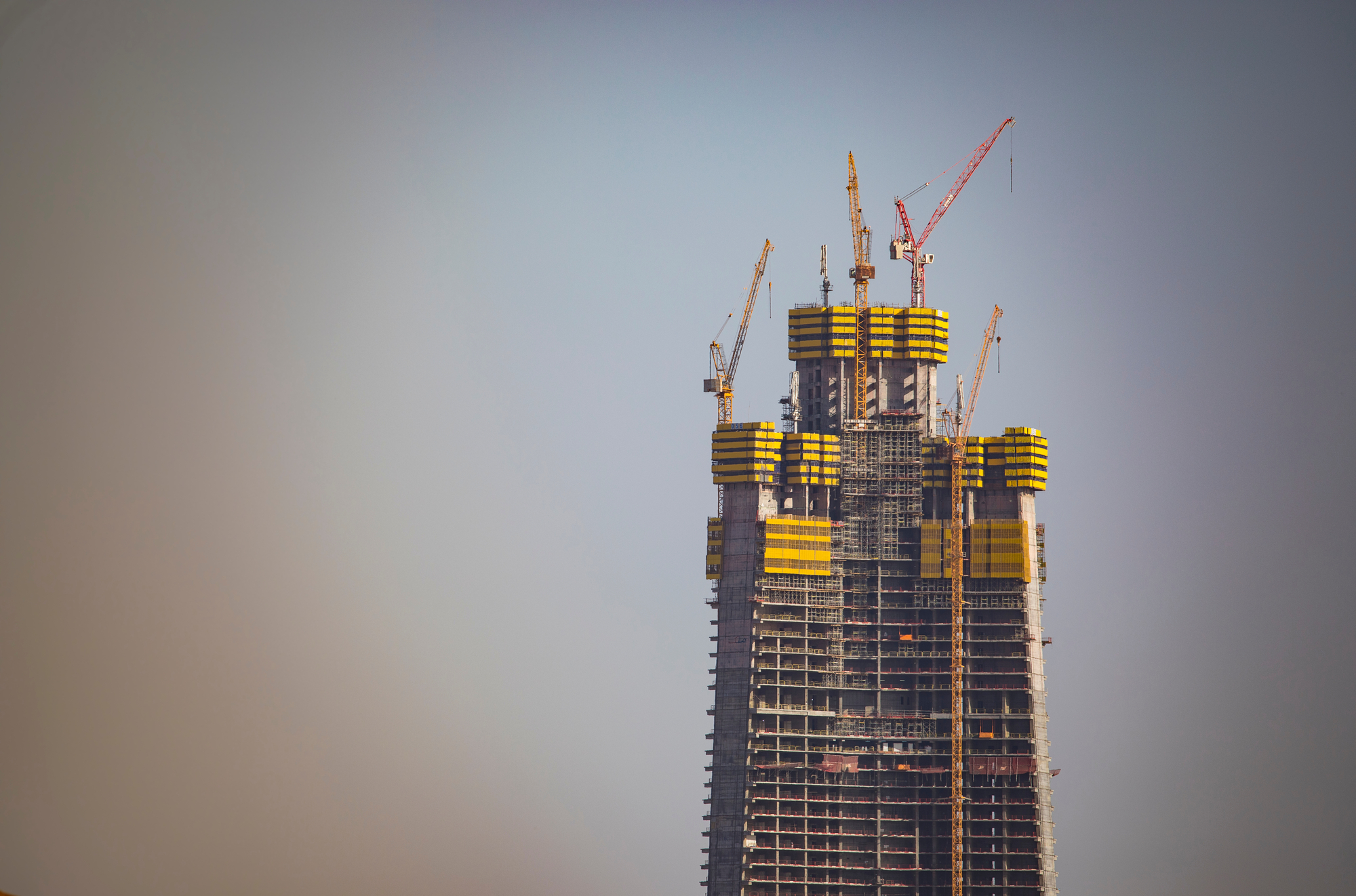
Construction on Jeddah Tower, set to become the world’s tallest skyscraper, has resumed after a seven-year hiatus, with the project now expected to be completed by 2028. The tower, located in Jeddah, Saudi Arabia, was originally halted due to a kingdom-wide anti-corruption purge in 2017 that targeted high-profile figures involved in the project.

At a ceremony held this week, the Jeddah Economic Company (JEC), the development consortium overseeing the project, confirmed that construction is back on track. The 1,000-meter-tall (3,280 feet) tower was one-third complete before work stopped, with 63 of the planned 157 stories built. The project, which had its groundbreaking in 2013, aims to surpass the Burj Khalifa in Dubai, currently the tallest building in the world at 828 meters (2,717 feet).

Reasons for the Hiatus

The tower’s construction was disrupted after several key figures connected to the project were implicated in Crown Prince Mohammed bin Salman’s anti-corruption drive. Among those detained were Prince Alwaleed bin Talal, chairman of Kingdom Holding Company, a major backer of the tower, and Bakr bin Laden, chairman of the Saudi Binladen Group, the project’s main contractor. Both individuals have since been released, with Bakr bin Laden’s family firm re-hired to complete the skyscraper.

The Covid-19 pandemic further delayed the resumption of work. However, satellite imagery in recent months indicated that preliminary construction had quietly resumed, leading to the official restart announcement.

Vision and Design of Jeddah Tower

Designed by Adrian Smith, the US architect behind the Burj Khalifa, the tower features a three-petal footprint and a tapered, aerodynamic structure meant to overcome the challenges of extreme height. The design evokes “a bundle of leaves shooting up from the ground,” according to Adrian Smith + Gordon Gill Architecture, the firm responsible for the project.

The skyscraper will serve as the centerpiece of a larger development called Jeddah Economic City, a 57-million-square-foot, $20-billion complex featuring residential, office, and retail spaces. It is also expected to house a hotel, a shopping mall, and the world’s highest observation deck. The tower will feature 59 elevators in one of the world’s most sophisticated elevator systems.

Saudi Arabia’s Ambitious Vision

Jeddah Tower is a key element of Saudi Arabia’s broader plans to position itself as a global economic hub. JEC’s Hisham Jomah, who was involved in the early stages of the project, described it as a shift in the mindset of Jeddah, traditionally seen as a gateway city to Mecca and Medina. The tower is part of the kingdom’s strategy to modernize and diversify its economy under Crown Prince Mohammed bin Salman’s Vision 2030.

Although the project has faced significant delays, officials and developers are optimistic that its completion will have a transformative impact on the region.
OPEC+ Focuses on Compliance as Output Hike Postponed Amid Market Uncertainty

The OPEC+ alliance is tightening its focus on ensuring compliance with oil production cuts as it advances with a strategy involving both formal and voluntary output reductions. Two OPEC+ delegates, speaking anonymously due to the sensitive nature of the discussions, revealed that the coalition is particularly concerned about some members’ failure to adhere to their production quotas. Countries like Iraq and Kazakhstan, along with Russia, have been producing more than their agreed levels, challenging the credibility of OPEC+ efforts to stabilize the market.

Earlier in the month, the group delayed an anticipated return of 2.2 million barrels per day (bpd) to the market, initially scheduled for October, pushing the phase-out of voluntary cuts to December instead. OPEC+ members are operating under a complex structure of cuts: the group is set to produce 39.725 million bpd next year under its official policy, while eight key members, including Saudi Arabia, are voluntarily reducing output by an additional 1.7 million bpd until 2025.

Undercompliance within OPEC+ has been a recurring issue, undermining the alliance’s credibility as it tries to manage the global oil supply amidst geopolitical tensions in the Middle East, economic recovery uncertainties in China, and market volatility triggered by stock sell-offs. Oil prices, which have been relatively low throughout the year, fell again on Thursday following reports that Saudi Arabia may be willing to abandon its unofficial target of $100 per barrel to increase output after December.

Brent crude futures for November were trading at $71.44 per barrel on Thursday, down slightly from the previous session, while Nymex WTI futures remained stable at $67.75 per barrel. Carole Nakhle, CEO of Crystol Energy, suggested that Saudi Arabia’s potential pivot on price could be a warning to non-compliant OPEC+ members, noting that Riyadh has shouldered much of the burden of production cuts. She emphasized that while higher prices benefit Saudi Arabia, there has never been a fixed target price for the group.

OPEC+ ministers, including Saudi Arabia’s Prince Abdulaziz bin Salman, have reiterated that their primary goal is to reduce global oil stocks rather than aim for a specific price point. Nonetheless, some member countries rely on oil revenues to meet budgetary obligations. For instance, the International Monetary Fund estimates that Saudi Arabia needs oil prices to average $96.20 per barrel to balance its fiscal budget, a key factor as the kingdom invests heavily in its Vision 2030 economic diversification program.

Despite these pressures, Saudi Arabia has not shifted its OPEC+ strategy and continues to avoid targeting an explicit oil price, according to one OPEC+ source. Riyadh’s focus remains on long-term revenue generation through projects like Neom, a futuristic megacity designed to lessen the country’s dependence on hydrocarbons.

The history of Saudi Arabia using its production capacity as leverage within OPEC+ is not new. In 2020, a price war between Riyadh and Moscow led to a market glut during the early stages of the Covid-19 pandemic, briefly driving WTI oil prices into negative territory. OPEC+ currently relies on monthly production data from independent sources to monitor member compliance, with the Joint Ministerial Monitoring Committee, which oversees conformity, scheduled to meet next on October 2.


Saudi Investment Minister Defends Vision 2030 Amid Skepticism and Promotes ‘Green Shoring’

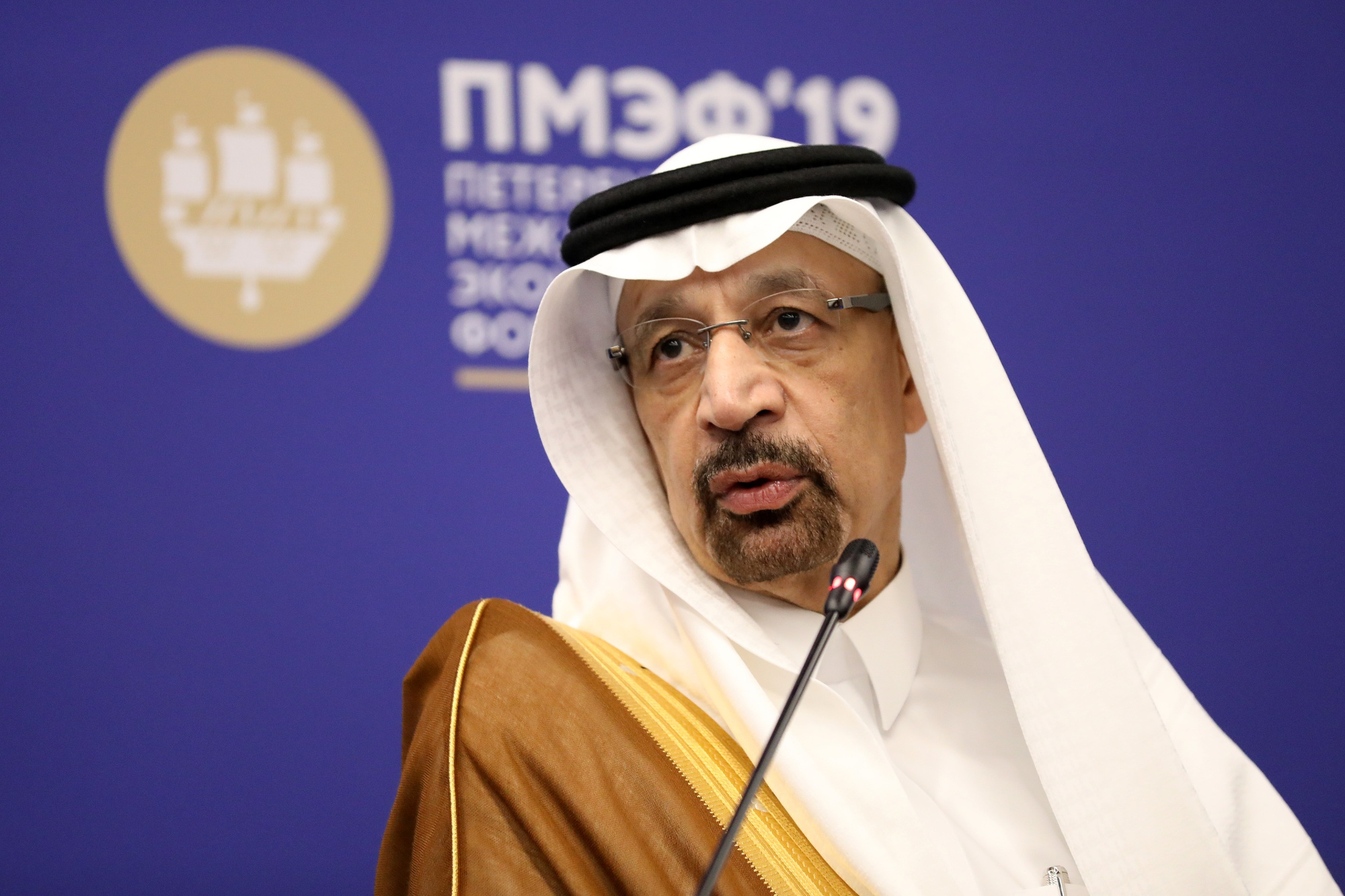
Saudi Arabia’s investment strategy under Vision 2030, led by Minister Khalid al-Falih, is facing skepticism, but the kingdom remains steadfast in its ambitious diversification plans. Despite doubts about Saudi Arabia’s ability to transition from its long-standing reliance on oil, the country is actively pursuing “green shoring” as a key component of its investment strategy to attract foreign financing. Vision 2030 aims to reduce the nation’s dependence on oil revenues and foster economic growth through 14 mega-projects, including the Neom industrial complex. The initiative seeks to channel over $3 trillion into the domestic economy and attract $100 billion in foreign investment annually by 2030. Al-Falih emphasized that Saudi Arabia has already achieved or is close to meeting 87% of its targets, demonstrating strong commitment to the plan. The kingdom has also intensified efforts to enhance its investment climate with market liberalization and reforms, although concerns about its legal framework and dispute resolution persist. Green shoring, which focuses on decarbonizing supply chains through renewable energy, is a major selling point for Saudi Arabia. The initiative aims to leverage the kingdom’s logistics, capital, and infrastructure to drive sustainable development. Saudi Arabia is committed to reaching net-zero emissions by 2060 and has been active in climate discussions, though some critics argue that its promotion of carbon capture and storage may be a cover for continued oil production. The green shoring strategy also targets improving global supply chain resilience and supporting the transition to a greener economy by focusing on critical materials and technologies.