Yazılar

Synopsys Resumes Limited Services in China Amid U.S. Export Restrictions, Core Tool Sales Still Blocked

Synopsys has partially resumed some services in China after suspending operations earlier this month in response to new U.S. export curbs, according to a source with direct knowledge of the situation. The California-based semiconductor design software provider had halted sales and access to its SolvNet customer support portal to comply with broad U.S. restrictions aimed at limiting technology exports to China.

The source revealed that while Synopsys has restarted sales of non-core hardware and intellectual property (IP) to serve some existing Chinese clients, sales of critical Electronic Design Automation (EDA) tools remain suspended. These essential EDA tools are necessary to fully utilize the company’s IP and hardware products, such as the HAPS and ZeBu hardware-assisted verification systems, which are primarily used for accelerating chip verification.

SolvNet has reopened with limited access, restricting some software-related documents, further impacting Chinese customers’ ability to use Synopsys’ full range of services.

Synopsys, along with Cadence and Siemens EDA, dominates the global EDA market with over 70% market share in China, according to the Chinese state news agency Xinhua. The ongoing restrictions on EDA tool sales pose a significant challenge to Chinese semiconductor design companies, potentially hindering the country’s chipmaking industry.

Following the U.S. export controls, Synopsys suspended its annual and quarterly revenue forecasts, reflecting uncertainty about future sales prospects in China.

The company did not immediately respond to requests for comment.

Investors Brace for China-Taiwan Conflict Risks, But See No Safe Hedge

Foreign investors are increasingly forced to factor in the once-unthinkable: the possibility of China invading Taiwan, a scenario made more plausible amid rising U.S.-China tensions under President Donald Trump and a new wave of global trade nationalism. Yet, despite heightened geopolitical anxiety, investors see little to no viable strategy for hedging against a full-scale conflict over the democratically governed island.

“You can’t settle any trades, the currency might disappear altogether… you either carry on like it’s business as usual, or stay away,” said Mukesh Dave, CIO of Aravali Asset Management.

War or Status Quo: A Binary Outlook

Investors now view the China-Taiwan standoff as a binary risk:

  • War, which would likely obliterate Taiwan’s status as a stable investment market.

  • Peace, maintaining the status quo under continued diplomatic ambiguity.

Rising Odds and Market Reaction

  • The Polymarket platform now pegs the odds of an invasion at 12%, up from near zero earlier in the year.

  • Taiwan stock outflows totalled nearly $11 billion in 2024, fueled in part by U.S. tariffs.

  • Taiwan’s benchmark index (.TWII) is down 6% year-to-date.

Even Goldman Sachs’ Cross-Strait Risk Index, which tracks media references to tensions, has been steadily climbing since Trump’s election win in late 2024.

“If aggression occurs, the investment decision becomes binary: stay exposed and absorb extreme volatility, or exit swiftly to preserve capital,” said Steve Lawrence, CIO of Balfour Capital Group.

TSMC at the Heart of the Dilemma

The central pillar of Taiwan’s market remains Taiwan Semiconductor Manufacturing Co (TSMC):

  • Valued as the crown jewel of the global chip industry

  • Supplies giants like Apple and Nvidia

  • Has been both a market driver and a geopolitical flashpoint, especially as Trump’s tariff policies increasingly target advanced tech

“TSMC is so big that the expectation is the U.S. will defend Taiwan — and defend it strongly,” said Dave.

However, Trump’s inconsistent tariff maneuvers, including temporary delays for negotiation leverage, have spooked investors and underscored Taiwan’s exposure to external political will.

Diverging Views on Risk

While global investors appear increasingly concerned about cross-strait instability, some local voices remain sceptical:

“We shouldn’t interpret this from a geopolitical risk perspective. The key issue is the tariffs,” said Li Fang-kuo, chairman of Uni-President’s securities advisory unit in Taiwan.

Others, like Rich Nuzum, global strategist at Mercer, recommend broad diversification and crisis stress-testing as the only realistic tools for institutional clients.

“There is no hedge for war,” Dave noted plainly. “But there is stress-testing for fear.”

With Taiwanese President Lai Ching-te pledging peace and Beijing accusing him of separatism, tensions remain unresolved. Investors face a stark choice: stay exposed to Taiwan’s tech-driven growth, or exit amid escalating uncertainty.

Nvidia CEO Jensen Huang Backs Trump’s Plan to Ease AI Chip Export Curbs

Nvidia CEO Jensen Huang has strongly criticized U.S. export restrictions on AI chips to China, calling them a “failure” that cost American firms billions in lost sales while accelerating China’s self-reliance in semiconductor development. Speaking at the Computex conference in Taipei, Huang welcomed the Trump administration’s decision to reverse some of the Biden-era controls, signaling a shift that could reshape global tech policy.

“The fundamental assumptions that led to the AI diffusion rule have been proven to be fundamentally flawed,” Huang said, referring to the Biden administration’s three-tiered export control regime, which entirely blocked sales of advanced chips to China.

Impact on Nvidia and U.S. Industry

Since the Biden administration’s controls came into effect, Nvidia’s market share in China fell from 95% to 50%, Huang revealed. Nvidia has been hit particularly hard, taking a $5.5 billion charge in April related to its blocked H20 chip, and Huang now estimates total revenue loss at $15 billion.

Despite these setbacks, Huang noted that AI research in China has continued unabated and is now being powered by local technologies, particularly chips from Huawei and other Chinese semiconductor designers. He estimated that China’s AI market will be worth $50 billion in 2025 and called the competition there “intense”.

“They would love for us never to go back to China,” he said.

Trump’s Strategy: A Shift in Direction

Huang praised the Trump administration’s plan to move away from rigid export tiers and toward a global licensing regime based on government-to-government agreements. The proposed shift could provide the U.S. more flexibility and leverage in trade negotiations while also easing pressure on U.S. tech firms.

“President Trump realises it’s exactly the wrong goal,” Huang said, arguing that isolating China from U.S. tech would not stop AI innovation and only encourage the growth of competitive alternatives.

Nvidia’s Workaround

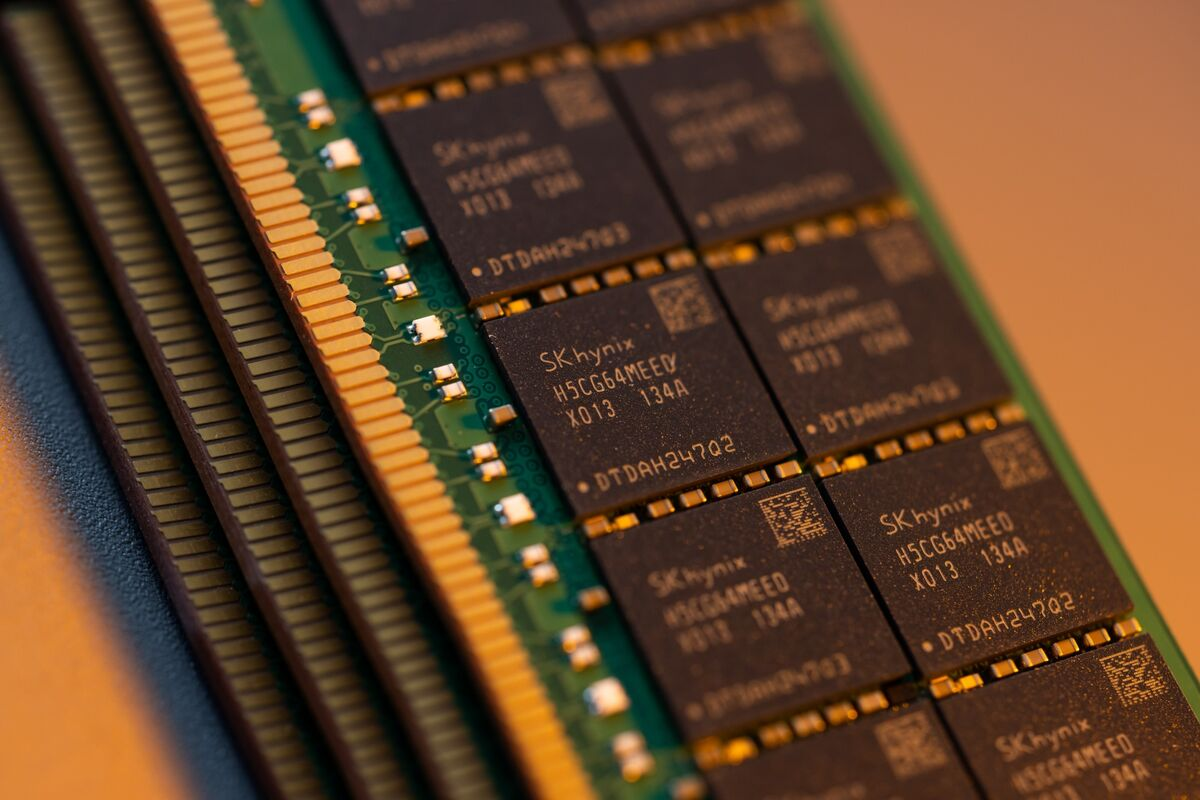
Nvidia is now developing a new version of its Blackwell AI chip that includes slower memory, allowing it to comply with current U.S. restrictions while still serving key markets.

Rising Tensions

China responded sharply to recent U.S. moves that warned firms against using Chinese-made AI chips like Huawei’s Ascend, urging the U.S. to “immediately correct its wrongdoings.” Beijing warned that such measures violate trade agreements and undermine cooperation, threatening “resolute” countermeasures.

Industry Outlook

While the Biden administration had aimed to contain China’s semiconductor and military advancements, the unintended consequence appears to be a rapid buildup of China’s domestic AI and chipmaking capabilities. Huang’s remarks underscore the growing frustration within U.S. tech circles over policies they say are self-damaging.

Meanwhile, Nvidia continues to dominate the global AI infrastructure market, with new product announcements at Computex expected to further boost its $130.5 billion revenue base.