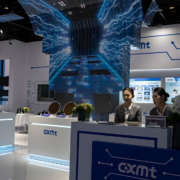
Chinese memory chip manufacturer CXMT Corp. delivered one of the most remarkable stock market debuts in recent history, with its shares surging 466% on the first day of trading in Shanghai. The rally transformed the company into China’s most valuable publicly listed business, highlighting investor optimism surrounding artificial intelligence and advanced semiconductor technologies.
The stock closed at 49 yuan, far above its IPO price of 8.66 yuan, after reaching an intraday peak of 55.03 yuan. The dramatic rise lifted the company’s market capitalization to approximately 3.3 trillion yuan ($488 billion), surpassing long-time market leader Industrial and Commercial Bank of China.
The listing follows Asia’s largest initial public offering of the year, reinforcing the growing importance of China’s domestic semiconductor industry as the country accelerates efforts to achieve greater technological self-sufficiency amid ongoing geopolitical tensions and export restrictions.
Formerly known as ChangXin Memory Technologies, CXMT has become one of China’s flagship semiconductor companies, specializing in memory chips that are increasingly critical for artificial intelligence, cloud computing, and high-performance data centers.
The company’s strong market debut reflects investors’ growing confidence in the global memory chip supercycle driven by AI infrastructure spending. As technology companies invest hundreds of billions of dollars in data centers and advanced AI systems, demand for high-performance memory has risen sharply alongside demand for graphics processors and networking hardware.
Trading activity was equally remarkable, with more than 141 billion yuan worth of shares changing hands during the company’s first trading session, making CXMT the first mainland Chinese A-share company to exceed 100 billion yuan in daily trading volume.
Industry analysts note that the company’s IPO was initially priced at a substantial discount compared with international semiconductor peers, helping fuel exceptionally strong investor demand. However, some market observers believe the first-day rally pushed the valuation well beyond fundamental expectations.
The valuation now places CXMT at nearly half the market value of U.S. memory manufacturer Micron Technology, despite ongoing challenges posed by U.S. export controls that limit Chinese companies’ access to certain advanced semiconductor manufacturing technologies.
Only a relatively small portion of CXMT’s shares became freely tradable following the listing, a factor that likely contributed to the sharp price movements by limiting available supply while demand remained exceptionally high.
Operationally, the company is experiencing rapid business growth. CXMT expects first-half revenue to increase more than sevenfold, while forecasting a return to profitability after reporting losses during the previous year. The company attributes much of this improvement to sustained AI-driven demand for memory chips.
Market research firms also anticipate continued strength in the memory sector through at least 2027, citing tight supply conditions and growing efforts by technology companies to diversify their memory suppliers. These trends could provide additional long-term opportunities for CXMT as it expands production and competes more aggressively in the global semiconductor market.
At the same time, analysts caution that the memory industry remains highly cyclical. Future performance will depend on the pace of AI infrastructure investment, overall semiconductor supply, and the evolving competitive landscape within the global memory market.