Yazılar

Chinese Tech Firms Still Pursuing Nvidia Chips Despite Government Pressure

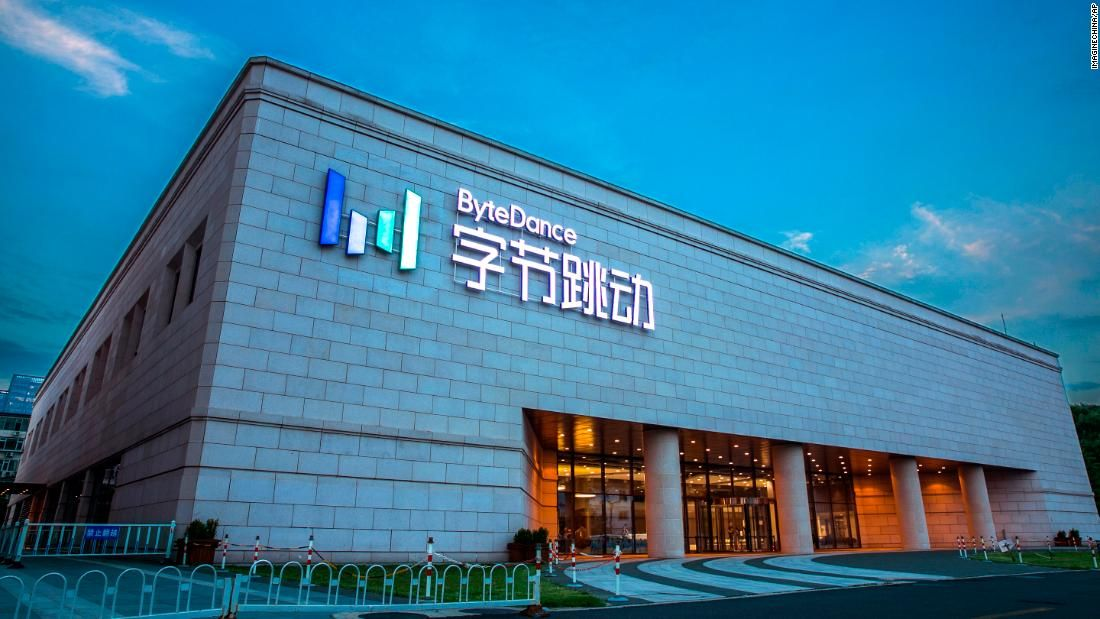
Chinese tech giants including Alibaba (9988.HK) and ByteDance remain eager to secure Nvidia’s (NVDA.O) artificial intelligence chips despite regulators in Beijing discouraging such purchases, according to four sources familiar with procurement talks.

The companies are pressing for assurance that their orders for Nvidia’s H20 model—which regained U.S. approval for sale in China in July—are being processed. They are also closely tracking Nvidia’s development of a more advanced chip, tentatively called the B30A, based on its Blackwell architecture. Sources said the B30A could cost roughly twice as much as the H20’s current $10,000–$12,000 price tag but may deliver up to six times more power, making it an attractive option if cleared by Washington.

Both the H20 and B30A are downgraded versions of Nvidia’s global products, designed to comply with U.S. export restrictions. The issue of whether Chinese firms can access advanced chips remains a central flashpoint in the U.S.–China technology rivalry. While Washington has relaxed some curbs, U.S. President Donald Trump recently struck a deal requiring Nvidia to give 15% of its H20 revenue to the U.S. government.

China, meanwhile, is urging its companies to reduce reliance on U.S. chips. Regulators have summoned Tencent (0700.HK), ByteDance, and others to question their H20 purchases, citing potential information security risks. However, Beijing has not formally banned Nvidia products.

Strong demand persists due to limited domestic chip supply. Products from Huawei and Cambricon (688256.SS) remain constrained and, according to engineers at Chinese firms, perform less effectively than Nvidia’s. Nvidia itself acknowledged rising competition from local rivals but declined further comment.

Uncertainty over its China sales led Nvidia to issue a cautious forecast in August, excluding potential revenue from the world’s second-largest economy. The company’s shares have since fallen about 6%. CEO Jensen Huang has reassured Chinese customers about H20 availability and is reportedly preparing B30A samples for delivery to China as early as September. Nvidia is estimated to hold 600,000–700,000 H20 units in inventory and has asked TSMC to produce more.

Huang has previously said China could represent a $50 billion market for Nvidia if it maintains access to competitive products.

China Slams U.S. as “Surveillance Empire” Over Chip Shipment Trackers

China’s state-run media Xinhua criticized the United States on Friday for secretly placing location trackers in shipments of advanced chips at risk of diversion to China, calling the practice indicative of the “instincts of a surveillance empire.” Reuters had reported earlier that U.S. authorities embedded these devices to monitor shipments subject to export restrictions aimed at curbing China’s access to advanced semiconductor technology.

In a commentary titled “America turns chip trade into a surveillance game,” Xinhua accused Washington of running “the world’s most sprawling intelligence apparatus” and treating trade partners as rivals to be undermined. The piece warned that if U.S. chips are perceived as potential surveillance tools, global customers may seek alternatives.

The commentary reflects ongoing tensions between the two tech superpowers. The U.S. government has imposed strict limits on exports of advanced chips and related equipment to China, while Washington and its allies have previously accused China of embedding potential surveillance capabilities in exported products, ranging from telecom gear to vehicles.

In recent moves, China has asked U.S. chipmaker Nvidia to clarify whether its H20 chips contain hidden backdoors and has cautioned domestic tech companies about their use, amid heightened scrutiny of foreign technology for security risks.

Trump’s Call for Intel CEO Lip-Bu Tan’s Resignation Sparks Mixed Reactions

U.S. President Donald Trump has called for the immediate resignation of Intel CEO Lip-Bu Tan, citing concerns over his extensive investments in Chinese technology companies — including at least eight with reported links to China’s People’s Liberation Army. The demand comes just months after Tan took over leadership of the struggling semiconductor giant.

According to an April Reuters investigation, Tan’s decades-long career includes hundreds of investments in Chinese firms, both personally and through venture funds he founded. On Wednesday, Reuters also reported that Senator Tom Cotton had raised questions about Tan’s ties to China and a recent criminal case involving his former company, Cadence Design Systems.

Reactions from analysts and investors have been sharply divided. Some view Tan’s knowledge of China’s semiconductor industry as an invaluable asset for Intel and the U.S., while others see Trump’s intervention as a sign of escalating political pressure and market uncertainty.

Key reactions:

  • Anshel Sag, Moor Insights & Strategy – Criticized Trump’s call, arguing that Tan’s deep understanding of China’s semiconductor capabilities could benefit Intel and the U.S., making him more valuable rather than less.

  • David Wagner, Aptus Capital Advisors – Said Trump’s move reflects his broader push to bring business back to the U.S., noting the momentum from the recent Apple deal.

  • Ryuta Makino, Gabelli Funds – Suggested Trump’s motives may be tied to Intel’s manufacturing strategy and possible deals with TSMC, calling it “very much a political move.”

  • Blake Anderson, Carson Group – Warned that such political disputes highlight Intel’s reliance on external factors for its manufacturing turnaround, increasing long-term uncertainty.

  • Shiraz Ahmed, Sartorial Wealth – Noted that Trump has a history of publicly criticizing corporate leaders and predicted it will not be the last such intervention.

  • Phil Blancato, Ladenburg Thalmann – Called it a troubling precedent for presidents to dictate corporate leadership, but acknowledged Trump’s opinion carries weight. He added that Intel’s problems extend beyond its CEO and require “real, radical change.”

The Intel board has yet to respond publicly, but the controversy underscores the growing intersection of geopolitics and corporate governance in the U.S. technology sector.