Yazılar

Does Chinese Investment Benefit or Harm Ireland?

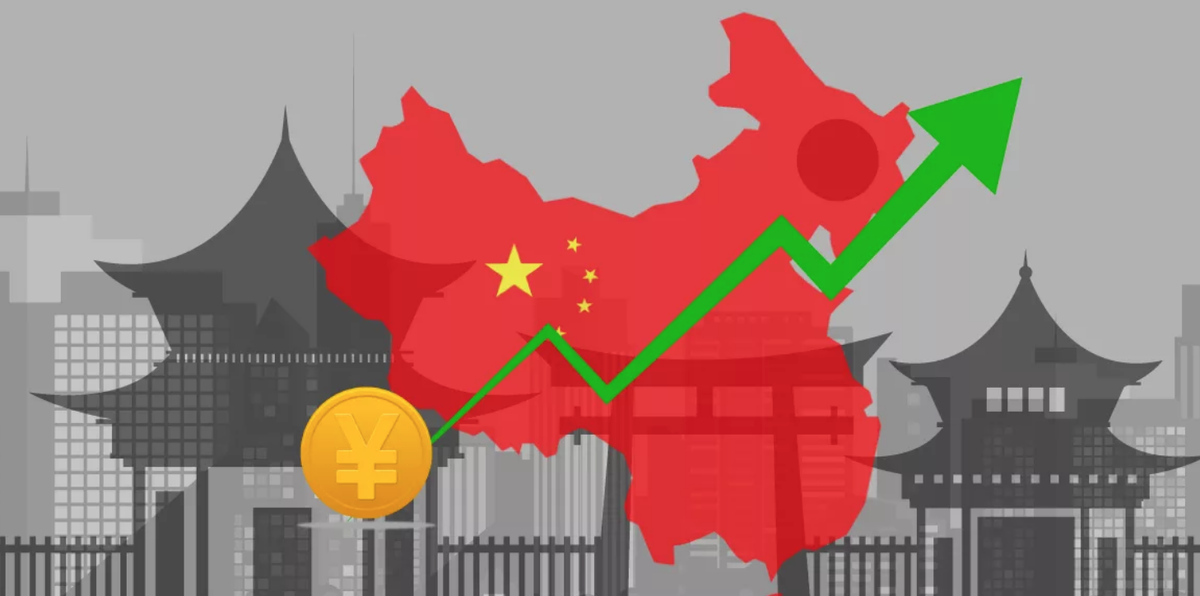
Chinese investment in Ireland has grown significantly, with the number of Chinese companies operating in the country rising from 25 in 2020 to 40 in 2024. This surge has prompted debates about whether these investments offer opportunities for economic diversification or carry reputational and political risks.

For some, Chinese investment represents a chance for Ireland to reduce its dependence on U.S. tech giants like Apple and Alphabet, creating jobs and potentially making the Irish economy more resilient. Companies such as Huawei and WuXi Biologics have made substantial financial contributions, with Huawei alone generating €800 million annually through its operations in Ireland. Additionally, TikTok’s European headquarters is in Dublin, and Chinese retailer Temu relocated its global headquarters to Ireland in 2023.

However, critics argue that these investments come with strings attached. Chinese companies, including Shein, Huawei, and WuXi, have been linked to human rights abuses, labor issues, and national security concerns. Shein, for instance, has faced allegations of child labor in its supply chain, while Huawei and WuXi have been sanctioned by the U.S. over security concerns. Critics like Irish MEP Barry Andrews have voiced concerns about Chinese companies’ practices, calling for stricter scrutiny and pointing out that human rights violations should not be overlooked.

Another concern is Ireland’s relationship with the U.S. Many of the Chinese firms setting up in Ireland, such as Huawei, are companies that have been sanctioned by the U.S., which could create diplomatic friction. Ireland, while aiming to de-risk rather than decouple from Chinese investments, must balance its close ties to both China and the U.S.

Economists are also divided on the benefits of Chinese investment. While the Irish government promotes its pro-business environment, some argue that Ireland’s economy is already heavily reliant on foreign direct investment (FDI). With unemployment at 4.3%, close to full employment, there is debate over whether Ireland needs additional jobs from Chinese firms. Dan O’Brien, chief economist at Ireland’s Institute of International and European Affairs, suggests that Ireland’s FDI dependence is too high, making the country vulnerable to global economic shifts, particularly if deglobalization trends continue.

Other experts, like Constantin Gurdgiev, emphasize that China’s investments offer Ireland a strategic cushion against potential U.S. pullbacks, especially given the pressure on American companies to re-invest domestically. Gurdgiev also points out that Ireland could act as a neutral ground where U.S. and Chinese firms can operate, giving Dublin a geopolitical edge.

Ireland’s relationship with China is further complicated by its low corporation tax, which has historically attracted foreign investment. However, international pressures have led Ireland to raise its tax rate for large companies. In light of corporate tax reforms and competition from other European nations, China’s investments could serve as a counterbalance if U.S. firms begin to relocate.

Nevertheless, Ireland risks playing a “dangerous geopolitical game” by courting Chinese companies while maintaining its diplomatic closeness with the U.S. While the Irish government insists that Chinese investment is part of a broader strategy to keep the economy competitive, the potential risks—both in terms of human rights and national security—cannot be ignored.
 

Shein and Temu Prices Set to Rise as Biden Administration Targets Chinese E-Tailers

The ultra-low prices that have made Shein and Temu popular among American consumers could increase significantly as the Biden administration moves to restrict a trade law loophole. The changes to the de minimis provision could result in price hikes of at least 20%, according to the Republican-majority House Select Committee on the Chinese Communist Party (CCP). This provision currently allows products under $800 to enter the U.S. without import duties, which has enabled companies like Shein and Temu to sell goods at bottom-barrel prices.

Retail analyst Neil Saunders from GlobalData concurs that the elimination of the de minimis exemption would drive up costs, although the exact increase is difficult to predict. While Shein and Temu would still offer low-cost items, their competitive edge in pricing might diminish, potentially impacting their market share. Saunders also suggested that these retailers may shift to higher-priced goods to counterbalance the loss of their price advantage.

On Friday, the Biden administration unveiled plans to halt the use of the de minimis exemption for products subject to U.S.-China tariffs, intensifying pressure on the Chinese-linked e-commerce platforms. This comes after more than a year of bipartisan scrutiny from lawmakers, specifically the House Select Committee on the CCP. The committee has been investigating both Shein and Temu, with accusations that they exploit the loophole to evade U.S. Customs scrutiny.

Shein and Temu have not confirmed whether they will raise prices in response to the proposed changes but maintain that their low prices are driven by their business models, not the de minimis exemption. Shein, for example, has already joined a voluntary pilot program with U.S. Customs and Border Protection to increase transparency in its shipping practices.

Impact on Competition

The rising prices could erode the significant price gap between Shein, Temu, and their competitors like H&M, Zara, Target, and Amazon. As of June, the average price of a dress on Shein was $28.51, well below H&M’s $40.97 and Zara’s $79.69, according to research firm Edited. A 20% increase would bring the average Shein dress price to $34.21, narrowing its competitive pricing advantage.

The companies’ long shipping times, coupled with smaller price differences, could push consumers toward more established retailers with faster delivery times. Although the de minimis reform aims to create a level playing field, it could ultimately lead to higher prices for consumers.

Political and Economic Scrutiny

The scrutiny on Shein and Temu extends beyond pricing. Last year, the House Select Committee began investigating their alleged use of forced labor in supply chains, as well as their reliance on the de minimis exemption. The committee claimed that the majority of their products fall under this exemption, enabling the companies to dodge import duties and Customs scrutiny, a claim that Shein disputes.

Shein’s hopes for a U.S. public offering have been dampened by these investigations. As lawmakers push for de minimis reform, Shein’s plans for a New York IPO appear to have stalled. Instead, the company has turned to London, where it has confidentially filed for a public listing.

It remains unclear how these proposed changes will impact Shein’s IPO plans or Temu’s continued growth in the U.S. market. However, with mounting scrutiny and potential price increases, both companies may face significant challenges in maintaining their current market positions.