
Yazılar

GlobalFoundries Forecasts Stronger Q2 Amid Stable Demand and Tariff Tailwinds

GlobalFoundries (GFS.O) on Tuesday projected second-quarter revenue and profit slightly above Wall Street expectations, indicating stable demand despite industry-wide pressures from tariffs, smartphone weakness, and policy uncertainty.

The U.S.-based contract chipmaker expects Q2 revenue of $1.68 billion (±$25 million) and adjusted earnings of 36 cents per share5 cents). Analysts polled by LSEG had anticipated $1.67 billion in revenue and 35 cents per share in profit. The positive forecast comes after the company posted Q1 revenue of $1.59 billion, slightly ahead of estimates, and adjusted earnings of 34 cents, beating forecasts of 28 cents.

While smartphone demand, its largest revenue stream, remains under pressure, GlobalFoundries said its automotive chip segment showed year-over-year growth in Q1. This resilience comes amid U.S. President Donald Trump’s global tariff strategy, which has already imposed levies on foreign-made autos – the company’s third-largest market.

Interestingly, CEO Thomas Caulfield noted that U.S. tariffs on foreign-made chips could benefit domestic manufacturers like GlobalFoundries by prompting customers to shift production to U.S.-based fabs. However, broader uncertainty around the CHIPS Act, which includes $52.7 billion in U.S. subsidies for domestic chip production, continues to cloud the industry’s long-term outlook.

Meanwhile, speculation of a potential merger with Taiwanese United Microelectronics Corp (UMC) resurfaced in March, although UMC denied any ongoing talks in April.

Despite the policy fog and shaky smartphone sector, GlobalFoundries appears cautiously optimistic heading into Q2 – signaling potential resilience among U.S.-based chipmakers navigating a turbulent geopolitical landscape.
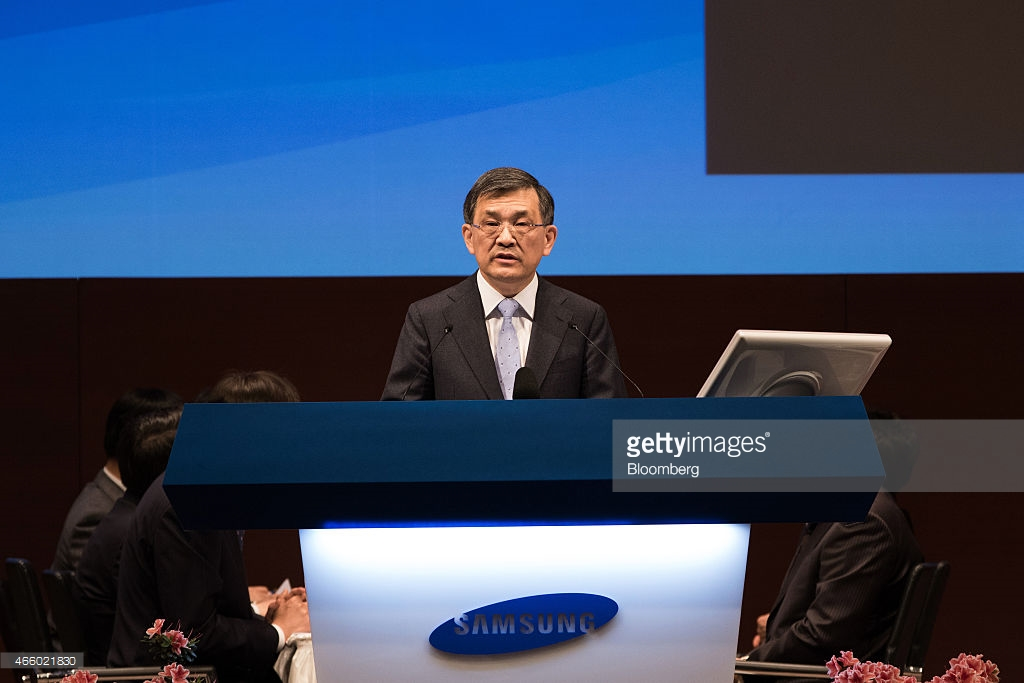
Samsung Electronics Co-CEO Han Jong-hee Dies, Jun Young-hyun Becomes Sole CEO

Samsung Electronics announced on Tuesday the sudden death of co-CEO Han Jong-hee, who passed away at the age of 63 after suffering a heart attack. Han’s death leaves newly-appointed CEO Jun Young-hyun in charge of the tech giant as it faces challenges in its underperforming chip division and navigates uncertainties in global trade.

Han, who had a distinguished 40-year career at Samsung, was known for his pivotal role in building Samsung’s influential television business. Despite his unexpected passing, Samsung stated that Jun would now serve as the sole CEO, after Han had previously shared leadership responsibilities with him, overseeing the company’s consumer and semiconductor divisions.

Jun’s appointment as co-CEO was announced just a week ago at Samsung’s annual shareholders meeting. He had been promoted in 2024 to lead the semiconductor division, which has been lagging behind competitors like SK Hynix and TSMC, particularly in the growing artificial intelligence (AI) chip market.

Samsung has faced difficult times in recent quarters, with weak earnings, a declining share price, and struggles in its semiconductor and smartphone divisions. The company has fallen behind in advanced memory chips and AI-related contract chip manufacturing, sectors in which rivals have enjoyed strong demand, particularly due to the AI boom. Han had acknowledged these challenges during the shareholder meeting, citing 2025 as a potentially tough year and emphasizing Samsung’s efforts to flexibly respond to trade challenges, including U.S. tariffs.

Han’s passing could have a long-term impact on Samsung’s business strategy, particularly in marketing and other areas like home appliances. The company is also exploring new growth opportunities in automotive electronics, a sector Samsung aims to expand into for future revenue streams.

GlobalFoundries Projects Weak First Quarter Amid Tariff Concerns and Smartphone Market Weakness

GlobalFoundries, the contract chipmaker based in Malta, New York, issued a bleak forecast for its first-quarter revenue and profit, citing the potential impact of U.S. President Donald Trump’s tariffs on automakers and a struggling smartphone market in 2025. Despite the outlook, the company’s shares reversed earlier losses, rising nearly 4% in morning trading.

For the first quarter, GlobalFoundries expects revenue to range between $1.55 billion and $1.60 billion, below the Wall Street estimate of $1.66 billion, according to data compiled by LSEG. The company also projects adjusted earnings per share to fall between 24 cents and 34 cents, with the midpoint of this range under analysts’ expectations of 32 cents per share.

The automotive sector, which is GlobalFoundries’ third-largest revenue contributor, is especially vulnerable to the effects of tariffs on steel and aluminum imports in the United States. In 2023, the company signed a long-term agreement with General Motors to produce chips exclusively for the carmaker at its Malta facility.

Additionally, GlobalFoundries is facing challenges in its largest segment, smartphones. The global smartphone market is expected to face a turbulent 2025, according to research firm Canalys, further adding pressure on the company’s performance.

For the fourth quarter, GlobalFoundries posted revenue of $1.83 billion, meeting analysts’ estimates. The company also reported a profit of 46 cents per share, excluding items, which was slightly above the expected 44 cents.

Earlier this month, the company announced the appointment of Tim Breen as its new CEO, succeeding Thomas Caulfield.