
Yazılar

Moon and Sun Take Center Stage in 2026’s Lineup of Cosmic Events

The moon and the sun will headline a busy calendar of celestial events in 2026, from major eclipses to lunar missions and eye-catching supermoons.

The year begins with renewed focus on the moon as NASA prepares to send astronauts past it for the first time in more than 50 years under its Artemis program. Alongside human missions, a wave of robotic landers is planned, including Blue Origin’s oversized Blue Moon prototype, as well as landers from U.S. and Chinese companies targeting scientifically rich regions of the lunar surface.

Solar activity will also draw attention, highlighted by two major eclipses. A rare “ring-of-fire” annular solar eclipse will occur over Antarctica in February, followed by a total solar eclipse on Aug. 12 that will sweep across parts of the Arctic, Greenland, Iceland and Spain. Several lunar eclipses are also scheduled throughout the year.

Skywatchers can expect planetary spectacles as well. Six planets will line up in late February, with most visible to the naked eye, while Mars joins a similar parade in August. Jupiter, Saturn, Venus and Mercury will be the easiest to spot shortly after sunset, weather permitting.

Three supermoons will brighten the night skies in 2026, including a particularly close and bright one on Christmas Eve. These full moons appear larger than usual as the moon reaches the closest point in its orbit around Earth.

Meanwhile, scientists expect continued bursts of solar activity, increasing the chances of vivid auroras in lower latitudes, though activity should gradually ease as the sun moves into the quieter phase of its 11-year cycle. For astronomers and casual stargazers alike, 2026 promises no shortage of cosmic drama.

ESA Converts Solar Flares into Sound Using Solar Orbiter, Unlocking New Insights

In an exciting new development, the European Space Agency (ESA) has turned the Sun’s activity into audible sound by using data collected by the Solar Orbiter, a joint mission with NASA. This pioneering sonification process has allowed scientists to convert solar flares, a key feature of solar activity, into sound, offering a novel way to experience these powerful cosmic events. The data collected over the past three years helps illustrate the Sun’s behavior as it moves toward the peak of its 11-year solar cycle, providing both researchers and the general public with a new perspective on the Sun’s dynamics.

The sonification process involved combining images from two of the Solar Orbiter’s instruments—the Spectrometer/Telescope for Imaging X-rays (STIX) and the Extreme Ultraviolet Imager (EUI). These instruments captured detailed images of solar flares, which were then translated into sound. Blue circles, representing the location and size of X-rays emitted by solar flares, were mapped onto the Sun’s image, while the Sun’s outer atmosphere was displayed in yellow. Each of the blue circles was paired with a specific tone that increased in frequency as solar activity intensified, offering a dynamic and evolving auditory representation of solar phenomena.

This innovative approach not only provides an artistic interpretation of solar events but also serves as a scientific tool to track the Sun’s behavior. By listening to the solar flares, researchers can analyze the frequencies and patterns, gaining deeper insights into the Sun’s activity. This auditory model brings attention to how solar events can be quantified and interpreted beyond traditional visual methods, making complex data more accessible and engaging.

The timing of this project aligns with the current solar cycle, as solar flare activity is increasing. As the Sun nears its solar maximum, the most active phase of its cycle, the frequency of solar flares is expected to rise, offering even more opportunities to study these phenomena. According to NASA and the U.S. National Oceanic and Atmospheric Administration (NOAA), this heightened solar activity makes it an ideal period for observing not just solar flares but other spectacular space phenomena, such as the northern lights, further emphasizing the relevance and timeliness of this sonification effort.

Rise in Solar Activity Leads to Reduced Lifespan of Binar CubeSats

Surge in Solar Activity Cuts Short Lifespan of Binar CubeSats
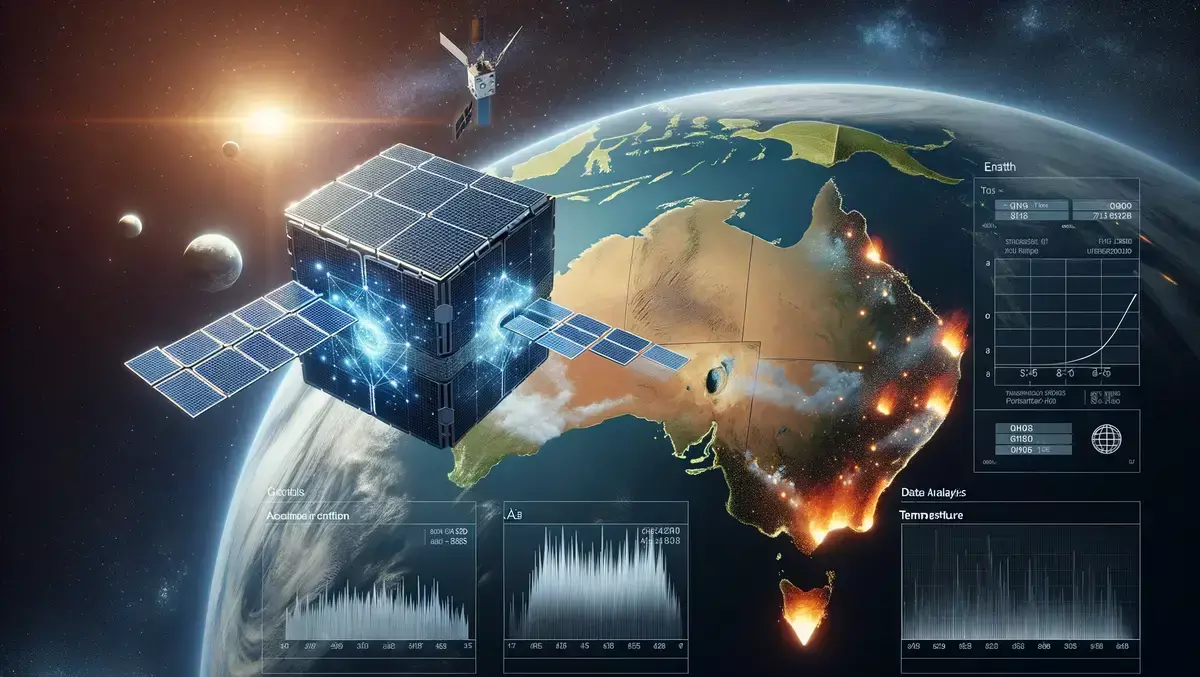
Three small satellites from Curtin University’s Binar Space Program re-entered Earth’s atmosphere far earlier than anticipated, prematurely ending their research missions. The CubeSats—Binar-2, Binar-3, and Binar-4—were designed with an initial lifespan of six months but only lasted two months in low Earth orbit (LEO). This early re-entry is attributed to a surge in solar activity that intensified conditions in space and affected satellite operations in ways that were not fully predicted.

Unprecedented Solar Activity Surpasses Predictions
Solar activity recently spiked, surpassing predictions by a significant margin, according to a Live Science report. The intensity of solar flares, sunspots, and solar wind has been about one and a half times higher than expected for Solar Cycle 25. This increase in solar activity is linked to the Sun’s 11-year magnetic field reversal, which influences space weather patterns. Despite advances in understanding solar cycles, forecasting solar weather remains difficult, making it challenging for satellite operators to predict the effects of these surges on space-based technology.

Impact of Solar Weather on Space Operations
The heightened solar activity has had a noticeable impact on space operations. On Earth, it has resulted in more vivid auroras visible closer to the equator, and the increased solar wind has contributed to higher levels of ionizing radiation, posing risks for astronauts and high-altitude flights. For satellites in low Earth orbit, particularly those like the Binar CubeSats without thrusters or altitude control systems, the solar wind creates additional drag, hastening orbital decay. These factors significantly shorten the operational lifespan of satellites in LEO during periods of high solar activity.

Challenges in Satellite Longevity and Space Weather Monitoring
The premature demise of the Binar CubeSats underscores the challenges posed by unpredictable space weather, particularly during solar cycle peaks. While satellites in LEO are more vulnerable to such conditions, the lack of reliable forecasting tools makes it difficult to fully prepare for or mitigate these effects. As solar activity continues to intensify, there is a growing need for advanced space weather forecasting and better shielding technologies to protect satellites, ensuring longer mission durations and more successful research outcomes.