Yazılar

Scientists Confirm Date of the “Solar Eclipse of the Century,” Visible From Spain in 2027

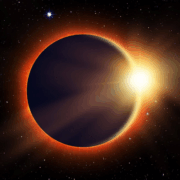
Astronomers have confirmed that the longest solar eclipse of the 21st century — often dubbed the “eclipse of the century” — will occur on August 2, 2027, and parts of southern Spain will be among the places able to witness it.

According to calculations cited by NASA, the total solar eclipse will last up to 6 minutes and 23 seconds at its maximum, making it the longest total eclipse of this century. Events of this duration are extremely rare and will not occur again until 2114.

The length of totality will vary by location. In Spain, the eclipse will be visible primarily in southern Andalusia, including areas such as Málaga and Cádiz, though totality there will last for a shorter period than in regions closer to the center of the eclipse path.

The eclipse will begin over the Atlantic Ocean near the Strait of Gibraltar and move across North Africa, passing through Morocco, Algeria, Tunisia and Libya before reaching Egypt, where the city of Luxor is expected to offer optimal viewing conditions with more than six minutes of total darkness.

Astronomers say the event will provide a rare opportunity for both scientific observation and public viewing, as long-duration total eclipses allow extended study of the Sun’s corona and other solar phenomena.

NASA’s Perseverance Rover Captures ‘Googly Eye’ Eclipse on Mars

NASA’s Perseverance rover, stationed in Mars’ Jezero Crater, recently captured a stunning celestial event as the Martian moon Phobos passed across the Sun. This moment, observed on September 30, provided a rare glimpse into the Martian sky and featured an intriguing “googly eye” effect, which was recorded by the rover’s Mastcam-Z camera. The eclipse offered a unique visual of Phobos’ orbit and helped scientists gain valuable data about the moon’s trajectory as it continues to slowly move closer to Mars. The footage released by NASA showcases the intricate dance of Mars’ moons and the dynamic nature of the Martian system.

The event unfolded as Perseverance observed Phobos casting its shadow across the Sun, creating a brief and distinctive visual effect. This “googly eye” effect occurred when Phobos partially blocked the sunlight, leaving a silhouette that was especially noticeable against the Martian backdrop. The eclipse, occurring on the 1,285th Martian day (sol) of the Perseverance mission, highlighted the moon’s rapid orbit around Mars. Phobos takes just 7.6 hours to complete one orbit, a much faster motion compared to Earth’s moon, which results in quick transits across the sky that last only about 30 seconds. This provides a fleeting but beautiful spectacle that is rarely visible from Earth.

Phobos, the larger of Mars’ two moons, follows an increasingly tight orbit around the Red Planet. Measuring around 27 kilometers at its widest point, Phobos appears much smaller in the Martian sky compared to Earth’s moon, and its proximity to Mars means that it crosses the sky more frequently. However, this close orbit comes at a cost: Phobos is gradually moving closer to Mars over time, and scientists predict that within the next 50 million years, it will either crash into the Martian surface or break apart, forming a ring around the planet. The periodic eclipses caused by Phobos’ orbit, including those recorded by Perseverance and previous rovers like Curiosity and Opportunity, have provided crucial insights into the moon’s orbit and its eventual fate.

This recent observation of Phobos’ eclipse adds to a growing body of knowledge about Mars and its moons. Each eclipse captured by rovers helps scientists refine their understanding of Phobos’ path, and in turn, offers important clues about the evolution of Mars’ natural satellites. As Perseverance continues its mission on Mars, more such events are expected, providing scientists with deeper insights into the Martian system and the behavior of its moons. These observations not only enrich our understanding of Mars’ present but also offer a glimpse into the future of the Red Planet and its celestial companions

ESA’s Proba-3 Mission, Set to Study Solar Eclipses, Heads to Launch Site in India

ESA’s Proba-3 mission, a groundbreaking project designed to simulate solar eclipses in space for studying the Sun’s corona, has officially left Europe and is now en route to its launch site in India. The dual-spacecraft mission departed from Redwire Space’s facility in Kruibeke, Belgium, and is on its way to the Satish Dhawan Space Centre near Chennai, where it will undergo final preparations for launch. The primary goal of Proba-3 is to create an artificial eclipse, allowing scientists to study the Sun’s outer atmosphere—an area that is usually only visible during brief moments of a natural eclipse on Earth.

The Proba-3 mission is a pioneering effort in space science and technology, involving two spacecraft: the Occulter and the Coronagraph. These two satellites will fly in formation with incredible precision, using one to cast a shadow on the other, effectively simulating the eclipse needed for the observation of the Sun’s corona. ESA Mission Manager Damien Galano emphasized the complexity of the mission, noting that achieving such precise formation flying, where the satellites must maintain an accuracy within a millimeter, required years of development. The mission is set to provide unprecedented insights into solar phenomena, giving scientists a clearer view of the Sun’s magnetic field and its impact on space weather.

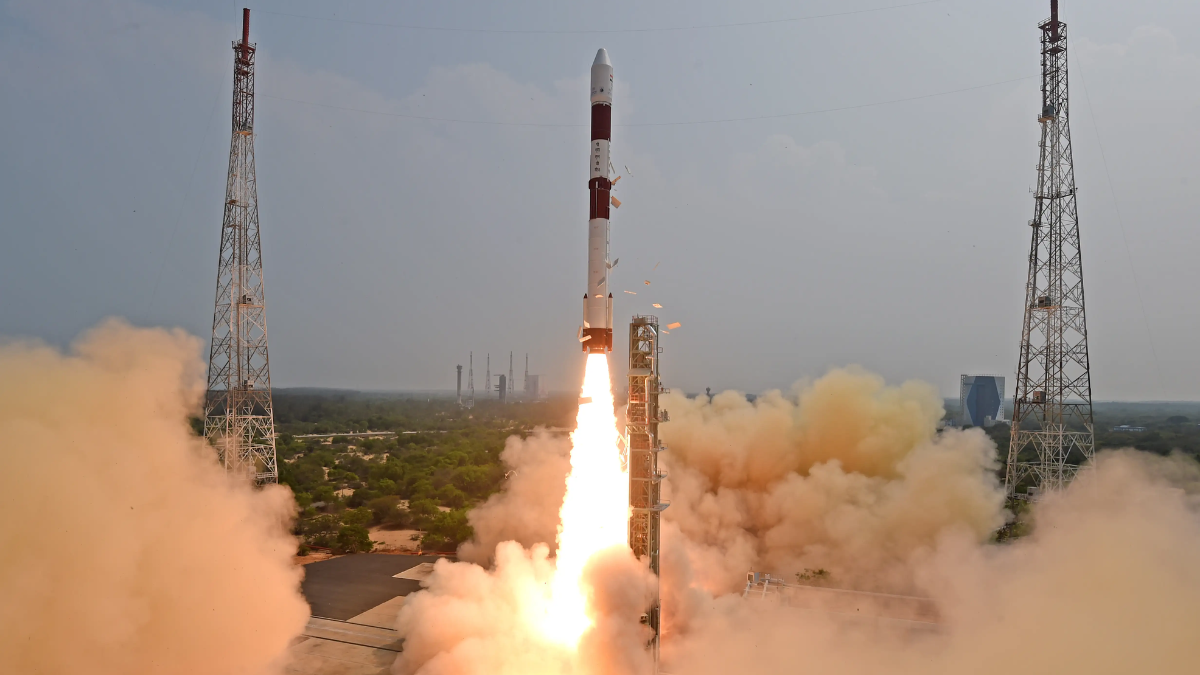
Scheduled for launch on December 4, Proba-3 will be deployed aboard India’s PSLV-XL rocket. Once in orbit, the spacecraft will enter a highly elliptical trajectory, ranging from 600 kilometers to 60,000 kilometers above Earth. This specific orbit is crucial for enabling the formation flying required for the eclipse simulation, as it places the spacecraft at altitudes where the gravitational pull is weaker, reducing the amount of fuel needed for the precise movements. Despite some initial challenges, such as delays in air freight logistics that required the spacecraft’s batteries to be shipped separately, the mission is now on track for its December launch.

This mission marks a significant milestone in solar observation, as it provides a unique opportunity to study the Sun’s corona in greater detail than ever before. By mimicking the conditions of a solar eclipse, Proba-3 will give scientists access to crucial data about the Sun’s behavior and its effects on space weather, which can have far-reaching consequences for satellite operations and Earth’s communication systems. As the mission progresses, it is expected to contribute valuable knowledge to the field of heliophysics and deepen our understanding of the Sun’s dynamic nature.