Yazılar

Namibian Observatory Detects Highest Energy Cosmic Electrons, Enhancing Understanding of Cosmic Rays

Namibian Observatory Records Highest-Energy Cosmic Electrons, Unlocking Cosmic Ray Mysteries
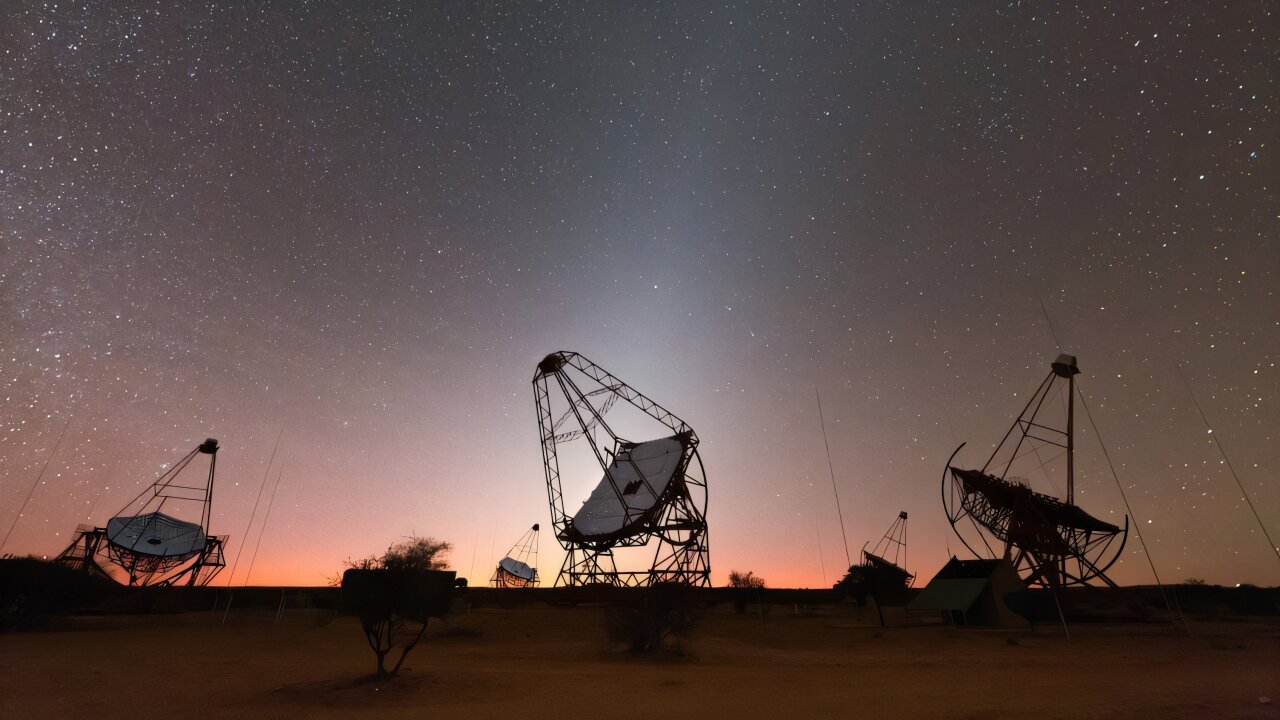
After more than a decade of research, the H.E.S.S. (High-Energy Stereoscopic System) Observatory in Namibia has made a groundbreaking discovery by detecting the most energetic cosmic ray electrons ever observed. These high-energy particles, which include both electrons and positrons, are believed to originate from some of the universe’s most extreme and powerful phenomena, such as supernova explosions, neutron stars, and black holes. The discovery provides new insights into the sources of these particles, which are suspected to lie within a few hundred light-years of the solar system.

Understanding Extreme Cosmic Processes
The detection of these particles marks a significant advancement in our understanding of the universe’s most energetic processes. Dr. Mathieu de Naurois, Deputy Director of the H.E.S.S. collaboration and researcher at the French National Centre for Scientific Research, emphasized the importance of these findings in revealing the nature of the universe’s biggest particle accelerators. These cosmic accelerators are often linked to the most violent and high-energy phenomena in space, and by studying them, scientists can better understand the mechanics behind these extreme events.

Challenges in Detecting High-Energy Electrons
Detecting these high-energy cosmic rays presents unique challenges due to their rarity and the difficulty in distinguishing them from other cosmic particles. The H.E.S.S. Observatory overcame these obstacles by employing an innovative method using an array of large telescopes designed to detect Cherenkov radiation. This phenomenon occurs when high-energy particles collide with Earth’s atmosphere, producing a faint flash of light. The observatory’s telescopes are capable of capturing this light, allowing scientists to identify and study these particles with energy levels far exceeding those generated by Earth-based accelerators.

Advancing the Study of Cosmic Rays
The successful detection of cosmic electrons with energies surpassing several teraelectronvolts (TeV) marks a new frontier in astrophysical research. This breakthrough provides a clearer picture of the dynamic and violent environments where these particles are produced, offering clues about the physical conditions near black holes and other extreme objects. As the H.E.S.S. Observatory continues its research, it is poised to further unravel the mysteries of cosmic rays and the powerful forces shaping the universe. This discovery not only enhances our understanding of high-energy particles but also paves the way for future research into the most energetic and distant phenomena in space.
NASA’s Europa Clipper Progresses Toward Jupiter’s Moon with Instruments Fully Deployed

NASA’s Europa Clipper Progresses Toward Studying Jupiter’s Icy Moon
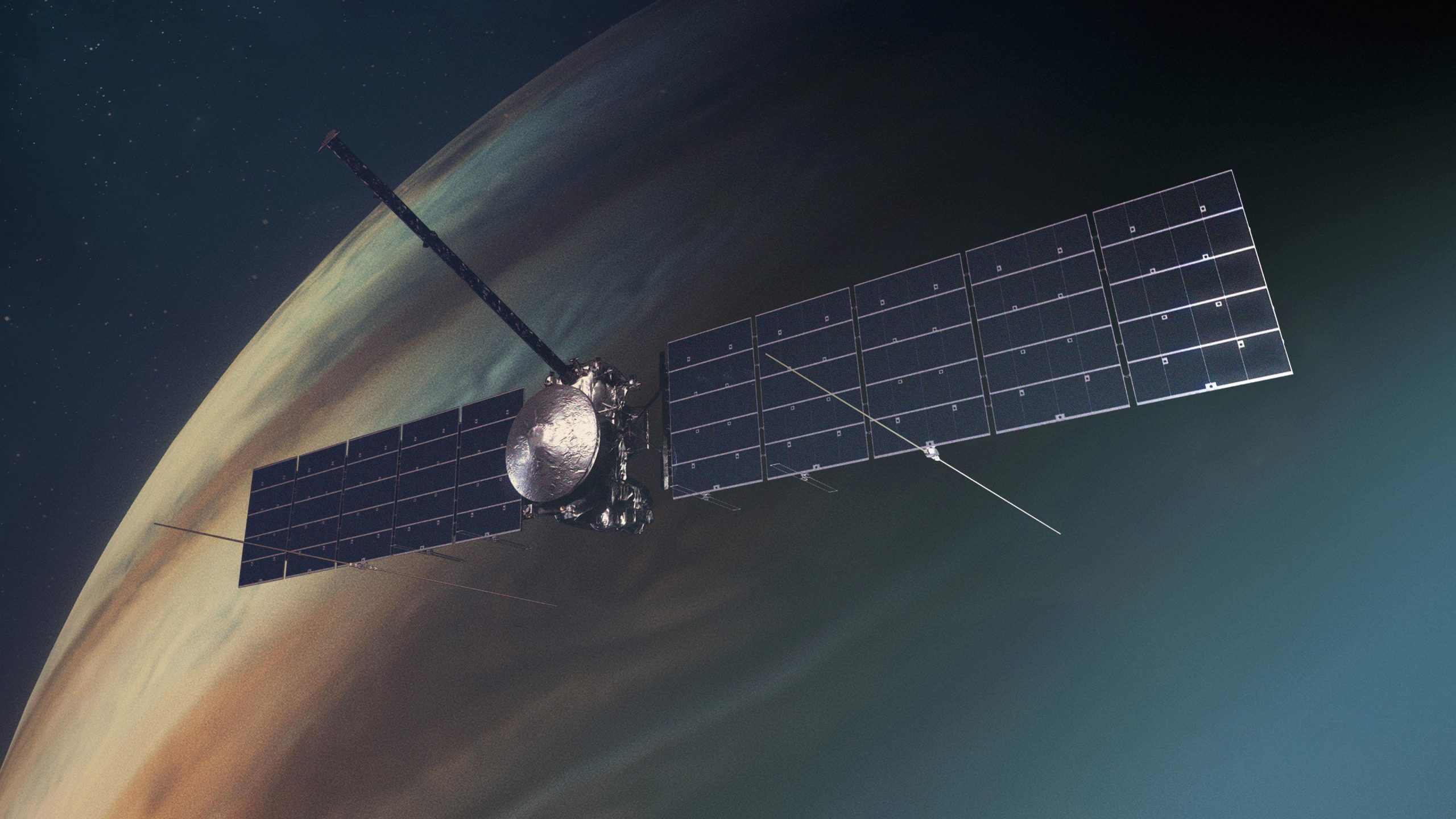
NASA’s Europa Clipper spacecraft, launched on October 14, 2024, has already covered over 13 million miles from Earth, speeding through space at 35 kilometers per second. This ambitious mission, aimed at studying Jupiter’s icy moon Europa, is set to reach the Jupiter system in 2030. Once there, the spacecraft will conduct 49 close flybys of Europa, gathering data to explore the moon’s subsurface ocean and evaluate its potential to harbor life. The mission is a pivotal step in unraveling the mysteries of one of the solar system’s most intriguing moons.

Successful Deployment of Instruments
Following its launch aboard a SpaceX Falcon Heavy rocket, the Europa Clipper successfully deployed its massive solar arrays, which span the length of a basketball court. This deployment ensures the spacecraft has sufficient power to carry out its operations in the dim environment of the outer solar system. NASA also confirmed the extension of the magnetometer boom, an 8.5-meter-long instrument designed to measure Europa’s magnetic field. This tool is critical for analyzing the depth and salinity of the subsurface ocean believed to exist beneath Europa’s icy crust.

Advanced Tools to Study Europa’s Ice Shell
The spacecraft has also deployed a suite of radar antennas, essential for probing Europa’s thick ice layer. These instruments will provide high-resolution data about the moon’s surface and help identify potential pathways for water exchange between the ocean and the surface. Jordan Evans, project manager at NASA’s Jet Propulsion Laboratory, highlighted that these successful deployments mark a significant milestone, demonstrating the spacecraft’s readiness for the complex tasks it will undertake upon arrival.

Anticipation Builds for 2030 Arrival
As the spacecraft continues its journey, scientists are eagerly preparing for the groundbreaking data it is expected to deliver. Europa Clipper’s findings could revolutionize our understanding of extraterrestrial oceans and the conditions required for life. By exploring Europa’s magnetic field, ice composition, and potential water plumes, the mission aims to provide the clearest picture yet of this enigmatic moon’s habitability. The successful early operations of the spacecraft bolster confidence in its capability to achieve these ambitious goals.

NASA’s Juno Spacecraft Reveals Breathtaking Images of Jupiter’s Storms and Moon Amalthea

NASA’s Juno spacecraft has once again provided stunning insights into the mysteries of Jupiter, offering up close and detailed images of the planet’s swirling storms and its intriguing moons. On October 23, 2024, Juno completed its 66th flyby of Jupiter, this time focusing on the planet’s polar regions. Among the highlights of this close encounter was a remarkable view of Jupiter’s fifth-largest moon, Amalthea. The spacecraft’s JunoCam captured these raw images, which were later enhanced by citizen scientists, revealing vibrant details of Jupiter’s complex atmosphere and its accompanying moon in unprecedented clarity.

One of the most striking images from Juno’s recent pass showcases a region on Jupiter known as the Folded Filamentary Region (FFR), located near the planet’s subpolar areas. These regions are characterized by their intricate cloud formations, including white, billowing clouds and delicate, thread-like filaments that swirl through Jupiter’s atmosphere. Citizen scientist Jackie Branc was responsible for processing this particular image, enhancing the colours and contrast to showcase the planet’s dynamic weather systems in breathtaking detail. The result is a vivid and detailed depiction of Jupiter’s stormy atmosphere, one that has never before been captured with such clarity.

Juno’s mission has not only provided fascinating images of Jupiter’s storms but has also opened up a collaborative space for both amateur and professional scientists. The spacecraft’s raw data, made publicly available, allows enthusiasts and researchers to adjust features like contrast and colour balance, providing new perspectives on the planet’s powerful weather patterns. These images have revealed everything from Jupiter’s characteristic atmospheric bands to its turbulent clouds and swirling vortices, offering a window into the planet’s ever-changing climate.

This ongoing collaboration between NASA and the global scientific community continues to yield exciting discoveries about Jupiter, a gas giant with a weather system that remains one of the most complex and active in our solar system. With every flyby, Juno brings back new details that enhance our understanding of the planet and its moons, helping to piece together the puzzle of how Jupiter’s atmosphere functions. These stunning images not only enrich our scientific knowledge but also fuel our fascination with the mysteries of space.