Yazılar

Mars May Harbor Hidden Methane Deposits Beneath Its Crust, Potentially Supporting Alien Life

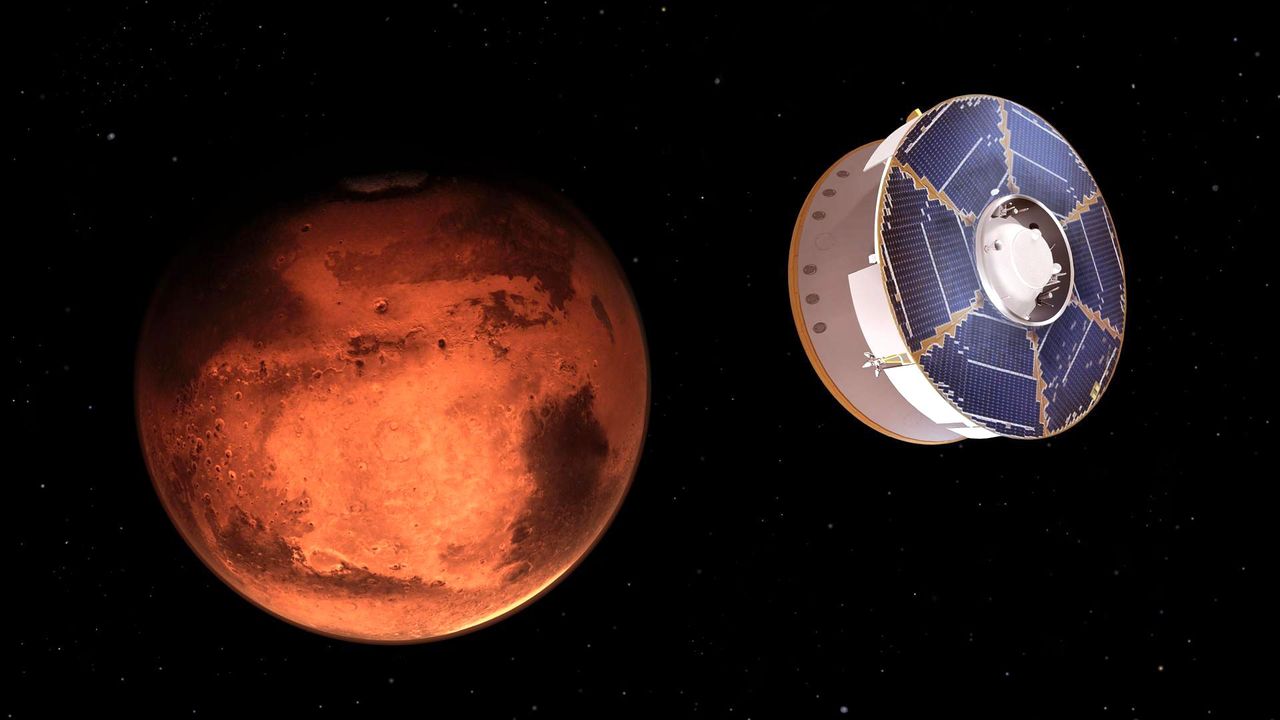
Scientists have identified potential habitats on Mars where life may exist, particularly in deep underground regions where methane has been detected. Over the years, seasonal variations in methane levels observed by rovers on the Martian surface have raised significant interest. These findings have led researchers to explore the possibility that Mars could host microbial life, despite its harsh environmental conditions. With subzero temperatures, a thin atmosphere, and high levels of cosmic radiation, the surface of Mars is far from hospitable. However, underground areas may offer a more stable and protective environment for certain forms of life.

A recent study published in the journal Astrobiology examined Earth environments that resemble conditions on Mars to better understand the potential for life on the Red Planet. Researchers focused on places where methanogens, microbes that produce methane as a byproduct, are known to thrive. These microorganisms are capable of surviving in extreme environments, much like those believed to exist on Mars.

One such Earth analog is microscopic fractures found deep within bedrock, where methanogens can survive by metabolizing minerals. Similarly, subglacial freshwater lakes and highly saline deep-sea basins have been identified as habitats where methanogens flourish. These environments are characterized by their isolation from the surface, extreme pressure, and the presence of minerals that could support microbial life, similar to what may be found beneath Mars’ surface.

The existence of methane-producing microbes in these Earth environments suggests that life forms capable of surviving in Mars’ subsurface could also be possible. If methane is indeed being produced underground on Mars, it could indicate active microbial processes, offering a compelling reason to explore these regions further. The potential for life beneath Mars’ crust continues to intrigue scientists, and future missions to the planet may focus on these hidden, methane-rich areas to unlock the mysteries of Martian life.
Recent Space Research Sheds Light on Chiron’s Unique Surface and Coma

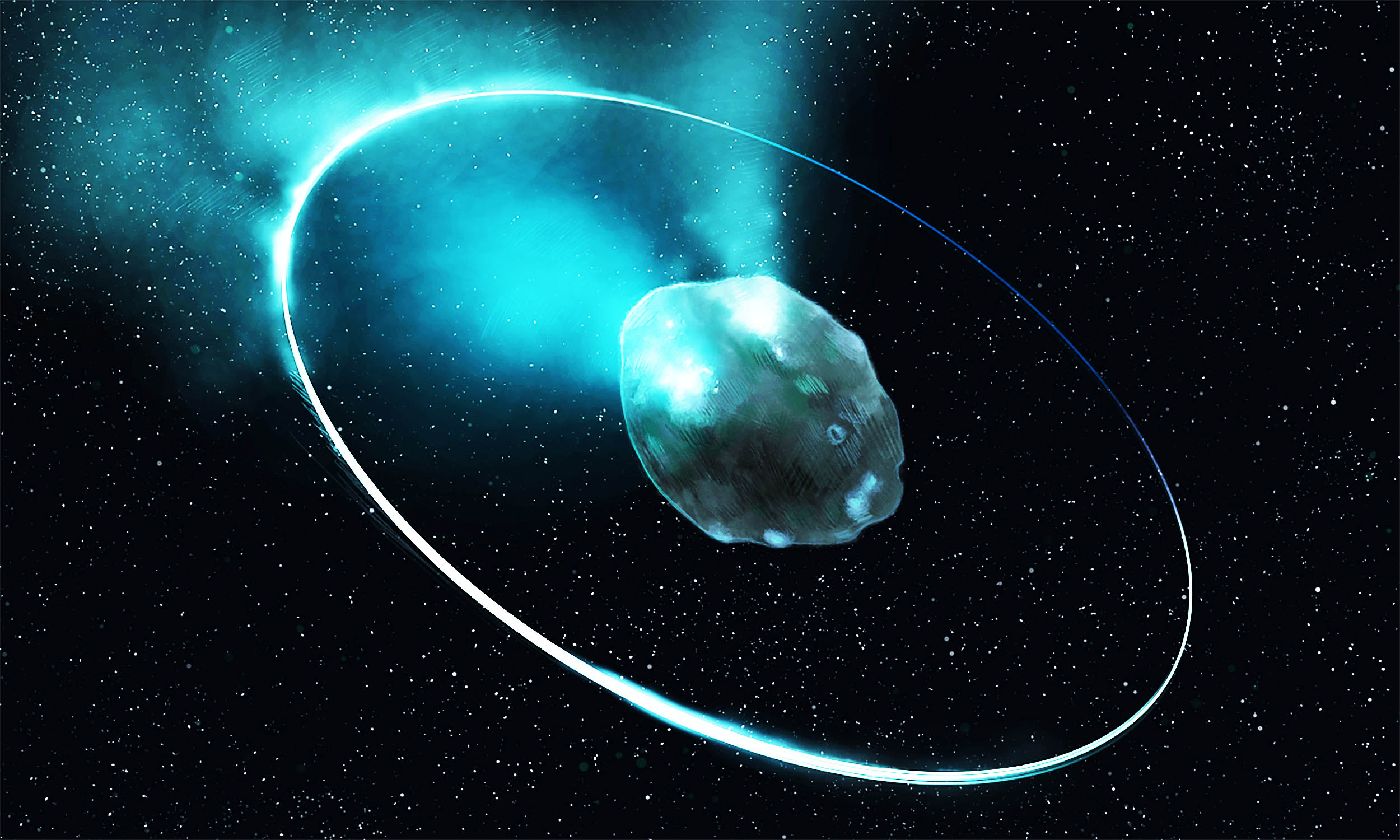
Researchers have recently turned their focus on (2060) Chiron, a celestial object that orbits between Jupiter and Neptune, unveiling new details about its unusual surface and the composition of its coma. A study published in Astronomy & Astrophysics classifies Chiron as a centaur, a category of celestial body that shares characteristics of both asteroids and comets. The James Webb Space Telescope provided critical data on Chiron’s surface, detecting carbon dioxide and carbon monoxide ice, as well as methane and carbon dioxide gases in its coma. This discovery offers valuable insights into the early history and evolution of our solar system, according to the research team from the University of Central Florida (UCF).

Chiron’s surface and coma are unique compared to other celestial bodies, largely due to the presence of volatile ices and gases. Dr. Noemí Pinilla-Alonso, an Associate Scientist at UCF’s Florida Space Institute and the lead researcher, emphasized the importance of these features. She explained that the presence of volatile materials sets Chiron apart from other centaurs, which often undergo active transformations due to solar heating. These changes allow scientists to study how Chiron’s surface composition evolves and how these transformations provide insights into the object’s behavior. The coma, a gaseous envelope surrounding the surface, is particularly important as it gives researchers a direct view of gases originating from beneath the surface—something that is not as easily observed in typical asteroids or trans-Neptunian objects.

The study of Chiron’s surface and coma not only deepens our understanding of this unique centaur but also has broader implications for understanding the dynamics of the solar system. Dr. Charles Schambeau, an Assistant Scientist at UCF with expertise in centaurs and comets, pointed out that Chiron’s unique activity and its potential for debris rings make it a fascinating case. By investigating the interaction between Chiron’s surface ices and its coma gases, researchers hope to uncover thermophysical processes that could explain the behavior of other similar celestial bodies in our solar system.

Chiron’s combination of asteroid-like and comet-like features makes it a crucial subject of study for those looking to understand the fundamental processes that govern the evolution of the solar system. This research highlights how centaurs, with their complex mixtures of ice and gas, can provide valuable clues about the conditions and transformations that shaped early planetary bodies. As more data is collected from missions and observations, scientists expect to further unravel the mysteries surrounding these enigmatic objects, offering a window into the past and future of our cosmic neighborhood.

Did Our Sun Once Have a Twin? Exploring the Mystery of a Lost Stellar Sibling

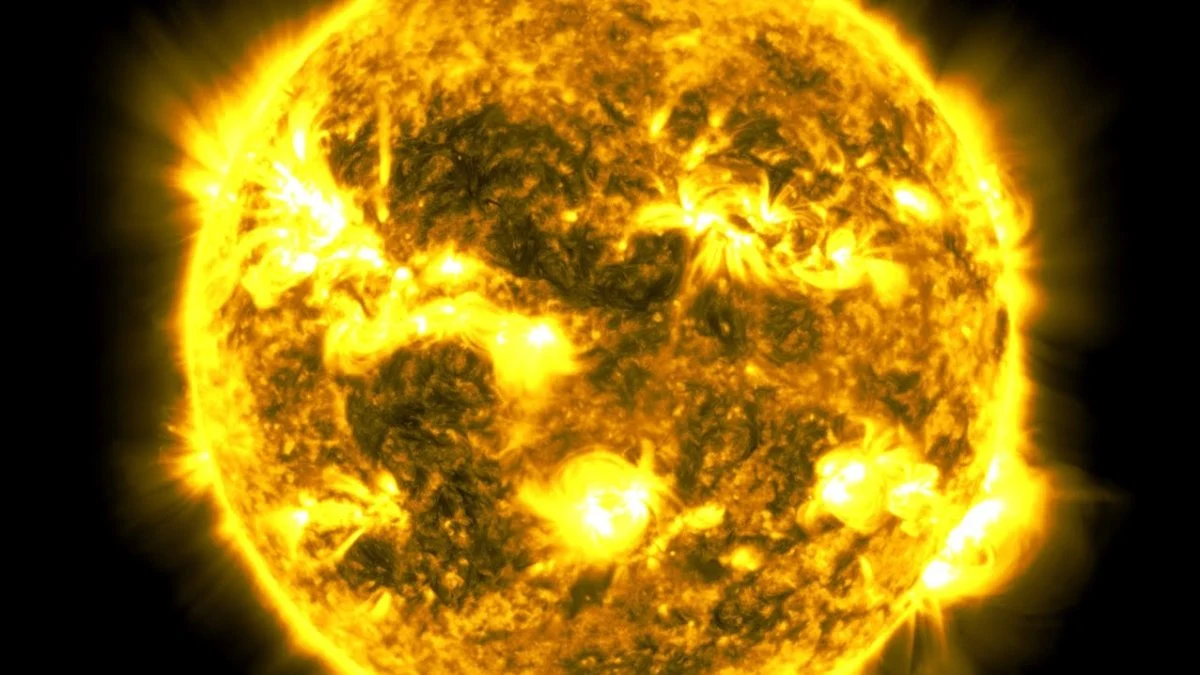
Our Sun may have once had a companion, a twin star, orbiting the galaxy together in a binary system. While the Sun is currently an isolated star, recent findings suggest that it might have formed in a stellar pair. The big question remains: where did this potential companion go?

The Sun’s position in the Milky Way is solitary; it orbits in one of the galaxy’s spiral arms, and its nearest neighbor, Proxima Centauri, is a distant 4.2 light-years away. Yet, binary stars—pairs of stars that orbit each other—are quite common in the galaxy. In fact, some studies suggest that most stars could have originally formed in pairs. This raises an intriguing question: could our Sun have once had a stellar sibling?

For many years, astronomers have explored the possibility that our Sun formed as part of a binary system, but it lost its companion over time. According to Gongjie Li, an astronomer at the Georgia Institute of Technology, this hypothesis is “very interesting” and warrants further investigation. Fortunately, the absence of a companion star today is beneficial for life on Earth, as a companion’s gravitational influence could have disrupted the orbit of our planets, potentially creating extreme temperature swings that would have been inhospitable for life.

While theories like the existence of a faint “Nemesis” star circling the Solar System have faded due to lack of evidence, early star formation processes suggest that the Sun could have had a twin. Stars form from vast clouds of gas and dust that collapse under gravity, and it is believed that stars often form in pairs or multi-star systems. In 2017, astrophysicist Sarah Sadavoy found that star formation might preferentially produce protostars in pairs, known as a fragmentation process. These binary systems could remain bound together, or, over time, the stars could drift apart.

If the Sun did have a companion, some researchers propose that it may have left behind clues in the outer regions of the Solar System. For example, Amir Siraj, an astrophysicist at Harvard University, suggests that the Oort Cloud—an icy shell surrounding the Solar System beyond Pluto—may hold evidence of the Sun’s former twin. He argues that a companion star could explain the large number of objects in the Oort Cloud and even the possible existence of a distant, undiscovered planet, often referred to as “Planet Nine.”

On the other hand, Konstantin Batygin of the California Institute of Technology believes that the Oort Cloud’s structure could be explained without invoking a binary companion. He suggests that the Sun may have formed in a dense star cluster, and the gravitational influence of Jupiter and Saturn could have caused the ejection of objects into the Oort Cloud.

Another potential signature of the Sun’s early binary relationship is its slight tilt of about seven degrees relative to the plane of the Solar System. Batygin believes this tilt could be due to the gravitational pull of a now-absent companion star. Although the search for our Sun’s missing twin is challenging, some believe that the Vera Rubin Observatory, set to begin operations in 2024, could help map the Oort Cloud and reveal whether a binary companion once existed.

Interestingly, the Sun’s formation in a star cluster might also provide clues. In 2018, scientists discovered a “twin” star located less than 200 light-years from the Sun. However, because stars in the same cluster often have similar compositions, it is difficult to pinpoint whether this star could have been our Sun’s companion.

Despite the uncertainty, the idea that the Sun once had a twin opens up fascinating possibilities for understanding exoplanetary systems. In fact, many exoplanets are found orbiting binary stars, and such systems can feature planets that orbit one of the two stars or both. While a binary companion could have caused some disruption in planetary orbits, it might not have prevented the formation of life on Earth. The mystery of the Sun’s potential twin may remain unresolved, but as scientists continue to study the outer reaches of the Solar System, they might uncover more signs of its stellar sibling.