Yazılar

Study Identifies Three Young Asteroid Families as Key Origins of Earth’s Meteorites

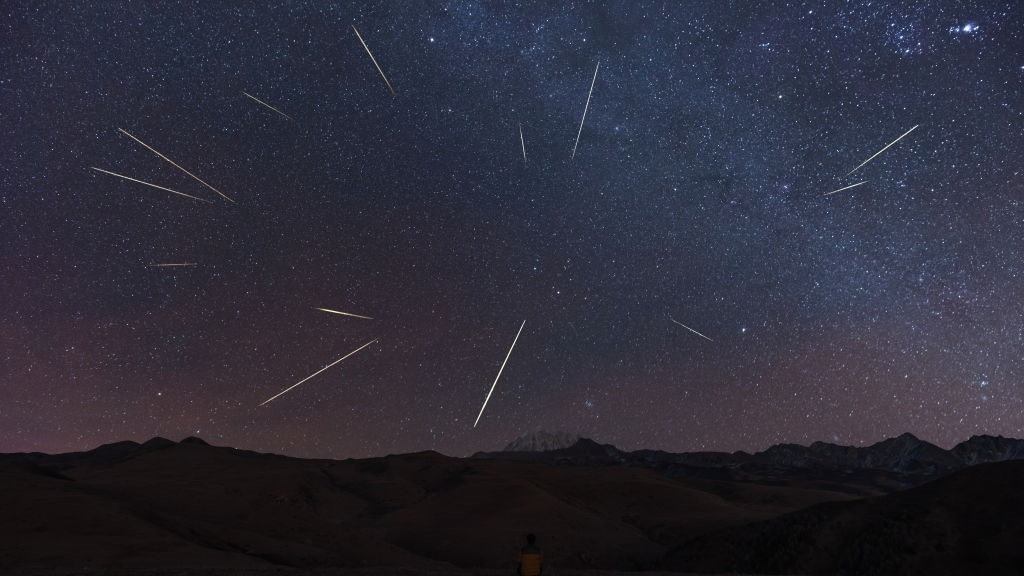
Earth experiences a constant influx of meteorites, most of which disintegrate in our atmosphere before making contact with the surface. However, some do survive, and significant impacts can have dramatic effects on our planet. Through extensive research, scientists have confirmed that the vast majority of these meteorites originate from the asteroid belt, located between Mars and Jupiter. This belt is filled with rocky remnants from the early solar system, and new research is shedding light on which specific asteroid sources contribute to Earth’s meteorite collection.

Identification of Asteroid Families

An international team of researchers has pinpointed three main asteroid families in the belt that are responsible for a large proportion of meteorites landing on Earth. According to their study, the Karin, Koronis, and Massalia families are the primary contributors, accounting for about 70 percent of all meteorites collected on our planet. These families formed as a result of collisions millions of years ago: the Karin family roughly 5.8 million years ago, the Koronis family around 7.5 million years ago, and the Massalia family approximately 40 million years ago. Of these, the Massalia family stands out, being linked to 37 percent of all known meteorites.

Methodology of Research

The research team used a combination of telescopic surveys and computer simulations to conduct their study. The telescopic surveys helped in analyzing the mineral composition of the asteroid families, while the simulations modeled the long-term evolution and movement of these asteroid fragments. This dual approach allowed scientists to track how these fragments made their way from the asteroid belt to Earth’s orbit. In the past, only about 6% of meteorites had clear origins linked to bodies like the Moon, Mars, or Vesta. The sources of the remaining 94% were ambiguous, making these findings a significant advancement in planetary science.

Implications for Future Research

The identification of these young asteroid families has implications for understanding the solar system’s history and the potential threats posed by near-Earth objects. By pinpointing these sources, scientists can better predict the frequency and type of meteorite impacts Earth might face in the future. Moreover, understanding the timeline of these collisions and the subsequent dispersion of asteroid fragments provides valuable insight into the asteroid belt’s dynamic nature. Future research may focus on how these findings can contribute to planetary defense strategies and space exploration missions targeting these asteroid families.
The Largest Storm in Our Solar System is Moving Unexpectedly, Scientists Say

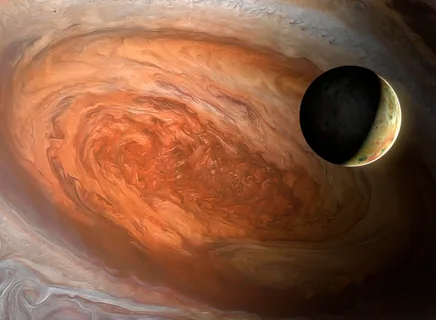
New findings from the Hubble Space Telescope have revealed unexpected changes in Jupiter’s Great Red Spot (GRS), the largest and longest-lasting storm in our solar system. Over a 90-day observation period, scientists found that the enormous storm, which has been raging for at least 190 years, wobbles like gelatin and shifts its shape in ways never before seen.

The Great Red Spot, an anticyclone located in Jupiter’s southern hemisphere, has long fascinated astronomers due to its enormous size—large enough to fit Earth inside—and its incredible longevity. The storm’s winds circulate around a central area of high pressure, and while typical storms are usually unstable, this one has persisted for nearly two centuries. However, the recent observations suggest that the GRS is far from stable, exhibiting noticeable motion and size oscillations.

Unusual Behavior and Observations

Scientists using Hubble’s high-resolution imaging tracked the storm’s behavior between December and March and were surprised to see the vortex “jiggling” as if made of gelatin, while also expanding and contracting. This behavior had never been observed before, leading scientists to reassess their understanding of this iconic storm.

“We didn’t expect to see the size oscillate as well. As far as we know, it’s not been identified before,” said Amy Simon, the lead author of the study and a planetary scientist at NASA’s Goddard Space Flight Center. Simon emphasized that these changes in the storm’s behavior are new insights into how Jupiter’s atmospheric systems operate.

The study, published in The Planetary Science Journal and presented at the American Astronomical Society’s Division for Planetary Sciences meeting, suggests that this oscillation is tied to changes in both the storm’s speed and how it interacts with surrounding jet streams on Jupiter.

A Dynamic Feature of Jupiter’s Atmosphere

The Great Red Spot has always been recognized for its distinctive oval shape and reddish hue, but more recent observations have shown that it can change its dimensions, sometimes appearing skinnier or fatter. Separate research from the James Webb Space Telescope used infrared light to peer into the storm, revealing new details about its internal structure. The Great Red Spot has a cold center, where ammonia and water condense to form thick clouds, and researchers also detected phosphine gas, which may contribute to the spot’s signature red color.

The Outer Planet Atmospheres Legacy (OPAL) program, led by Simon, monitors Jupiter’s atmosphere and weather systems annually. The new study, however, involved more frequent imaging, capturing changes over a matter of months rather than the usual yearly snapshot. This allowed scientists to observe more dynamic features of the storm, including its oscillation and interactions with Jupiter’s jet streams.

The oscillations suggest that the storm’s core brightens when it reaches its largest size and slows down during contractions, pushing against the powerful jet streams to its north and south. This interaction is likened to a “sandwich” effect, where the storm bulges outward when internal pressure increases, much like a stress ball being squeezed.

The Future of the Great Red Spot

Astronomers have noticed that the Great Red Spot has been shrinking over the past decade and predict it may eventually stabilize into a less elongated shape. This could potentially reduce the wobble observed in the latest study. Simon explained that once the storm shrinks to fit more comfortably within its latitude band, the winds around it will likely hold it in place more effectively.

Mike Wong, a planetary scientist at the University of California, Berkeley, compared the storm’s confinement between jet streams to weather patterns on Neptune, where dark spots drift more freely without such boundaries. The study shows that while the Great Red Spot may be shrinking, it continues to exhibit complex behavior, such as changing shape and interacting with other atmospheric systems.

Leigh Fletcher, a professor of planetary science at the University of Leicester, who was not involved in the study, emphasized that long-term observations are essential to understanding the chaotic and variable weather on Jupiter. The findings add important insights into the physics governing the Great Red Spot and other planetary weather systems, which could help astronomers better understand atmospheric dynamics on exoplanets as well.

As Jupiter’s most iconic storm continues to evolve, scientists remain captivated by its mysteries, unraveling the complex meteorological processes that make it both a marvel of our solar system and a valuable object of study.