
Close Menu
  • Home
  • Technology
  • Devices
  • Business
  • Science
  • Gadgets
  • Startups
Ayaksız
  • Home
  • Technology

    Lucid and Bolt Plan 25,000 Robotaxis for Europe

    Eylül 18, 2026

    AMD Gives PC Builders More Choice With New Ryzen 5 Desktop Chips

    Eylül 11, 2026

    Apple Expands Device Protection With a $49.99 Family Plan

    Eylül 11, 2026

    Snapdragon 8 Elite Extreme Gen 6 Reportedly Beats MediaTek’s Next Flagship Chipset

    Eylül 11, 2026

    Pinterest CFO Julia Donnelly to Step Down in October

    Ağustos 30, 2026
  • Devices

    iQOO 16 Design and Colour Options Unveiled With Major Camera Upgrade Confirmed

    Eylül 11, 2026

    Lava Bold N4 Pro 5G India Launch Date, Design and Key Specs Confirmed

    Eylül 11, 2026

    Xiaomi 18 Pro Max Geekbench Listing Reveals Key Specifications

    Eylül 10, 2026

    Samsung Galaxy Tab S12 Ultra, Tab S12+ Design Leaks in New Renders

    Eylül 10, 2026

    Vivo X500 Series Designs Revealed Ahead of September Launch

    Eylül 10, 2026
  • Business

    Google Pixel 11 Pro Leaked Renders Indicate It Might Sport Thinner Bezels Than the Pixel 10 Pro

    Mart 30, 2026

    Motorola Edge 70 Debuts With Snapdragon 7 Gen 4, Ultra-Slim 5.99mm Body

    Kasım 5, 2025

    Samsung Galaxy S26 Series Could See Price Increase Amid Rising Component Costs: Report

    Kasım 4, 2025

    Amazon’s AWS Partners with NBA to Power New AI Basketball Platform

    Ekim 4, 2025

    Billionaire-Backed Bitcoin Firm OranjeBTC to List on Brazil’s B3 Exchange

    Ekim 4, 2025
  • Science

    SpaceX’s $1.75 Trillion Valuation Raises Questions Ahead of IPO

    Nisan 11, 2026

    US Moves to Ease Satellite Power Limits, Boosting Space Broadband

    Nisan 10, 2026

    iPhone 17 Pro Max NASA Approves iPhone 17 Pro Max for Use on Artemis 2 Deep Space Mission

    Nisan 6, 2026

    Spain’s First Private 5G Satellite Mission

    Şubat 17, 2026

    Eutelsat Signs Launch Deal With MaiaSpace for LEO Satellites

    Ocak 17, 2026
  • Gadgets

    Vivo Buds Debut in India With Up to 50-Hour Battery Life

    Eylül 10, 2026

    Moto Buds 2 Fusion India Launch Date Confirmed, Features Teased

    Eylül 10, 2026

    Sennheiser Unveils Accentum Clip Earbuds With Up to 36 Hours of Total Battery Life

    Temmuz 2, 2026

    Nothing Ear 3a and CMF Buds Neo Appear in Regulatory Filings, Hinting at Upcoming Launch

    Haziran 2, 2026

    OnePlus Watch 4 Leak Hints at Launch With Snapdragon W5 and OxygenOS Watch 8

    Nisan 22, 2026
  • Startups

    Glean Reaches $7.2 Billion Valuation Amid AI Investment Surge

    Haziran 15, 2025

    How I Built a $2 Billion Super App: The Journey of Grab’s Anthony Tan and ’20-Hour’ Workdays

    Ekim 7, 2024

    Tupperware Files for Bankruptcy as Demand Declines

    Eylül 18, 2024

    Wildfire Detection Device Wins UK James Dyson Award

    Eylül 12, 2024

    Japan and Tokyo Governments Eye $4.7 Billion Valuation for Tokyo Metro in Upcoming IPO

    Ağustos 19, 2024
Ayaksız
Anasayfa » Blog » The Largest Storm in Our Solar System is Moving Unexpectedly, Scientists Say
Science

The Largest Storm in Our Solar System is Moving Unexpectedly, Scientists Say

By ayaksızEkim 13, 2024Yorum yapılmamış4 Mins Read
Facebook Twitter Pinterest LinkedIn Tumblr Email
Share
Facebook Twitter LinkedIn Pinterest Email

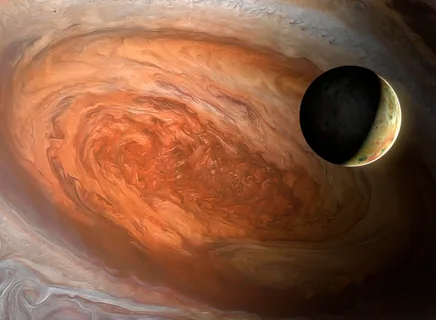
New findings from the Hubble Space Telescope have revealed unexpected changes in Jupiter’s Great Red Spot (GRS), the largest and longest-lasting storm in our solar system. Over a 90-day observation period, scientists found that the enormous storm, which has been raging for at least 190 years, wobbles like gelatin and shifts its shape in ways never before seen.

The Great Red Spot, an anticyclone located in Jupiter’s southern hemisphere, has long fascinated astronomers due to its enormous size—large enough to fit Earth inside—and its incredible longevity. The storm’s winds circulate around a central area of high pressure, and while typical storms are usually unstable, this one has persisted for nearly two centuries. However, the recent observations suggest that the GRS is far from stable, exhibiting noticeable motion and size oscillations.

Unusual Behavior and Observations

Scientists using Hubble’s high-resolution imaging tracked the storm’s behavior between December and March and were surprised to see the vortex “jiggling” as if made of gelatin, while also expanding and contracting. This behavior had never been observed before, leading scientists to reassess their understanding of this iconic storm.

“We didn’t expect to see the size oscillate as well. As far as we know, it’s not been identified before,” said Amy Simon, the lead author of the study and a planetary scientist at NASA’s Goddard Space Flight Center. Simon emphasized that these changes in the storm’s behavior are new insights into how Jupiter’s atmospheric systems operate.

The study, published in The Planetary Science Journal and presented at the American Astronomical Society’s Division for Planetary Sciences meeting, suggests that this oscillation is tied to changes in both the storm’s speed and how it interacts with surrounding jet streams on Jupiter.

A Dynamic Feature of Jupiter’s Atmosphere

The Great Red Spot has always been recognized for its distinctive oval shape and reddish hue, but more recent observations have shown that it can change its dimensions, sometimes appearing skinnier or fatter. Separate research from the James Webb Space Telescope used infrared light to peer into the storm, revealing new details about its internal structure. The Great Red Spot has a cold center, where ammonia and water condense to form thick clouds, and researchers also detected phosphine gas, which may contribute to the spot’s signature red color.

The Outer Planet Atmospheres Legacy (OPAL) program, led by Simon, monitors Jupiter’s atmosphere and weather systems annually. The new study, however, involved more frequent imaging, capturing changes over a matter of months rather than the usual yearly snapshot. This allowed scientists to observe more dynamic features of the storm, including its oscillation and interactions with Jupiter’s jet streams.

The oscillations suggest that the storm’s core brightens when it reaches its largest size and slows down during contractions, pushing against the powerful jet streams to its north and south. This interaction is likened to a “sandwich” effect, where the storm bulges outward when internal pressure increases, much like a stress ball being squeezed.

The Future of the Great Red Spot

Astronomers have noticed that the Great Red Spot has been shrinking over the past decade and predict it may eventually stabilize into a less elongated shape. This could potentially reduce the wobble observed in the latest study. Simon explained that once the storm shrinks to fit more comfortably within its latitude band, the winds around it will likely hold it in place more effectively.

Mike Wong, a planetary scientist at the University of California, Berkeley, compared the storm’s confinement between jet streams to weather patterns on Neptune, where dark spots drift more freely without such boundaries. The study shows that while the Great Red Spot may be shrinking, it continues to exhibit complex behavior, such as changing shape and interacting with other atmospheric systems.

Leigh Fletcher, a professor of planetary science at the University of Leicester, who was not involved in the study, emphasized that long-term observations are essential to understanding the chaotic and variable weather on Jupiter. The findings add important insights into the physics governing the Great Red Spot and other planetary weather systems, which could help astronomers better understand atmospheric dynamics on exoplanets as well.

As Jupiter’s most iconic storm continues to evolve, scientists remain captivated by its mysteries, unraveling the complex meteorological processes that make it both a marvel of our solar system and a valuable object of study.

Amy Simon Great Red Spot Hubble Space Telescope James Webb Space Telescope Jupiter storm OPAL Outer Planet Atmospheres Legacy planetary weather solar system
Share. Facebook Twitter Pinterest LinkedIn Tumblr Email
ayaksız
  • Website

Related Posts

SpaceX’s $1.75 Trillion Valuation Raises Questions Ahead of IPO

Nisan 11, 2026

US Moves to Ease Satellite Power Limits, Boosting Space Broadband

Nisan 10, 2026

iPhone 17 Pro Max NASA Approves iPhone 17 Pro Max for Use on Artemis 2 Deep Space Mission

Nisan 6, 2026
Add A Comment

Comments are closed.

Recent Posts
  • Lucid and Bolt Plan 25,000 Robotaxis for Europe
  • AMD Gives PC Builders More Choice With New Ryzen 5 Desktop Chips
  • Apple Expands Device Protection With a $49.99 Family Plan
  • Snapdragon 8 Elite Extreme Gen 6 Reportedly Beats MediaTek’s Next Flagship Chipset
  • iQOO 16 Design and Colour Options Unveiled With Major Camera Upgrade Confirmed
Tags
AI AI Chips AI Infrastructure Amazon Android Apple Artificial Intelligence Bitcoin ChatGPT China Cryptocurrency Cybersecurity data centers DeepSeek Donald Trump Electric Vehicles Elon Musk Ether Generative AI Google Huawei India Investment Iphone Meta Microsoft NASA National Security Nvidia OnePlus OpenAI Oppo Realme Samsung semiconductor industry Social media Sony SpaceX Technology Tesla Tether TikTok Vivo WhatsApp Xiaomi
Ayaksız
Instagram
© 2026 Ayaksız.

Type above and press Enter to search. Press Esc to cancel.