North Korea Destroys Roads Connecting to South Amid Escalating Tensions
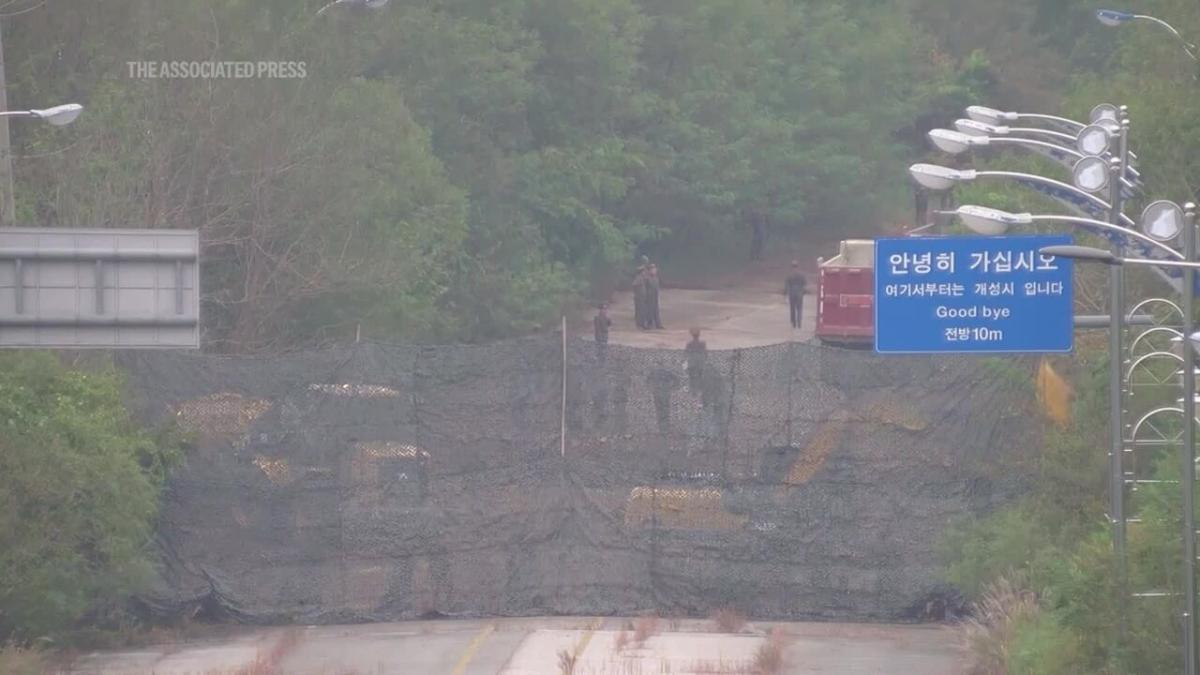
North Korea has destroyed sections of two major roads linking it with South Korea, further escalating tensions on the peninsula. South Korea’s Joint Chiefs of Staff (JCS) confirmed that portions of the Gyeongui and Donghae lines, critical transportation routes along the west and east coasts, were blown up on Tuesday around noon local time. The destruction comes shortly after North Korea declared it would sever all ties with the South.
Although these roads have been inactive for years due to the divided nature of the Korean Peninsula, the demolition carries heavy symbolic weight. The action reflects increasing hostility between North Korean leader Kim Jong Un and South Korean President Yoon Suk-yeol, as rhetoric between the two governments intensifies.
Explosions and Military Responses
South Korean authorities released video footage showing multiple explosions on roads north of the Military Demarcation Line (MDL), the boundary dividing the two Koreas. Following the blasts, North Korea deployed heavy machinery to further disrupt the routes. South Korea responded by opening fire within the MDL area, while remaining on high alert in collaboration with the United States, according to the JCS.
The destruction of the roads occurred just days after North Korea accused the South of flying drones loaded with propaganda over its capital, Pyongyang, in what Pyongyang called an act of provocation. In retaliation, North Korea recently launched its own balloons filled with trash into South Korean territory, marking a continued tit-for-tat exchange between the two sides.
North Korea’s Shift Toward Isolation
This latest move follows a series of actions by Kim Jong Un aimed at isolating North Korea from the South. Earlier this year, Kim ended the country’s policy of seeking peaceful reunification, calling relations between the two Koreas those of “belligerents at war.” In January, he announced that North Korea would no longer pursue reconciliation efforts with the South, signaling a major shift in inter-Korean diplomacy.
North Korea’s general staff reiterated this hardline stance on October 9, declaring that all remaining roads and railways connecting to the South would be cut off. This decision was framed as a response to joint U.S.-South Korean military drills and the recent presence of U.S. nuclear assets in the region, including aircraft carriers and long-range bombers.
Since January, North Korea has fortified its border defenses with land mines, anti-tank traps, and the dismantling of railways, marking a significant effort to further isolate itself from its southern neighbor.
Rising Nuclear Threats and International Concerns
North Korea’s increasingly belligerent behavior is accompanied by its ramped-up nuclear threats. Earlier this month, Kim Jong Un threatened to use nuclear weapons against the South if provoked, escalating concerns over potential conflict. In response, President Yoon Suk-yeol warned that if North Korea used nuclear weapons, it would face regime collapse.
These threats come amid reports that North Korea has strengthened its ties with Russia and increased its nuclear production, deepening global concerns over its geopolitical trajectory.
Expert Analysis
According to Leif-Eric Easley, a professor at Ewha Womans University in Seoul, North Korea’s moves to sever ties with the South may be part of a broader strategy to shift blame for the country’s economic difficulties. He suggests that Kim Jong Un could be exaggerating external threats to justify the North’s costly missile and nuclear weapons programs.
“Kim wants both domestic and international audiences to believe he is acting out of military strength,” said Easley, “but he may actually be motivated by political weakness. North Korea’s threats, both real and rhetorical, reflect the regime survival strategy of a hereditary dictatorship.”