Yazılar

Wall Street Ends Strong Holiday Week with Broad Sell-Off

Wall Street’s week ended on a sour note Friday, with major indexes experiencing a broad sell-off that overshadowed gains earlier in the shortened holiday week. The Dow Jones Industrial Average, S&P 500, and Nasdaq Composite all posted losses as investors took profits and adjusted portfolios ahead of the new year.

The Dow Jones Industrial Average fell 333.59 points, or 0.77%, to close at 42,992.21, ending a five-session winning streak that had followed its longest losing run since 1974. The S&P 500 dropped 66.75 points, or 1.11%, finishing at 5,970.84, while the Nasdaq Composite lost 298.33 points, or 1.49%, to end at 19,722.03.

Michael Reynolds, Vice President of Investment Strategy at Glenmede, attributed the losses to profit-taking, stating, “We are more than two years into a strong bull market, so it’s not surprising to see some people rebalancing portfolios.” The decline also interrupted the anticipated “Santa Claus rally,” a seasonal trend where stocks typically rise in the final five sessions of December and the first two sessions of January.

The market was further pressured by rising U.S. Treasury yields, with the benchmark 10-year yield hovering near a seven-month high of 4.63%. Higher yields increase borrowing costs, posing challenges for growth stocks, particularly the “Magnificent Seven” tech giants that have driven much of 2024’s market rally.

Tesla led the group’s declines for a second consecutive day, dropping 5%, while Nvidia, Alphabet, Amazon, and Microsoft all shed over 1.5%. Glenmede’s Reynolds noted that rising rates prompted investors to reassess valuations on these high-growth stocks, potentially seeking better opportunities elsewhere.

All 11 major S&P sectors recorded losses, with the hardest-hit being 2024’s leading sectors—consumer discretionary, information technology, and communication services—which fell between 1.1% and 1.9%.

Despite Friday’s pullback, the major indexes posted weekly gains. The S&P 500 rose 0.7%, the Nasdaq gained 0.75%, and the Dow added 0.36% for the week.

Some stocks bucked the trend. Amedisys surged 4.7% after extending the deadline for its $3.3 billion merger with UnitedHealth, while Lamb Weston climbed 2.6% following activist investor Jana Partners’ push for board changes.

Trading volumes remained below the six-month average due to the holiday-shortened week and are expected to stay subdued until January 6. Investors now shift their focus to the December employment report, scheduled for release on January 10.

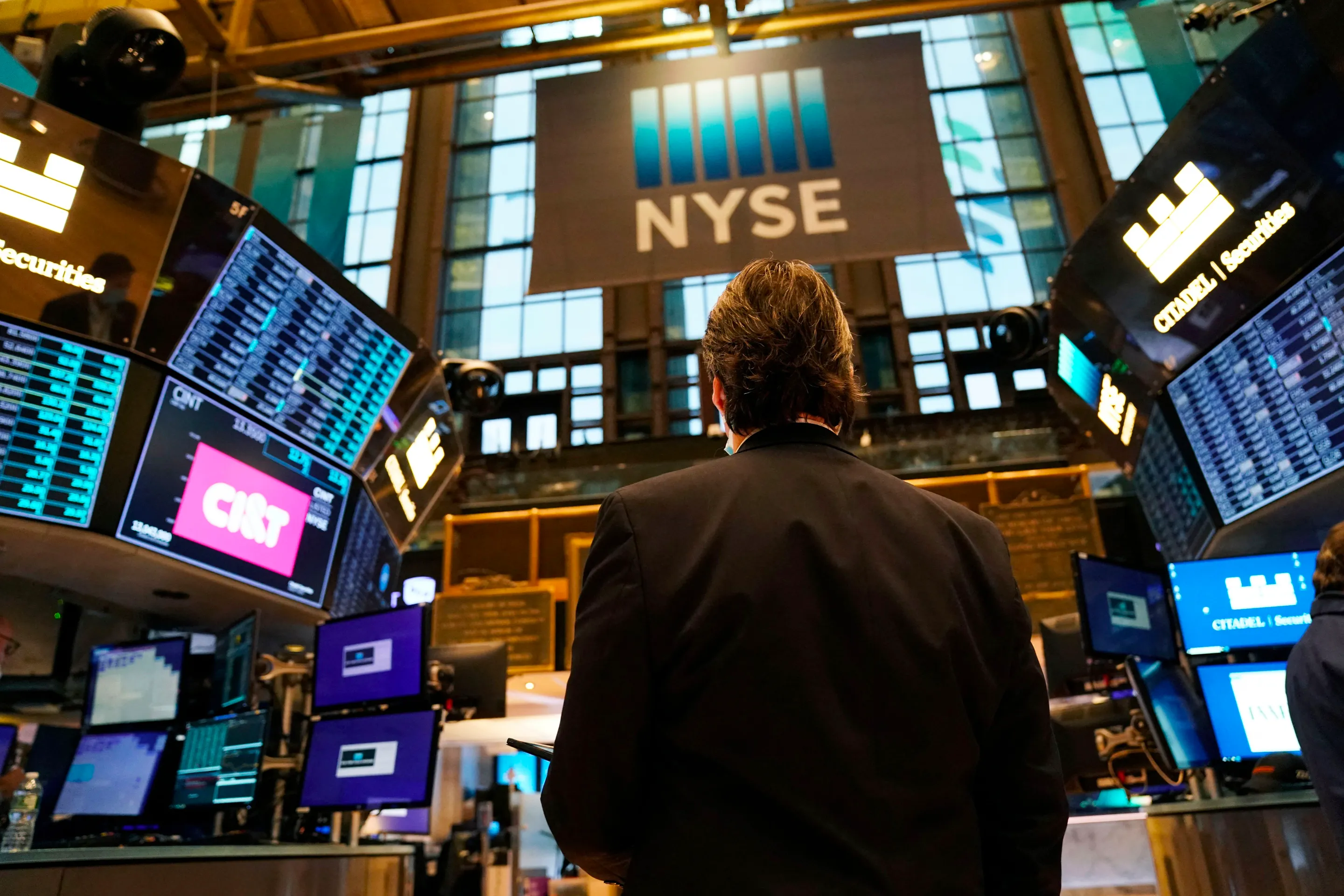
 

S&P 500 Rises 1% on Christmas Eve, Tech Stocks Drive Gains: Live Updates

The U.S. stock market saw a strong performance on Christmas Eve, with the S&P 500 gaining 1.1% to close at 6,040.04. The Dow Jones Industrial Average also rose by 0.91%, adding 390.08 points to reach 43,297.03, while the Nasdaq Composite climbed 1.35% to finish at 20,031.13. A significant contributor to the Nasdaq’s rise was a 7.4% increase in Tesla’s stock price, alongside gains in Amazon and Meta Platforms, which each rose over 1%.

The New York Stock Exchange closed early at 1 p.m. ET, and the bond market followed suit, closing at 2 p.m. The market will remain closed on Wednesday for Christmas Day.

Tuesday’s gains marked the beginning of the “Santa Claus rally,” a seasonal trend in which the market tends to see stronger performance during the last five trading days of the year and the first two days of January. Historical data from LPL Research shows that since 1950, the S&P 500 has averaged a 1.3% return during this period, far outpacing the typical seven-day return of 0.3%.

Despite the upbeat performance, experts advise caution. Paul Hickey, co-founder of Bespoke Investment Group, mentioned on CNBC’s “Squawk Box” that while the market shows positive momentum, it’s important to temper enthusiasm, as the market has already rallied significantly.

Over the past two days, the S&P 500 has gained 1.8% for the week, with the Dow up about 1%. The Nasdaq has surged 2.3% week-to-date, fueled by strong gains in megacap tech stocks. Additionally, the S&P 500 has turned positive for the month, rising by 0.1%. The tech-heavy Nasdaq has seen an impressive 4.2% increase in December, with major players like Google’s parent Alphabet up 16%, Apple up nearly 9%, and Tesla soaring by about 34%. However, the blue-chip Dow remains down by around 3.6% for the month, on track for its worst monthly performance since April.

On the corporate front, American Airlines experienced fluctuations in its stock price on Tuesday after the airline temporarily grounded all flights in the U.S. due to a technical issue during one of the busiest travel days of the year. Despite the disruption, the stock ended the session up 0.6%.

In other retail news, analysts at Jefferies expressed optimism about toy sales this holiday season. Their store checks indicated high traffic and lower inventory levels compared to earlier in the season. Board games, in particular, were reported as strong sellers both in-store and online. Jefferies also noted that discounts were lower than the peak Black Friday levels.

In the toy sector, Mattel and Hasbro stocks showed mixed results. While Mattel’s shares are down over 5% year-to-date, Hasbro has seen a more significant gain of 11%. However, Hasbro has faced recent declines, with its stock down nearly 13% month-to-date, while Mattel’s shares have fallen 6%.


U.S. Inflation Edges Up, But Investors Find Reasons to Be Thankful

Inflation Data and Market Reactions

U.S. inflation in October showed a modest uptick, with the personal consumption expenditures (PCE) price index rising by 0.2% month-over-month and 2.3% year-over-year, as reported by the U.S. Commerce Department. Core inflation, which excludes food and energy, increased by 0.3% month-over-month, with an annual reading of 2.8%, slightly higher than the previous month’s 2.7%. These figures were in line with analysts’ expectations, and they had little impact on investor sentiment.

Despite the inflation data, U.S. stock markets saw a pause in their recent rally. The S&P 500 ended its seven-day winning streak, falling by 0.38%. Bond prices rose as Treasury yields slipped. On the global front, Asia-Pacific stocks saw a mixed performance, with Australia’s S&P/ASX 200 climbing to a record high, while South Korea’s Kospi index remained flat after an unexpected rate cut by its central bank.

South Korea’s Unexpected Rate Cut

On Thursday, the Bank of Korea (BOK) reduced its benchmark interest rate by 25 basis points to 3%, surprising economists who had expected no change. This decision came after South Korea reported disappointing third-quarter GDP growth of just 0.1%. The BOK also lowered its 2024 growth outlook to 2.2%, down from 2.4%. The rate cut is seen as a response to slow economic activity and the need for stimulus.

Yuan Pressure Amid Tariff Threats

China’s offshore yuan is facing downward pressure, with forecasts predicting it could weaken to an average of 7.51 per U.S. dollar by the end of 2025, marking its lowest level on record. This decline is largely attributed to concerns over U.S. tariff threats and lower interest rates in China. As tensions rise between the U.S. and China, the yuan is expected to face further challenges, adding to the uncertainty in the global markets.

U.S. Tariffs: Potential Winners and Losers

While U.S. President-elect Donald Trump’s tariff plans raise concerns for investors and companies, some sectors could stand to benefit. The proposed tariffs could be advantageous for technology firms that specialize in optimizing supply chains. These companies could gain from the increased demand for their services as businesses seek to adjust to the higher costs imposed by tariffs.

Investor Sentiment Ahead of Thanksgiving

Ahead of the Thanksgiving holiday, U.S. investors kept their trading light, with trading volume in the SPDR S&P 500 exchange-traded fund (ETF) falling by 22.6% below its 30-day average. Despite the S&P 500’s dip and the Dow Jones Industrial Average’s 0.31% slide, there were no signs of a panic sell-off. Instead, traders appeared to be taking profits from Big Tech stocks, causing the Nasdaq Composite to drop 0.6%.

Inflation’s modest increase didn’t rattle investors either. In fact, many seem confident that the U.S. Federal Reserve may lower interest rates by 25 basis points at its upcoming December meeting. Market expectations for this rate cut have risen to 68.2%, up from 55.7% a week earlier, according to the CME FedWatch tool.

A Bright Market Outlook

Despite some market fluctuations, the overall sentiment remains positive. Chris Verrone from Strategas noted that over three-quarters of the stocks in the S&P 500 are above their 200-day moving average, indicating a steady upward trend and a healthy market. With the economy nearing full employment and inflationary pressures easing, many analysts believe that the market is still in a solid position, providing investors with plenty to be thankful for this Thanksgiving.