Yazılar

NASA Explores Crystal Growth in Space to Unlock Future Technological Advances

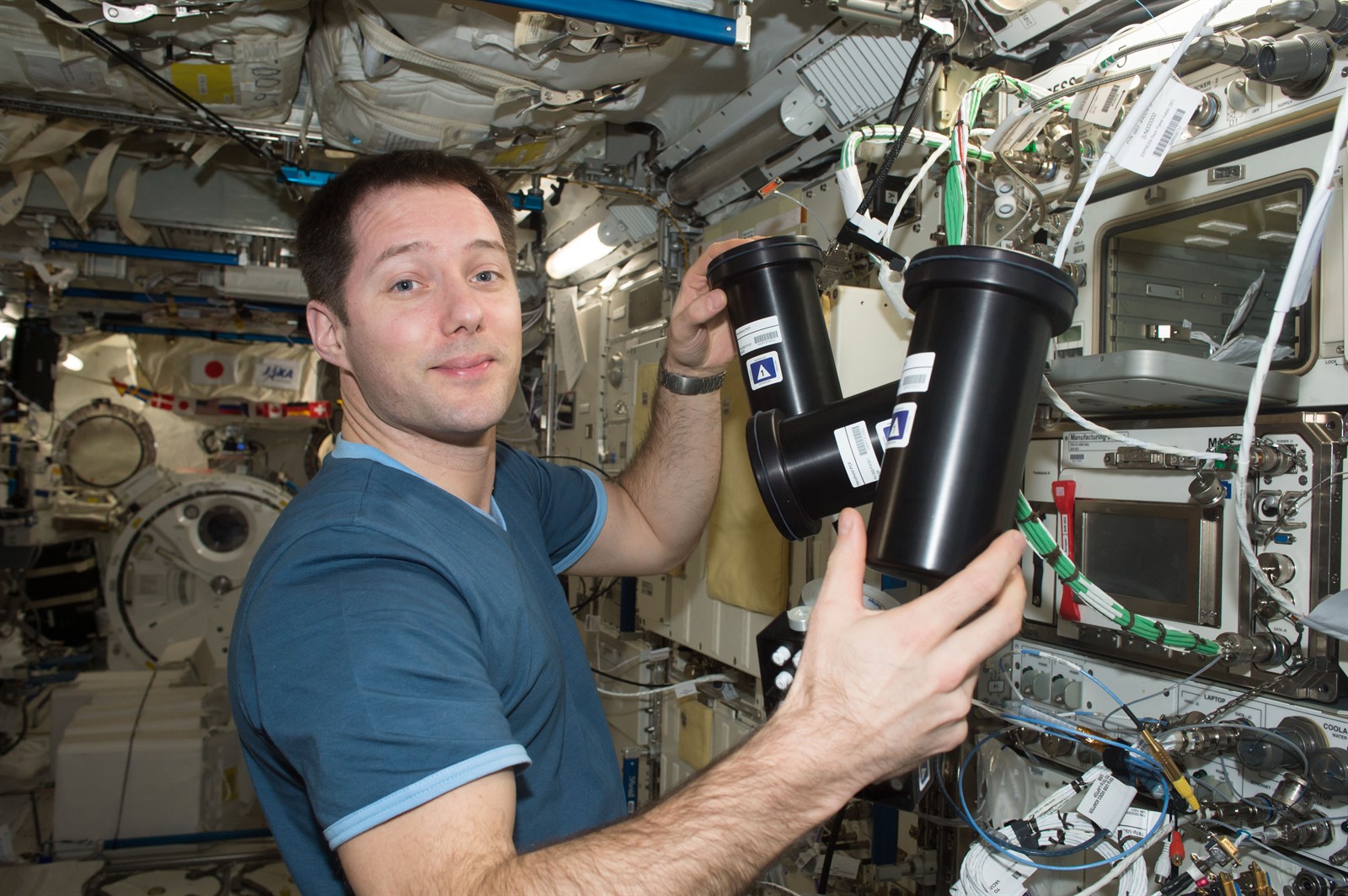
NASA scientists have long been fascinated by the process of crystallisation and its potential to improve technologies here on Earth. Most recently, researchers have turned their attention to how crystals form in microgravity aboard the International Space Station (ISS). A team led by Alexandra Ros from Arizona State University launched a series of protein crystallisation experiments using specially designed microfluidic devices. These experiments aim to evaluate whether the low-gravity environment of space enables the formation of higher-quality protein crystals compared to those grown under Earth’s gravity. If successful, this could revolutionize how we approach drug development, materials science, and more.

Crystallisation is the process through which liquid or molten materials cool and solidify into highly ordered structures known as crystals. These formations aren’t limited to gemstones or snowflakes—they are an essential part of modern life. From natural minerals to complex synthetic compounds, crystals can form from a variety of substances and serve diverse purposes across industries. Understanding how to control and optimize crystallisation can lead to better materials and more precise scientific tools.

Everyday items owe their functionality to crystals. Whether it’s the ceramic in your coffee mug, the silicon in your smartphone, or the memory chips that store your data, crystallisation plays a central role in shaping their components. Semiconductor crystals are critical for detecting radiation such as gamma and infrared rays, and optical crystals power laser technologies used in everything from barcode scanners to medical instruments. Even the durable turbine blades in jet engines rely on metal crystals designed for high strength and heat resistance.

The implications of space-based crystal research are profound. If space-grown crystals can achieve superior structure and purity, scientists could gain new insights into diseases, develop more effective medications, and engineer advanced materials with exceptional precision. As NASA and its research partners continue to explore these possibilities, microgravity experiments may become a cornerstone in developing next-generation technologies—both in orbit and back on Earth.


Perseverance Rover Uncovers Abundant Unique Rock Samples Along Jezero Crater’s Rim

Perseverance Rover Discovers Rich Variety of Ancient Rocks at Jezero Crater’s Edge

NASA’s Perseverance rover continues to make remarkable discoveries as it explores the rugged terrain along the rim of Jezero Crater. Over the past few months, the rover has collected five core samples, closely examined seven rocks, and remotely analyzed 83 others using its onboard laser technology. Scientists have been surprised by the sheer diversity of rocks encountered — a mix of once-molten fragments, buried boulders, and well-preserved layered formations. The first rock sample from the crater rim, nicknamed “Silver Mountain,” was retrieved from an area called “Shallow Bay” and is thought to date back nearly 3.9 billion years.

The mission’s findings offer compelling clues about Mars’ distant past, especially its potential for once harboring water. In collaboration with the European Space Agency, NASA’s Mars Sample Return Program aims to bring sealed Martian samples back to Earth for more detailed examination. Among the highlights is the discovery of igneous rocks containing minerals that crystallized from ancient magma, possibly buried deep in Mars’ crust and later exposed by massive impacts. These findings could shed light on the planet’s early geological evolution and the processes that shaped its surface.

Currently, Perseverance is navigating the stratified landscape of Witch Hazel Hill, located near the crater’s western rim. Scientists believe the layers of rock here could record environmental changes that occurred when Jezero Crater likely held a vast, long-lost lake. The data being collected will help build a clearer timeline of Mars’ ancient climate and the possible presence of conditions favorable for life. The rover’s detailed study of rock textures, compositions, and layering is crucial for piecing together the story of water on early Mars.

Adding to the intrigue, Perseverance recently analyzed a boulder rich in serpentine minerals — a type of rock that, under specific conditions, can produce hydrogen gas, a potential energy source for microbial life. Discoveries like these boost hopes that traces of ancient life, if they ever existed, might be hidden within these ancient rocks. As the rover continues its trek along Jezero’s rim, mission scientists are carefully selecting the next promising sites for sample collection, inching closer to solving Mars’ long-standing mysteries.

NASA’s James Webb Space Telescope Uncovers Detailed Structure of a Planetary Nebula

NASA’s James Webb Space Telescope (JWST) has uncovered the intricate details of NGC 1514, a planetary nebula that has been evolving over a span of at least 4,000 years. The nebula, which can only be seen in infrared light, exhibits a series of “fuzzy” clusters arranged in twisted patterns. These patterns highlight the complex structure of the nebula, revealing the presence of sharper holes near the center. These holes indicate areas where faster-moving materials have pierced through, providing insight into the dynamics of the nebula’s formation. An orange arc of dust surrounds the stars at the center of the nebula, which are in a close, elongated orbit that lasts about nine years. One of these stars, which was once several times more massive than the Sun, played a critical role in shaping the nebula’s structure.

The JWST has allowed astronomers to observe the dual gas rings that surround the dying star at the core of the nebula. The star’s interaction with its companion, as well as its evolution, is thought to have influenced the nebula’s distinctive hourglass shape. The rings of gas are unevenly illuminated, with the mid-infrared light casting a textured appearance. In particular, the clumped pink center of the nebula contains high concentrations of oxygen, particularly around the boundaries of the bubble-like holes. The nebula’s structure is of particular interest because of what it lacks: the absence of certain complex molecules. This absence may be due to the merging orbits of the two central stars, which have hindered the formation of these molecules.

NGC 1514, located in the Taurus constellation and situated 1,500 light-years from Earth, offers astronomers a valuable opportunity to study the final stages of a star’s life. The nebula’s dual rings of expelled material, traced back to the interaction of the two central stars, are particularly fascinating. The study of these rings offers a unique glimpse into the ongoing processes that shape star systems over long periods. These insights could help astronomers better understand the role of gravitational pull in shaping the dynamics of star outflows, providing key data on how stars evolve and interact over time.

The stars at the center of NGC 1514 are part of a binary system with one of the longest known orbits—about nine years. Astronomers believe that the creation of the nebula is largely attributed to the more massive of the two stars. As this star aged, it shed layers of gas and dust, producing a hot, compact core known as a white dwarf. The winds from this white dwarf likely carried away the earlier, slower-moving material, forming faint, clumped rings that are visible only in infrared light. Despite the lack of complex carbon-based molecules, JWST’s observations have revealed significant oxygen concentrations in the nebula, furthering the understanding of stellar processes. These findings underscore the importance of the JWST in advancing our knowledge of stellar evolution and the life cycles of stars.