NOAA Warns of Increased Solar Storm Risk with Double CME Strike on Earth
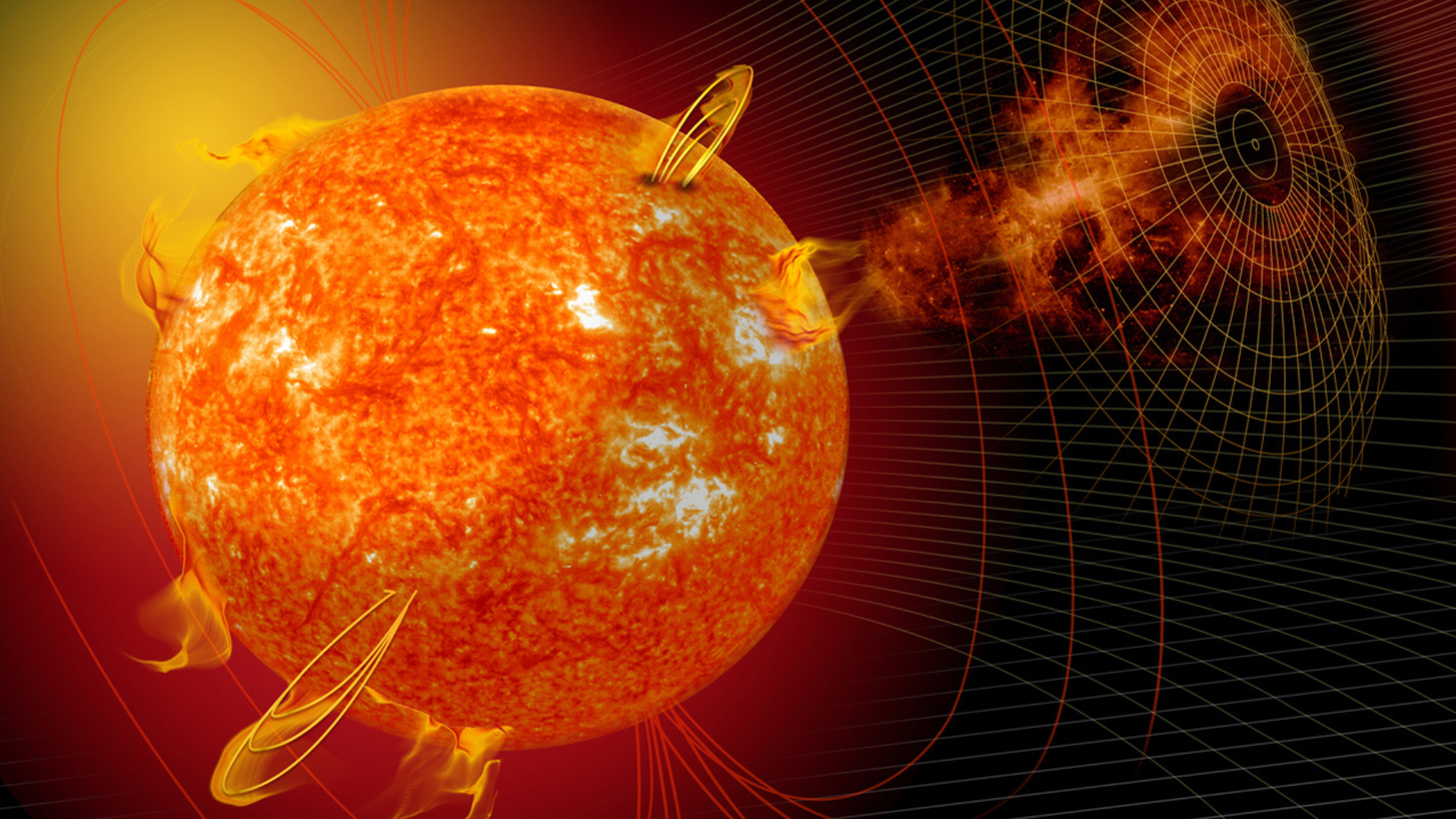
A rare and powerful event took place, as two separate coronal mass ejections (CMEs) erupted from the Sun, heading directly toward Earth. These solar eruptions are predicted to result in a spectacular display of auroras or northern lights, with the most intense show expected around April 16. However, the impact of these CMEs goes beyond just the visual beauty they may bring. Due to the magnitude and trajectory of the solar particles, the event is also anticipated to cause geomagnetic storms, which could affect various regions on Earth. The phenomenon was closely monitored by space agencies, who have deemed the likelihood of geomagnetic activity particularly high.
The CMEs originated from an unusually active sunspot region, known for producing both M-class and X-class solar flares in the preceding days. According to the National Oceanic and Atmospheric Administration (NOAA), these intense solar eruptions have prompted the issuance of a geomagnetic storm watch. The storm is expected to reach Earth on April 16, bringing with it the potential for moderate (G2) or even strong (G3) geomagnetic storms. While these types of storms can disrupt communications and power systems, they also offer a rare opportunity for skywatchers to witness extraordinary auroral displays. NOAA’s Space Weather Prediction Center is closely tracking the event to provide up-to-date information to the public.
Typically, auroras are visible in the polar regions, where geomagnetic storms are most intense. However, this particular event is expected to extend the auroral visibility much further south than usual. Regions like Canada, Minnesota, Michigan, Idaho, New York, and parts of Northern Europe may experience glimpses of the northern lights. Predictions from the European Space Agency (ESA) suggest that the incoming solar material could generate powerful auroras across these areas. According to space weather physicist Tamitha Skov, the solar storms are expected to travel slowly, but with their high density, they could still pack a significant punch, producing particularly vibrant and widespread displays.
CMEs are massive explosions of solar plasma and magnetic fields that, when directed toward Earth, interact with our planet’s magnetosphere. This interaction triggers a chain reaction, causing the charged particles to collide with Earth’s atmosphere. The result is the formation of colorful auroras, which are often seen as shimmering green, purple, and red lights. However, CMEs can also disrupt communication systems, such as radio waves and GPS signals, and even cause power outages by interfering with electrical grids. As scientists continue to study the Sun’s activity, they anticipate more solar storms throughout the remainder of the solar cycle, particularly as the Sun reaches its peak activity. These storms will likely become a more frequent phenomenon in the coming months.