Yazılar

SpaceX to Launch Firefly’s Blue Ghost Lander Carrying 10 NASA Payloads

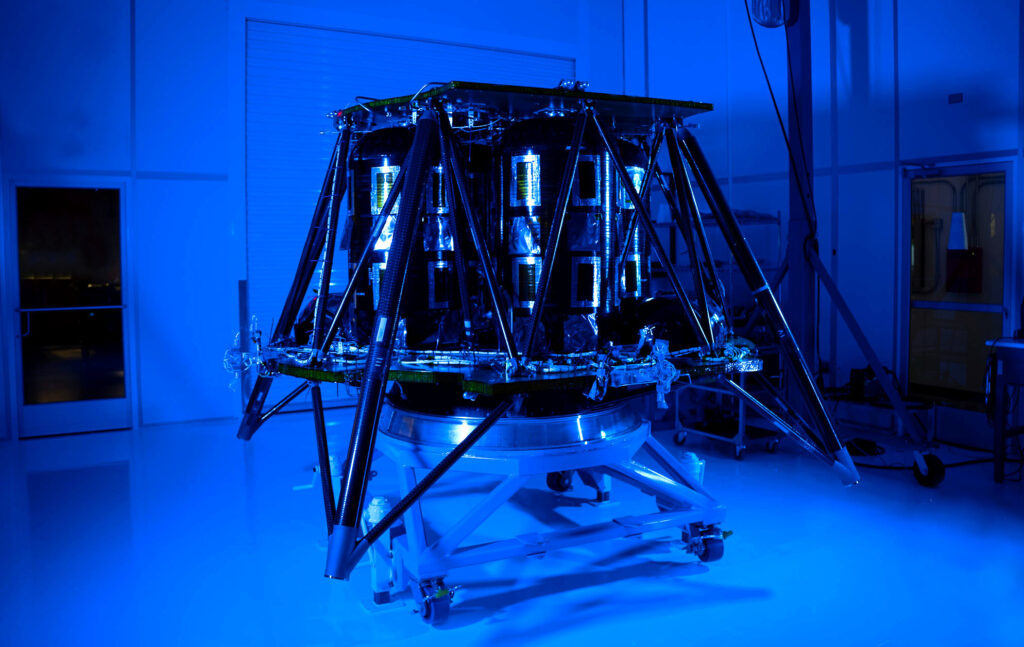
Firefly Aerospace’s Blue Ghost lunar mission is gearing up for its launch aboard a SpaceX Falcon 9 rocket, with a six-day window opening in mid-January. This landmark mission, dubbed “Ghost Riders in the Sky,” not only highlights Firefly’s capabilities but also serves as a collaborative effort under NASA’s Commercial Lunar Payload Services (CLPS) programme. Alongside Blue Ghost, Japan’s Resilience lander will share the Falcon 9 ride, marking a rare dual-mission launch. Reports confirm that Blue Ghost has already reached NASA’s Kennedy Space Center for final integration with the rocket, signaling the mission’s readiness.

Advancing Lunar Science Through NASA Payloads

The mission will carry 10 cutting-edge NASA payloads designed to deepen our understanding of the moon and its interaction with Earth’s magnetic fields. Among the standout instruments is the Next Generation Lunar Retroreflector (NGLR), a tool capable of measuring Earth-moon distances with unparalleled accuracy. Additionally, the Regolith Adherence Characterisation (RAC) will analyze the impact of lunar dust on equipment, while the Lunar Environment Heliospheric X-ray Imager (LEXI) will monitor solar wind activities to better understand the moon’s space weather environment.

Experimental Technologies for Lunar Exploration

The Blue Ghost mission will also serve as a platform for testing pioneering technologies crucial for future lunar exploration. The Electrodynamic Dust Shield (EDS) is designed to repel lunar dust using electric fields, an essential innovation for maintaining equipment functionality on the moon. Another noteworthy technology is the Lunar GNSS Receiver Experiment (LuGRE), which evaluates the potential of GPS-like navigation systems in lunar conditions. The Radiation Tolerant Computer System (RadPC) will demonstrate its ability to withstand the harsh radiation environment of space, laying the groundwork for future long-duration lunar missions.

A Milestone in Space Collaboration

This mission underscores the growing importance of public-private partnerships in advancing lunar science and technology. By combining efforts under the CLPS initiative, NASA, Firefly Aerospace, and SpaceX aim to pave the way for sustainable lunar exploration and establish critical capabilities for missions beyond Earth’s orbit.
Astronomers Discover Youngest Exoplanet Orbiting a Protostar 520 Light-Years Away

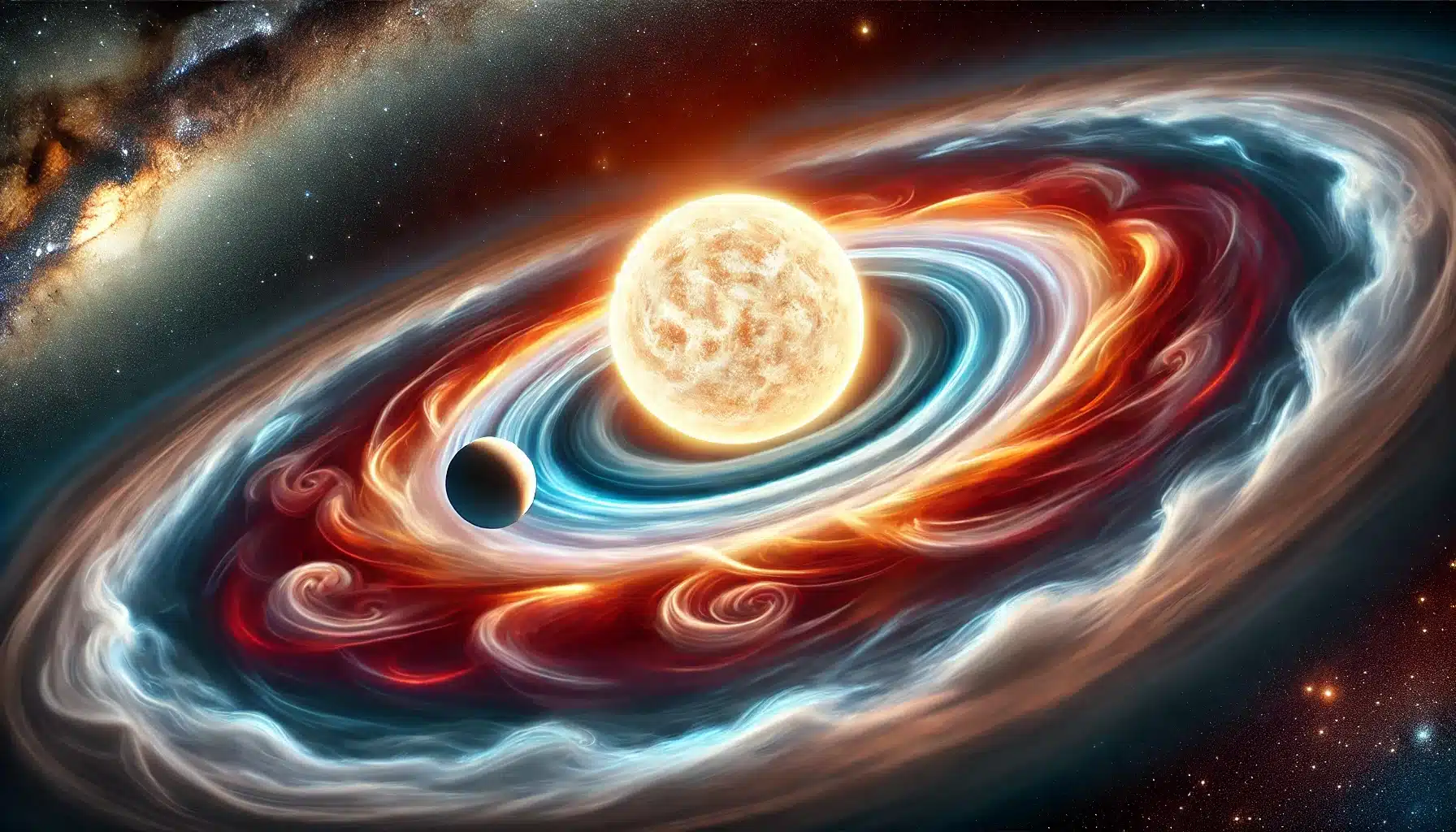
Researchers have identified one of the youngest exoplanets ever observed, a gas giant named TIDYE-1b, estimated to be only 3 million years old. Orbiting a protostar in the Taurus molecular cloud, roughly 520 light-years from Earth, this discovery offers a rare glimpse into the earliest stages of planetary formation. Published in the journal Nature on November 20, the findings provide key insights into the processes that shape young planetary systems. The planet’s unusual environment, including a tilted protoplanetary disk, has intrigued scientists.

TIDYE-1b is described as a gas giant with a diameter slightly smaller than Jupiter’s and a mass approximately 40% that of the largest planet in our solar system. It completes an orbit around its host protostar in just 8.8 days, an incredibly close proximity for such a young planet. According to lead researcher Madyson Barber, a graduate student at the University of North Carolina at Chapel Hill, this rapid orbital period highlights the dynamic and accelerated processes involved in the formation of gas giants. These findings contrast with the slower development typically associated with terrestrial planets like Earth.

One of the most striking aspects of this system is the orientation of the protoplanetary disk surrounding the host star. The disk is misaligned, tilted at an angle of about 60 degrees relative to the planet and the star. Such a configuration is highly unusual, as planets are generally thought to form within flat, aligned disks of gas and dust. Andrew Mann, planetary scientist and co-author of the study, emphasized that this misalignment challenges established theories of planetary formation and raises new questions about the forces influencing early planetary systems.

This discovery has far-reaching implications for understanding the diversity of planetary formation. TIDYE-1b’s unique characteristics suggest that young planets and their systems may undergo more complex and chaotic development than previously thought. By studying such rare and early-stage systems, scientists hope to refine existing models and uncover new mechanisms that contribute to the formation and evolution of planets across the galaxy.

Study Suggests Jupiter’s Earth-Sized Storms May Be Driven by Magnetic Tornadoes

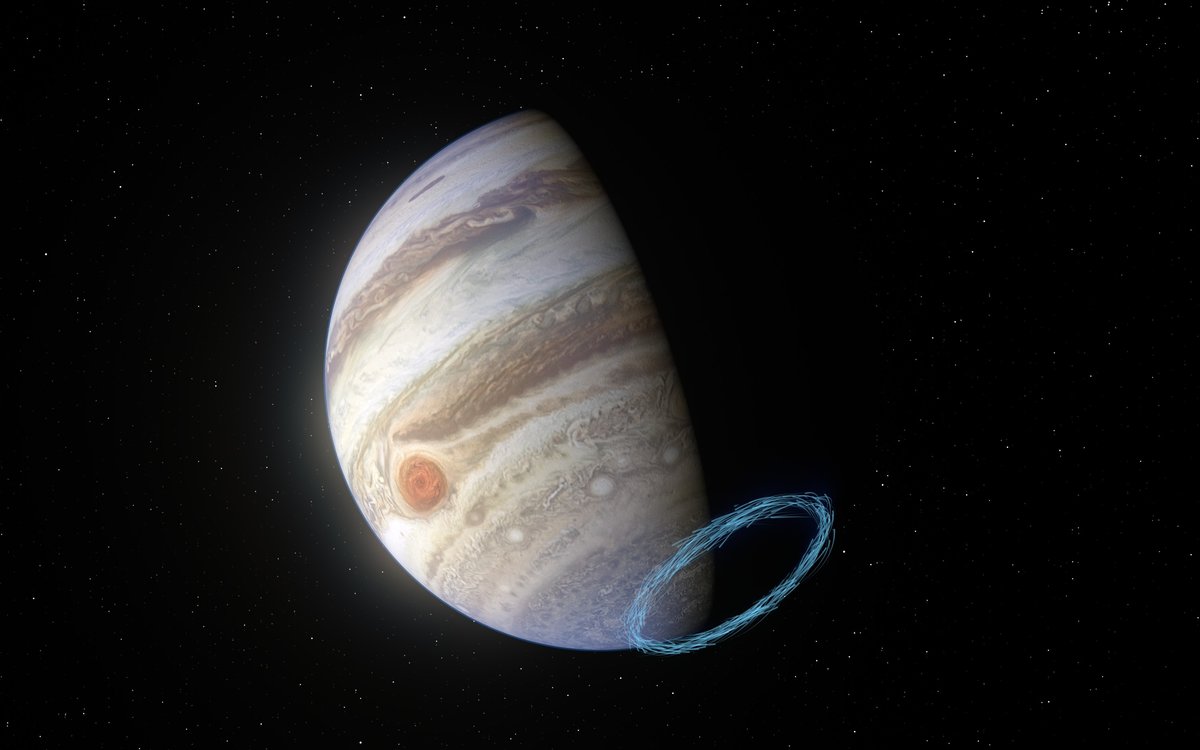
A recent study published in Nature Astronomy on November 26 proposes that magnetic vortices descending from Jupiter’s ionosphere into its deep atmosphere may be the driving force behind the planet’s Earth-sized ultraviolet-absorbing storms. These dark, anticyclonic storms, which appear as dark ovals, are observed primarily in Jupiter’s polar regions. Spanning the size of Earth, the storms were first detected in the 1990s through ultraviolet (UV) light by the Hubble Space Telescope and were later confirmed by NASA’s Cassini spacecraft in 2000, sparking interest in understanding their origin.

The research, led by undergraduate researcher Troy Tsubota from the University of California, Berkeley, in collaboration with Michael Wong of UC Berkeley and Amy Simon from NASA’s Goddard Space Flight Center, investigates the mysterious dynamics behind these massive storms. According to their findings, the formation of these dark ovals is closely linked to magnetic tornadoes on Jupiter. These tornadoes arise due to friction between Jupiter’s powerful magnetic field lines and those in the planet’s ionosphere, generating swirling vortexes that reach deep into the atmosphere.

These magnetic tornadoes appear to stir the planet’s aerosols, causing dense layers of ultraviolet-absorbing haze to form in Jupiter’s stratosphere. This phenomenon leads to the creation of the dark, storm-like features observed on the planet’s surface. By shedding light on the complex interactions between Jupiter’s magnetic field and atmosphere, the study provides new insights into the dynamics of these gigantic storms.

Understanding the formation of these storms could offer broader implications for atmospheric science, not just on Jupiter but for other planets with strong magnetic fields. The study enhances our knowledge of planetary weather systems and the role of magnetic forces in shaping the environments of distant worlds. As researchers continue to investigate Jupiter’s atmospheric phenomena, this study marks a significant step toward unraveling the mysteries of the gas giant’s tumultuous weather.