Did Our Sun Once Have a Twin? Exploring the Mystery of a Lost Stellar Sibling
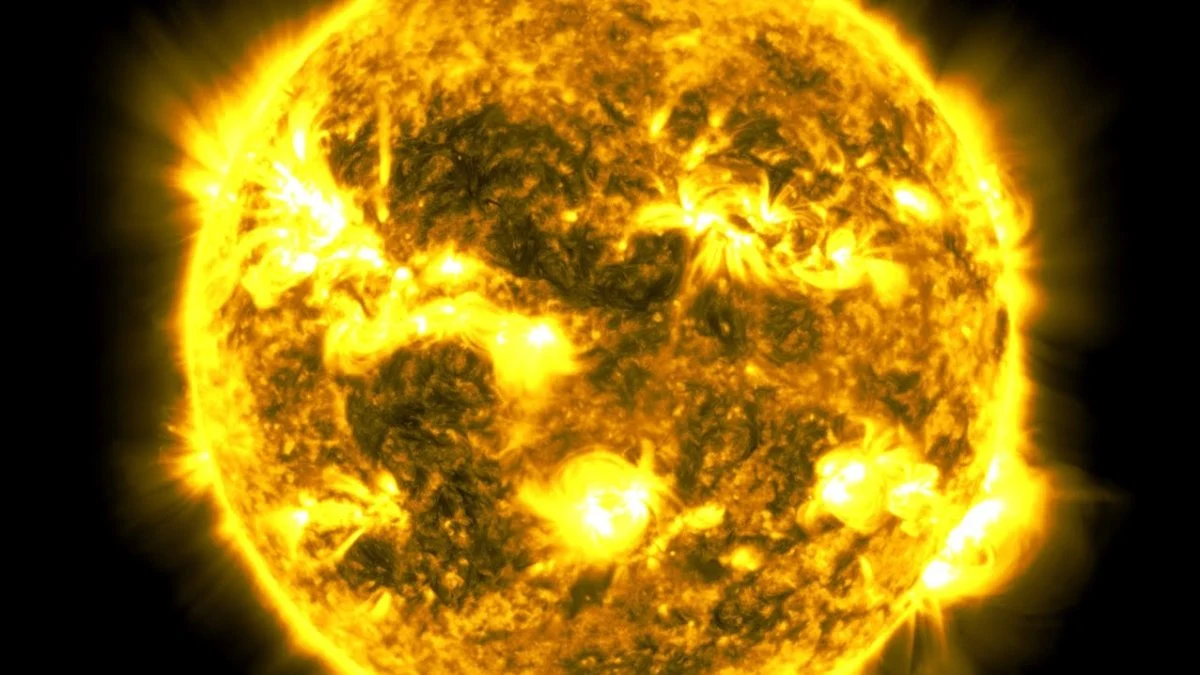
Our Sun may have once had a companion, a twin star, orbiting the galaxy together in a binary system. While the Sun is currently an isolated star, recent findings suggest that it might have formed in a stellar pair. The big question remains: where did this potential companion go?
The Sun’s position in the Milky Way is solitary; it orbits in one of the galaxy’s spiral arms, and its nearest neighbor, Proxima Centauri, is a distant 4.2 light-years away. Yet, binary stars—pairs of stars that orbit each other—are quite common in the galaxy. In fact, some studies suggest that most stars could have originally formed in pairs. This raises an intriguing question: could our Sun have once had a stellar sibling?
For many years, astronomers have explored the possibility that our Sun formed as part of a binary system, but it lost its companion over time. According to Gongjie Li, an astronomer at the Georgia Institute of Technology, this hypothesis is “very interesting” and warrants further investigation. Fortunately, the absence of a companion star today is beneficial for life on Earth, as a companion’s gravitational influence could have disrupted the orbit of our planets, potentially creating extreme temperature swings that would have been inhospitable for life.
While theories like the existence of a faint “Nemesis” star circling the Solar System have faded due to lack of evidence, early star formation processes suggest that the Sun could have had a twin. Stars form from vast clouds of gas and dust that collapse under gravity, and it is believed that stars often form in pairs or multi-star systems. In 2017, astrophysicist Sarah Sadavoy found that star formation might preferentially produce protostars in pairs, known as a fragmentation process. These binary systems could remain bound together, or, over time, the stars could drift apart.
If the Sun did have a companion, some researchers propose that it may have left behind clues in the outer regions of the Solar System. For example, Amir Siraj, an astrophysicist at Harvard University, suggests that the Oort Cloud—an icy shell surrounding the Solar System beyond Pluto—may hold evidence of the Sun’s former twin. He argues that a companion star could explain the large number of objects in the Oort Cloud and even the possible existence of a distant, undiscovered planet, often referred to as “Planet Nine.”
On the other hand, Konstantin Batygin of the California Institute of Technology believes that the Oort Cloud’s structure could be explained without invoking a binary companion. He suggests that the Sun may have formed in a dense star cluster, and the gravitational influence of Jupiter and Saturn could have caused the ejection of objects into the Oort Cloud.
Another potential signature of the Sun’s early binary relationship is its slight tilt of about seven degrees relative to the plane of the Solar System. Batygin believes this tilt could be due to the gravitational pull of a now-absent companion star. Although the search for our Sun’s missing twin is challenging, some believe that the Vera Rubin Observatory, set to begin operations in 2024, could help map the Oort Cloud and reveal whether a binary companion once existed.
Interestingly, the Sun’s formation in a star cluster might also provide clues. In 2018, scientists discovered a “twin” star located less than 200 light-years from the Sun. However, because stars in the same cluster often have similar compositions, it is difficult to pinpoint whether this star could have been our Sun’s companion.
Despite the uncertainty, the idea that the Sun once had a twin opens up fascinating possibilities for understanding exoplanetary systems. In fact, many exoplanets are found orbiting binary stars, and such systems can feature planets that orbit one of the two stars or both. While a binary companion could have caused some disruption in planetary orbits, it might not have prevented the formation of life on Earth. The mystery of the Sun’s potential twin may remain unresolved, but as scientists continue to study the outer reaches of the Solar System, they might uncover more signs of its stellar sibling.