Yazılar

Musk’s Starlink Receives Final Regulatory Approval to Launch Commercial Operations in India

India’s space regulator, the Indian National Space Promotion and Authorization Centre (IN-SPACe), granted Starlink a license on Wednesday to commence commercial satellite internet operations in the country. This clears the last regulatory barrier for Elon Musk’s satellite broadband provider to enter the Indian market.

Starlink had been waiting since 2022 for the necessary approvals. Last month, it received a key license from India’s telecom ministry, but awaited clearance from the space regulator. The newly issued license is valid for five years.

Starlink becomes the third company authorized by India to provide satellite internet services, following approvals granted to Eutelsat-backed OneWeb and Reliance Jio. Next steps for Starlink include securing spectrum allocation from the government, establishing ground infrastructure, and conducting testing to comply with India’s security regulations.

The licensing process was marked by a prolonged dispute between Musk’s Starlink and billionaire Mukesh Ambani’s Reliance Jio over how satellite spectrum should be allocated. The Indian government sided with Starlink, ruling that spectrum should be assigned directly rather than auctioned.
France’s SNCF to Roll Out Satellite Internet on Trains Amid European Connectivity Push

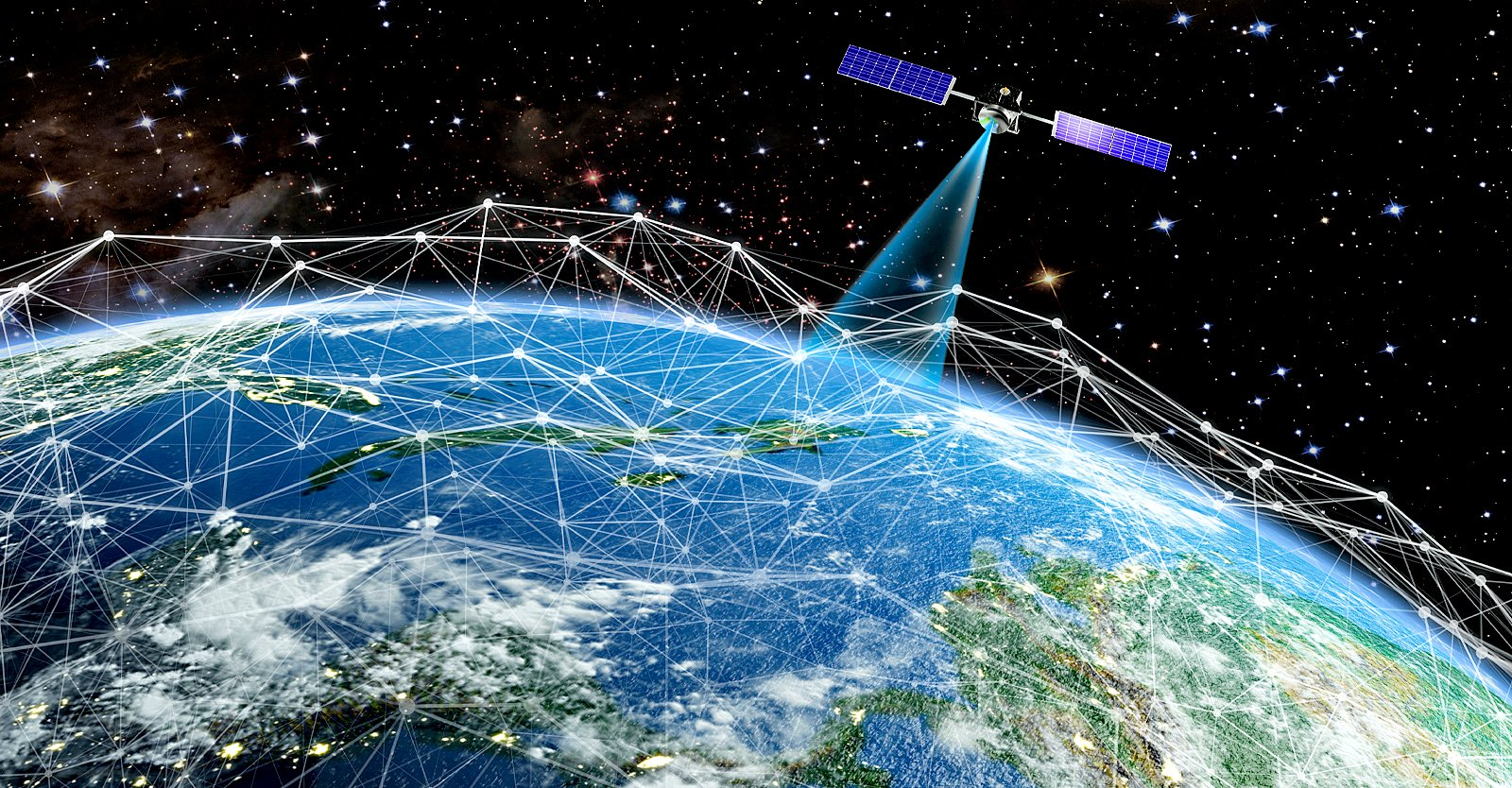
France’s state railway operator SNCF is preparing to introduce satellite internet on its trains, joining a growing movement across Europe to improve onboard connectivity using low Earth orbit (LEO) satellite networks. The company announced on Friday it will launch a tender seeking providers to supply satellite-powered internet services.

Dual-Network Strategy

In a statement to Reuters, SNCF said it is adopting an “innovative approach” that combines terrestrial (4G/5G) and satellite internet to enhance network resilience and continuity across its vast rail network, including in rural and isolated areas.

“The satellite plus 4G/5G combination would eliminate dead zones and offer stable, fast service adapted to new uses such as streaming or video conferencing,” the company said.

Possible Partners: Starlink and Eutelsat

According to a source familiar with the matter, Elon Musk’s Starlink and France’s Eutelsat are among the companies being considered for the project. While SNCF declined to confirm specific talks, Eutelsat has publicly expressed interest, stating it is already in discussions with SNCF about a potential pilot project.

A Eutelsat spokesperson highlighted its experience in similar pilot efforts in Britain and Kazakhstan, and emphasized its position as one of only two active LEO providers currently operating, alongside Starlink. Eutelsat’s OneWeb network, backed by the French government, operates more than 600 LEO satellites.

“We intend to bid for the contract with our French partners such as Orange Business Services,” said the spokesperson.

A Broader European Trend

France’s move mirrors similar efforts across Europe:

  • Italy’s Ferrovie dello Stato ran a two-week trial in June with providers including Starlink.

  • Scotland’s ScotRail began a six-week Starlink trial in May.

These initiatives seek to address longstanding problems with mobile-based train internet, which often suffers from dead zones, tunnel interference, and rapid handovers between towers—particularly challenging at high train speeds.

In contrast, LEO satellites offer more stable, continuous coverage, including in rural and mountainous regions where cellular signals are often weak or absent.

Looking Ahead

With public demand growing for high-speed, uninterrupted internet on the move, satellite connectivity is poised to become a mainstay of next-generation transportation infrastructure. France’s entry into the space-connected railway space may soon redefine the standard for European rail travel.

India Rebukes X Over “Tom, Dick, and Harry” Remark in Ongoing Court Battle on Content Takedowns

A legal clash between Elon Musk’s X (formerly Twitter) and the Indian government intensified on Tuesday after X’s lawyer made a controversial remark suggesting that “every Tom, Dick, and Harry” government official could issue takedown orders on online content. The statement drew a sharp and immediate rebuke from India’s Solicitor General Tushar Mehta, escalating a long-standing standoff over digital content regulation.

The remark came during a hearing at the Karnataka High Court, where X is challenging a government-run website that it alleges serves as a “censorship portal.” The Indian government, however, defends the portal as a tool for swiftly notifying social media platforms of legal obligations under content moderation laws.

X’s lawyer, K.G. Raghavan, cited a recent example where the Indian Railways ordered the takedown of a video showing a car being driven on a railway track—content X considered newsworthy. “This is the danger… if every Tom, Dick, and Harry officer is authorised,” he argued.

Solicitor General Mehta strongly objected, stating, “Officers are not Tom, Dick, or Harry… they are statutory functionaries.” He further defended India’s regulatory approach, saying, “No social media intermediary can expect completely unregulated functioning.”

The Indian Information Technology Ministry and X did not issue public responses to Reuters’ inquiries following the courtroom exchange.

India has become a strategically important market for Musk’s expanding empire, particularly with upcoming plans to launch Starlink and Tesla in the country. However, X’s friction with Prime Minister Narendra Modi’s administration over content moderation continues to cast a shadow over those ambitions.

The roots of the conflict trace back to 2021, when X refused to comply with Indian orders to block specific tweets. Although it eventually yielded to the demands, the platform has continued to contest the legality of those directives in Indian courts.

Tuesday’s court exchange underscores the ongoing tension between tech giants and sovereign governments over who has the final say in regulating online content—and how far that power should extend.