Yazılar

SpaceX Plans to Retry ‘Chopsticks’ Rocket Catch in Upcoming Starship Launch

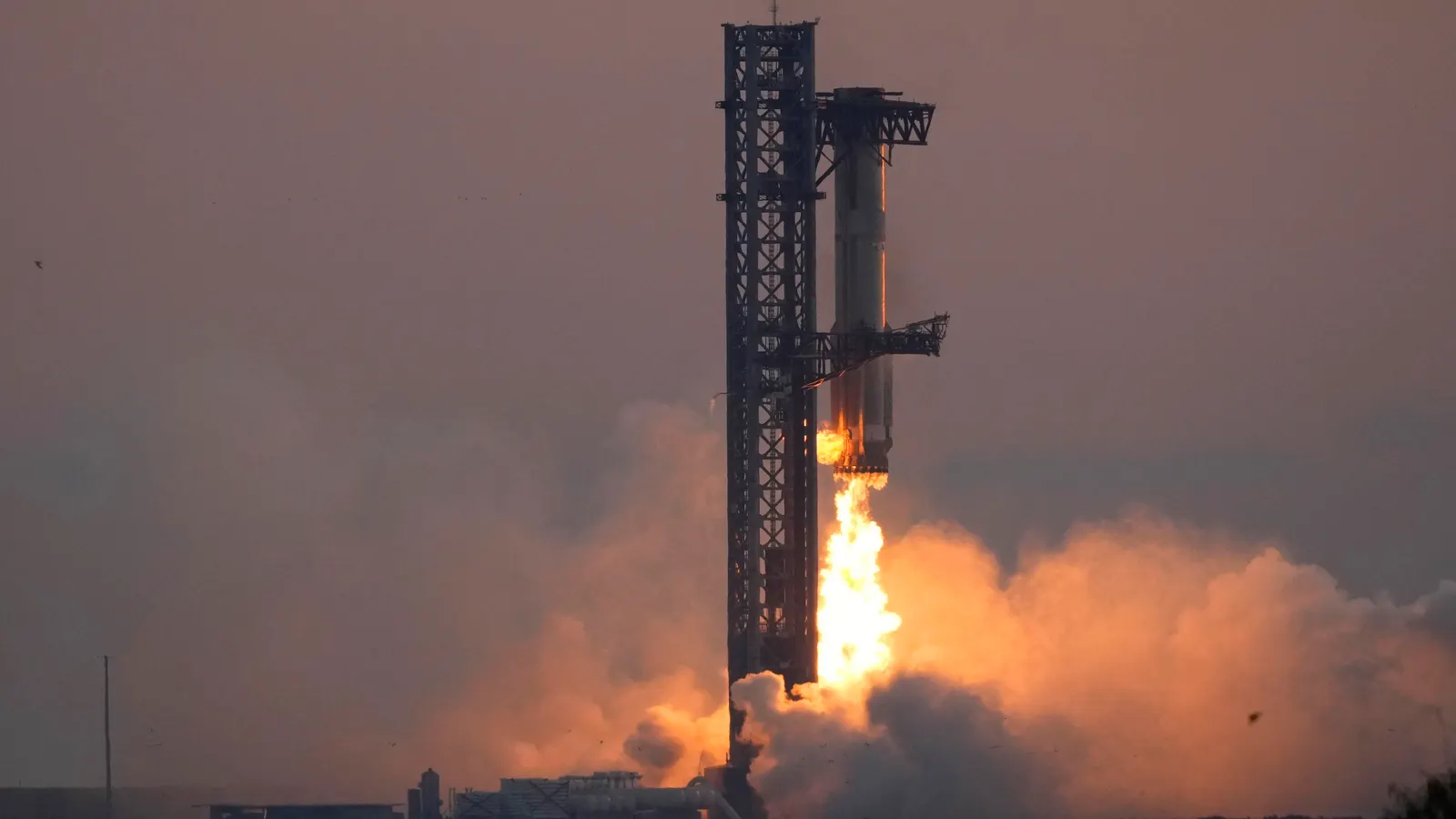
SpaceX is preparing for the highly anticipated launch of its massive Starship rocket from South Texas, scheduled for Tuesday. This critical test mission, which marks the sixth major trial for the Starship program, is set to draw significant attention. One notable aspect of the launch is the expected visit from President-elect Donald Trump, signaling the importance of this event both for SpaceX and its political connections.

The launch comes at a time when SpaceX CEO Elon Musk is deeply involved in the transition planning for Trump’s second term. Musk has been an influential figure in Trump’s circle since the November 5 election, and his support for the Republican administration has been attributed to concerns over regulations, particularly those affecting the development of the Starship rocket. Musk has voiced concerns about excessive regulation and its impact on the advancement of cutting-edge technologies like Starship, which has been central to SpaceX’s vision for space exploration.

Scheduled for a 30-minute launch window beginning at 4 p.m. local time, the mission will see Starship attempt a bold flight, sending the rocket into space and partially orbiting the Earth. This mission is considered a crucial step in SpaceX’s plans to eventually make Starship a fully reusable spacecraft capable of missions to the Moon, Mars, and beyond. The test will assess various elements of the vehicle’s design and performance, providing invaluable data for future launches.

As SpaceX continues to push the boundaries of space exploration, the Starship launch is expected to be a pivotal moment for both the company and the broader aerospace industry. With political backing from the Trump administration and ongoing technical advancements, SpaceX aims to solidify its position as a leader in the quest for interplanetary travel. The outcome of this mission will likely play a key role in shaping the future of space exploration.

Is SpaceX’s Starship the Loudest Rocket Ever?

A History of Thunderous Rockets

Rocket launches have always been associated with immense noise, but SpaceX’s Starship, the largest and most powerful rocket to leave the launchpad, has reignited debates about the loudest rocket ever. With thrust levels exceeding all previous rockets, Starship may set new records for launch noise.

Historically, NASA’s Saturn V rocket, used in the Apollo program during the 1960s and 1970s, was among the loudest rockets. Saturn V’s launches, with thrust levels of 35 MN, produced a maximum noise level of 204 decibels (dB), loud enough to be heard miles away and powerful enough to cause potential damage near the launchpad. Spectators were kept at least 3.2 miles (5.1 km) away to mitigate the risks of exposure.

Comparatively, the Soviet N1 rocket, designed for lunar missions, generated 45 MN of thrust, theoretically louder than Saturn V, though its limited launches failed to provide reliable acoustic measurements.

Starship: Breaking New Records

Starship, with its Super Heavy booster, produces an extraordinary 74 MN of thrust, more than double Saturn V’s output. During its fifth test flight in October 2024, researchers from Brigham Young University recorded noise levels exceeding 120 dB at a distance of 6.5 miles (10.5 km) and sonic booms reaching nearly 140 dB at the same distance.

Closer to the launchpad, pre-launch estimates from the FAA suggested noise levels could reach up to 150 dB, a volume that can potentially cause physical damage to structures. Residents in nearby towns reported vibrations, broken windows, and dust storms caused by the force of the rocket’s engines.

The combination of Super Heavy’s thrust and Starship’s massive size makes it a strong contender for the loudest rocket, especially when considering the environmental impact of its launches.

Managing Rocket Noise

Both Saturn V and Starship have highlighted the challenges of managing the acoustic power generated by massive rockets. NASA’s engineers addressed noise concerns during the Apollo era by using water-filled flame trenches at the launchpad to suppress sound waves. This method was also used for the Space Shuttle and the newer Space Launch System (SLS) rockets.

The SLS, used in NASA’s Artemis program, produces 15% more thrust than Saturn V and recorded 136 dB at 0.9 miles (1.5 km) during its Artemis I launch in 2022. Researchers noted the SLS’s crackling sound was “40 million times greater than a bowl of Rice Krispies.”

Starship’s sheer power poses additional challenges. Its April 2023 maiden flight destroyed its launchpad, underscoring the intensity of its thrust and noise. SpaceX has since worked on improving its launch systems, including water-based sound suppression.

Why Rockets Sound Different

Rocket noise isn’t just about volume; its characteristics depend on thrust, design, and atmospheric conditions. Low-frequency rumbles, high-decibel crackles, and the environment’s reflection of sound waves contribute to how launches are experienced. Overcast conditions, for instance, can amplify noise, carrying it farther from the launch site.

Future of Loud Rockets

With Starship’s ongoing development, noise levels may climb further as engineers refine the rocket for missions to Mars. SpaceX’s efforts to optimize performance and safety will include mitigating acoustic impacts, but earplugs and safe viewing distances will remain essential for spectators.

SpaceX Achieves Major Milestone: Starship Booster Successfully Caught in Fifth Test Flight

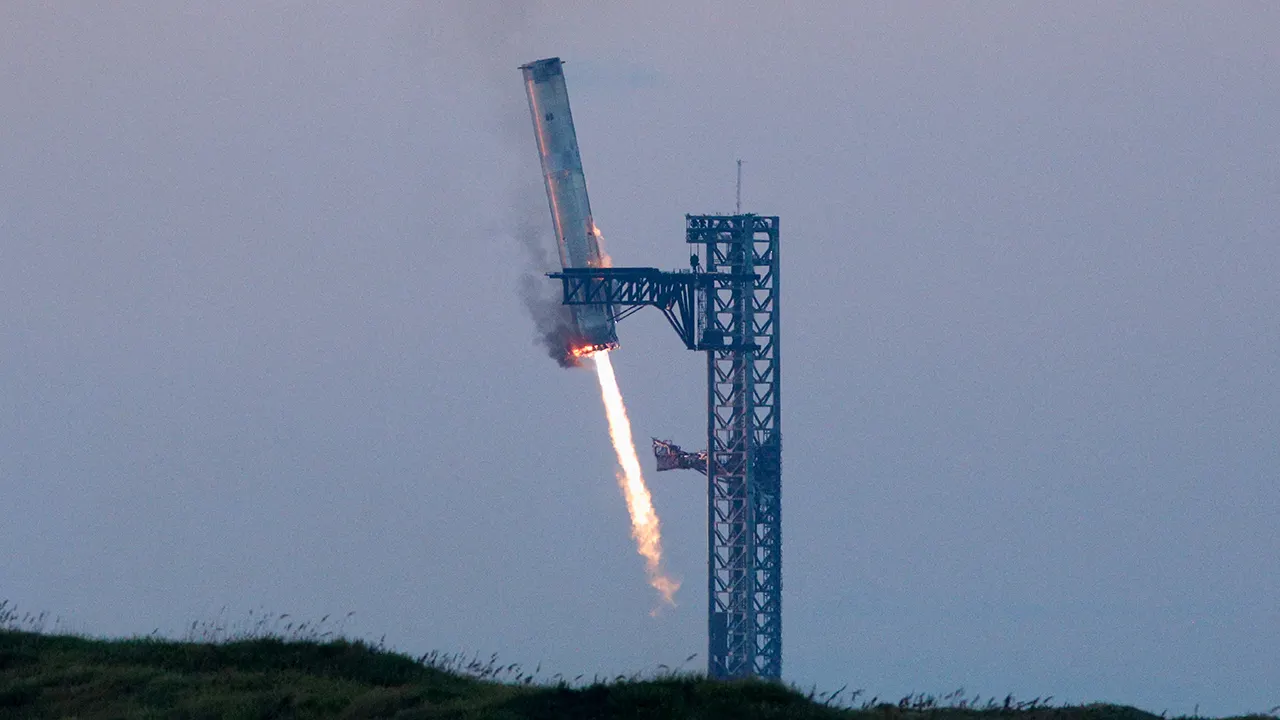
SpaceX achieved a groundbreaking engineering feat on Sunday during its fifth test flight of the Starship rocket, successfully returning the Super Heavy booster to its Texas launch pad using giant mechanical arms. This marks a critical advancement in SpaceX’s efforts to develop a fully reusable rocket system designed for missions to the moon, Mars, and beyond.

The mission began at 7:25 a.m. CT (1225 GMT) when the Super Heavy booster lifted off from SpaceX’s Boca Chica facility in Texas, propelling the Starship second stage toward space. After separation at an altitude of approximately 70 kilometers (40 miles), the Super Heavy booster initiated its descent back to the launch site in a dramatic sequence. As it neared the pad, the booster reignited three of its 33 Raptor engines to control its descent, targeting the 400-foot launch tower equipped with large metal arms designed to “catch” the rocket.

In a first for SpaceX, the booster hooked itself into place using tiny protruding bars under its four grid fins, which had steered the rocket during its descent. Elon Musk, SpaceX’s CEO, celebrated the success by posting, “The tower has caught the rocket!!” on X (formerly Twitter). Engineers at SpaceX were seen cheering on the company’s live stream as the novel landing method succeeded.

Pushing the Limits of Reusability

This successful catch-landing is part of SpaceX’s ambitious mission to develop fully reusable rockets, an essential feature for deep-space exploration and reducing the costs of space missions. Starship, the rocket system’s second stage, also played a key role in the test flight, accelerating to speeds of 17,000 miles per hour at an altitude of 89 miles before heading toward a targeted splashdown in the Indian Ocean.

Upon reentry, Starship encountered superheated plasma, with onboard cameras capturing the spectacular display as it streaked through Earth’s atmosphere. The heat shields, now made up of 18,000 improved tiles, were enhanced following the previous test flight in June, when the Starship’s heat shields sustained damage, complicating its reentry.

Controlled Splashdown and Explosion

The test flight concluded with Starship re-igniting one of its six Raptor engines to reorient itself for a simulated landing in the ocean near Western Australia. While the ship successfully landed on target in the waters, it toppled onto its side soon after, and moments later, a fireball explosion illuminated the area. Although it remains unclear whether the explosion was a controlled detonation or due to a fuel leak, SpaceX engineers were heard celebrating the mission’s outcome, confirming that the Starship landed “precisely on target.”

Regulatory Approvals and Tensions

SpaceX’s fifth test flight was cleared for launch just a day before by the U.S. Federal Aviation Administration (FAA), ending a period of tension between the company and the regulatory body over the pace of launch approvals. The FAA had previously fined SpaceX over its Falcon 9 rocket, which is the company’s workhorse for launching satellites and crew missions. Despite these regulatory hurdles, the successful test highlights SpaceX’s commitment to advancing its spaceflight technology and achieving its long-term vision of interplanetary travel.

Conclusion

This latest test is a significant step in SpaceX’s test-to-failure development strategy for creating reusable rocket technology capable of supporting NASA’s lunar missions and Musk’s vision of human colonization of Mars. Though setbacks like the Starship’s post-landing explosion remain, the key achievements of this mission—such as the booster catch—bring SpaceX closer to its ambitious goal of developing a rocket system that can be reused for multiple deep-space missions, drastically cutting costs and paving the way for the future of space exploration.