Yazılar

Two Chinese AI Chip Firms Target $1.7 Billion IPOs Amid U.S. Export Curbs

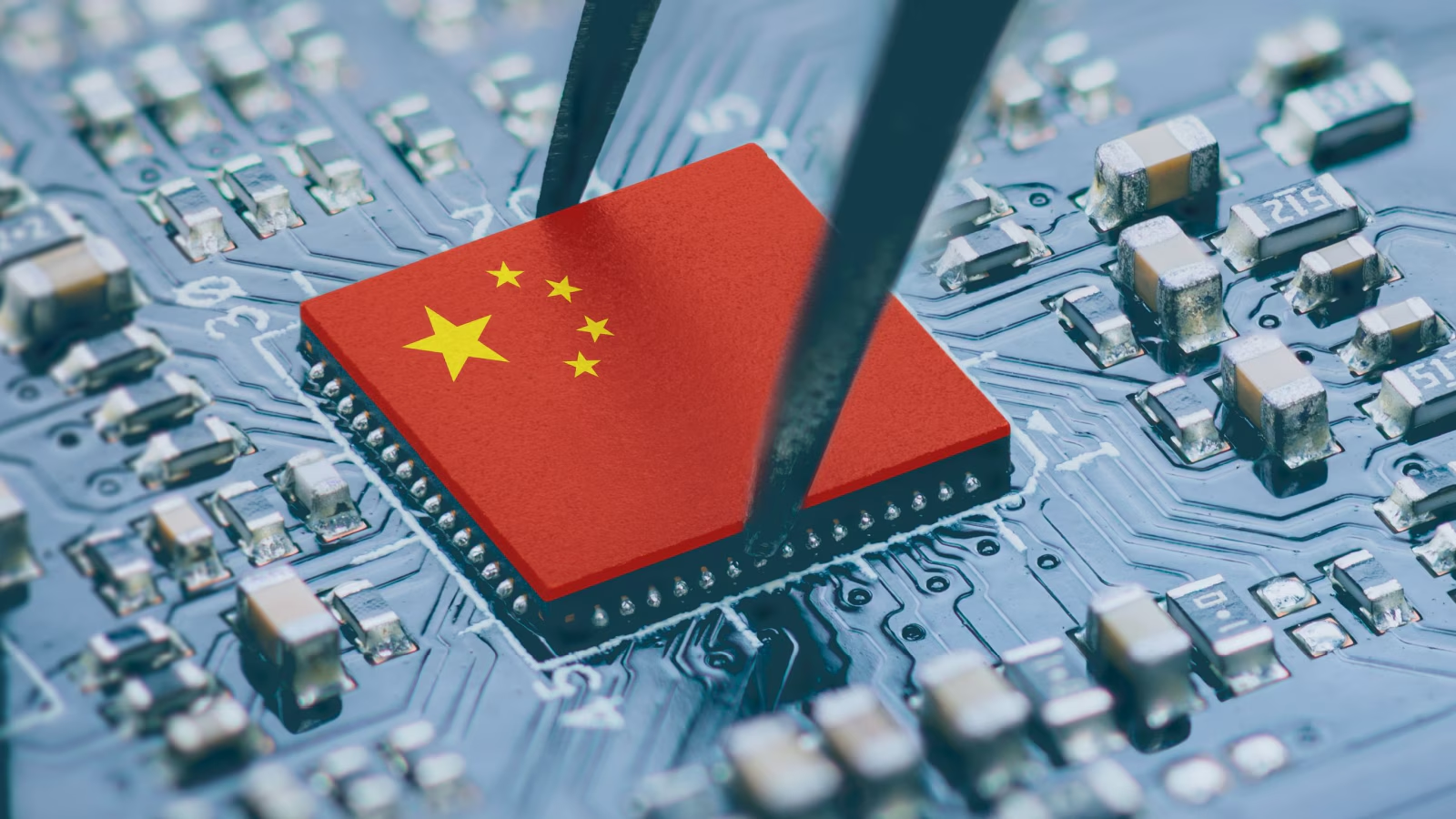
Two Chinese artificial intelligence chipmakers, Moore Threads and MetaX, are seeking to raise a combined 12 billion yuan ($1.65 billion) through initial public offerings (IPOs) on Shanghai’s STAR Market, according to filings released Monday. The companies are betting that U.S. export restrictions on advanced semiconductors will drive demand for homegrown alternatives.

Beijing-based Moore Threads aims to raise 8 billion yuan, while Shanghai-based MetaX targets 3.9 billion yuan. Both firms design graphics processing units (GPUs)—vital components for AI applications—and are attempting to position themselves as domestic challengers to Nvidia, whose chips are now largely restricted from sale in China.

Their listing bids come as China accelerates its push for semiconductor self-sufficiency amid tightening U.S. sanctions. In April, Washington imposed additional curbs that banned Nvidia’s popular H20 chips from export to China. Earlier restrictions have also blocked Chinese chipmakers from using top-tier global foundries such as Taiwan Semiconductor Manufacturing Company (TSMC).

Although both Moore Threads and MetaX acknowledged in their IPO filings that U.S. sanctions present operational challenges, they also highlighted the market opportunity those restrictions have created. “U.S. restrictions… are prompting Chinese companies to accelerate domestic substitution,” Moore Threads stated. Similarly, MetaX noted that geopolitical pressures are “forcing domestic clients to use domestically-produced GPU products.”

Financially, both firms remain deep in the red.

  • Moore Threads reported 2024 revenue of 438 million yuan but posted a loss of 1.49 billion yuan, adding to losses of 1.67 billion yuan in 2023 and 1.84 billion yuan in 2022.

  • MetaX had 2024 revenue of 743 million yuan with a 1.4 billion yuan loss, following losses of 871 million yuan in 2023 and 777 million yuan in 2022.

Despite these losses, analysts say that access to China’s capital markets is critical for these startups to scale R&D and reach economies of scale. “Moore Threads and MetaX are both considered leading GPU firms in China,” said He Hui, semiconductor research director at Omdia. “IPO funding is essential to sustain innovation and growth.”

Founded in 2020, both companies were launched by veterans of major U.S. chipmakers.

  • MetaX’s leadership includes former AMD executives, notably Chairman Chen Weiliang, AMD’s former global head of GPU product line design.

  • Moore Threads was founded by ex-Nvidia personnel, including Chairman Zhang Jianzhong, previously Nvidia’s general manager in China.

These two firms join a rapidly expanding field of Chinese AI chipmakers such as Huawei, Cambricon, and Hygon, all seeking to fill the void left by restricted foreign chip supply and capitalize on Beijing’s semiconductor independence ambitions.

Meta Launches ‘Superintelligence Labs’ to Revive AI Strategy Amid Fierce Competition

Meta is restructuring its artificial intelligence efforts under a new division called Meta Superintelligence Labs, in a bid to regain lost ground in the global AI race. According to a source familiar with the matter, the new unit will be headed by Alexandr Wang, the former CEO of data-labeling firm Scale AI, who now takes on the role of Chief AI Officer at Meta.

The move comes as Meta grapples with senior staff exits and underwhelming reception to its latest open-source model Llama 4, developments that have left rivals such as Google, OpenAI, and China’s DeepSeek in stronger positions. Meta CEO Mark Zuckerberg reportedly hopes the new lab will fast-track progress toward artificial general intelligence (AGI)—a long-term ambition to build machines that can surpass human intelligence.

In recent weeks, Zuckerberg has taken personal control of AI recruiting, targeting high-profile names with aggressive offers, including attempts to lure OpenAI co-founder Ilya Sutskever’s new startup Safe Superintelligence (SSI). Offers reportedly reached $1 million per candidate via direct WhatsApp outreach.

The shakeup includes Meta’s $14.3 billion investment in Scale AI earlier this month. In addition to Wang, the Superintelligence Labs will include SSI co-founder and CEO Daniel Gross, while former GitHub CEO Nat Friedman will co-lead the division, focusing on applied AI products.

Meta has also attracted talent from top AI firms, hiring at least 11 new AI researchers from OpenAI, Anthropic, and Google DeepMind. Notable names include Jack Rae and Pei Sun (DeepMind), Jiahui Yu, Shuchao Bi, Shengjia Zhao, and Hongyu Ren (OpenAI), as well as Joel Pobar (Anthropic), who had previously spent over a decade at Meta.

Earlier this month, OpenAI’s CEO Sam Altman revealed that Meta had offered some of his staff $100 million bonuses to switch companies.

Despite the hiring blitz, some analysts are skeptical of Meta’s AGI strategy. They point to the company’s Reality Labs unit, which has burned over $60 billion since 2020 with few commercial wins, outside of Ray-Ban smart glasses and Quest headsets.

The broader tech sector is expected to spend $320 billion on AI development this year. Other firms are also making bold moves: Microsoft spent $650 million acquiring most of Inflection AI’s team, and Amazon has poached key personnel from Adept.

Still, the path to AGI remains uncertain. Meta’s own Chief AI Scientist Yann LeCun has publicly said that current methods are inadequate to reach true AGI. Meanwhile, SoftBank CEO Masayoshi Son believes the breakthrough is within 10 years.

SoftBank’s Masayoshi Son Proposes $1 Trillion Arizona AI and Robotics Hub

SoftBank Group founder Masayoshi Son is planning a $1 trillion industrial complex in Arizona focused on robotics and artificial intelligence, Bloomberg News reported Friday, citing sources familiar with the matter. The ambitious project aims to revive high-end tech manufacturing in the U.S. and create a hub akin to China’s manufacturing powerhouse, Shenzhen.

Son is reportedly seeking to partner with Taiwan Semiconductor Manufacturing Co. (TSMC) for the venture, codenamed Project Crystal Land, though the exact role TSMC would play and its interest level remain unclear. TSMC is already investing heavily in U.S. chip manufacturing with planned investments totaling $165 billion.

SoftBank officials have engaged in discussions with U.S. federal and state officials, including Commerce Secretary Howard Lutnick, to explore tax incentives for companies that build factories or invest in the industrial park.

The project also seeks interest from other tech giants such as Samsung Electronics. However, the plans are preliminary and dependent on support from the Trump administration and state authorities.

If realized, the $1 trillion investment would surpass the scale of the $500 billion “Stargate” project, a U.S. data center expansion funded by SoftBank, OpenAI, and Oracle.

SoftBank and TSMC have declined to comment on the report. The White House and Department of Commerce did not immediately respond to requests for comment.

This proposed initiative follows several major SoftBank investments this year, including its $6.5 billion acquisition of semiconductor designer Ampere and up to $40 billion commitment to OpenAI, part of which may be syndicated to other investors. Recently, SoftBank also raised $4.8 billion by selling shares in T-Mobile.