Yazılar

EssilorLuxottica shares hit record high as Meta AI glasses fuel investor optimism

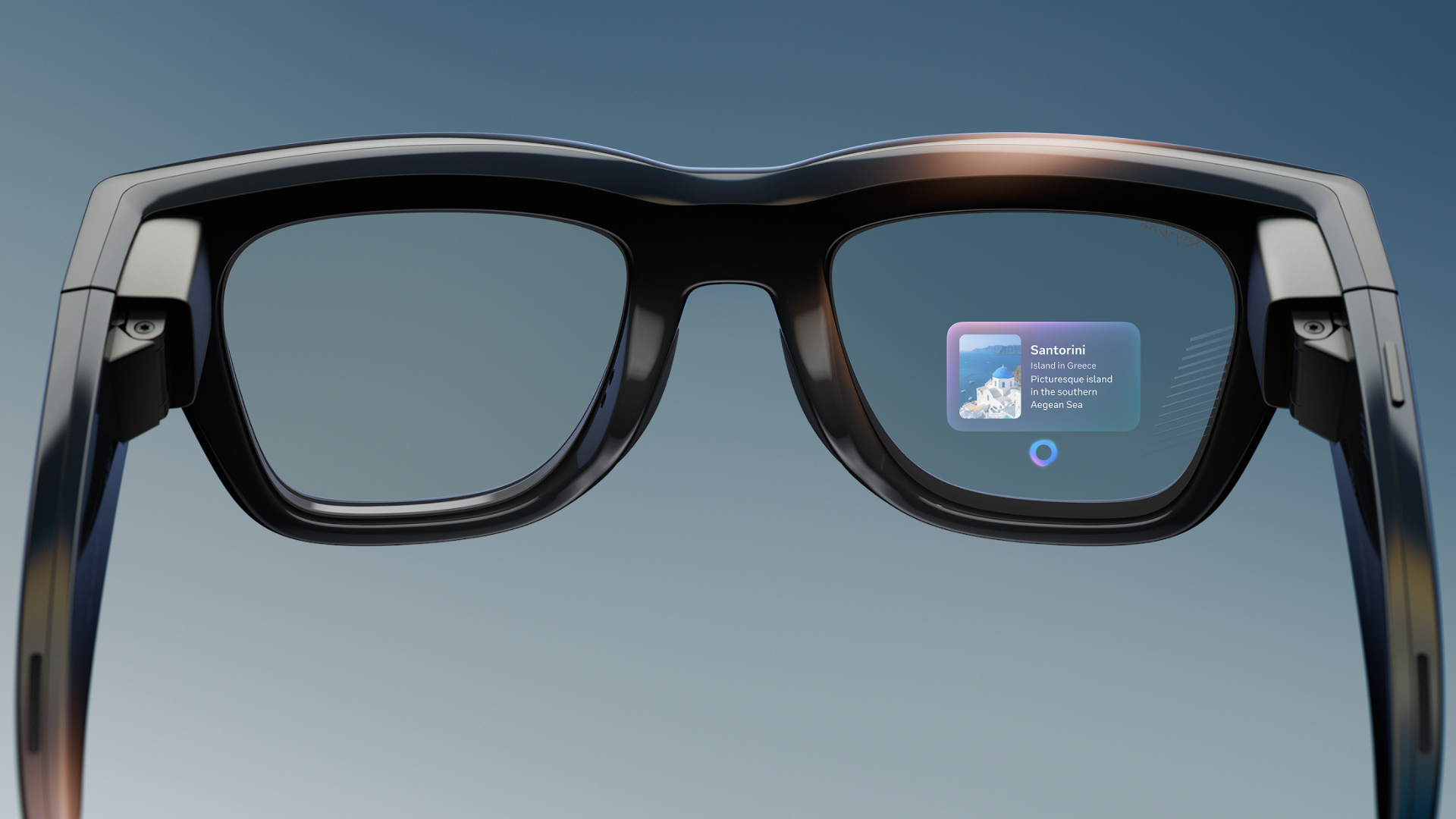
Shares of EssilorLuxottica (ESLX.PA) soared 14% on Friday, reaching an all-time high and adding nearly $20 billion in market value, as enthusiasm over its AI-powered Ray-Ban Meta smart glasses surged among investors.

The Paris-listed eyewear giant, founded by Leonardo Del Vecchio, reported third-quarter sales up 11.7% year-on-year to €6.9 billion ($8.1 billion), marking its strongest quarterly performance ever. The results exceeded analyst expectations, buoyed by growing demand for smart and wearable technologies.

Although the Ray-Ban Meta smart glasses currently account for only a small portion of EssilorLuxottica’s total revenue, they have become a major growth catalyst. Chief Financial Officer Stefano Grassi said the AI-enabled glasses contributed over four percentage points to sales growth, prompting the company to expand production capacity ahead of schedule.

“The exponential growth of wearables provided an extra boost to top-line performance,” EssilorLuxottica said.

Barclays analysts predicted that smart glasses could become the most disruptive innovation since smartphones, forecasting sales of 60 million units globally by 2035.

The stock’s surge marked the biggest daily gain since 2008, lifting the company’s market capitalization to €126.5 billion and driving the Stoxx Europe Luxury 10 Index up more than 7% on the week.

Priced between $379 and $799, the latest Ray-Ban Meta models feature built-in displays and generative AI capabilities. Expansion to Canada, France, Italy, and the UK is planned for early 2026.

Analysts at J.P. Morgan called the glasses a “material growth driver,” while Equita raised its annual wearables forecast, estimating the category could contribute around €1 billion to sales this year.

Anthropic launches low-cost Haiku 4.5 model to make AI more accessible for businesses

AI startup Anthropic has unveiled a major update to its smallest model, Haiku, as it seeks to make artificial intelligence more affordable and practical for companies outside Silicon Valley. The new version, Haiku 4.5, costs about one-third as much as Anthropic’s Sonnet 4 and just one-fifteenth the price of its flagship Opus model, while matching or outperforming mid-tier models on tasks like coding and data synthesis.

Chief Product Officer Mike Krieger said the upgrade reflects a growing demand among traditional businesses for cost-effective AI tools that still deliver high performance. “Small models really help because they can be a more economical way of deploying at scale,” Krieger told Reuters, noting that cheaper AI makes it easier for firms to integrate intelligent assistants into systems used by thousands of employees.

Anthropic’s enterprise business now accounts for about 80% of its revenue, with over 300,000 corporate customers using its AI tools internally or within their products. The company’s annual revenue run rate has reached nearly $7 billion, underscoring its rapid ascent in the AI sector.

Founded in 2021 by former OpenAI employees, the San Francisco-based company has become one of the strongest challengers to OpenAI, backed by a recent valuation of $183 billion.

Anthropic’s smaller models, such as Haiku, aim to balance power and affordability at a time when companies are pushing back against the massive computational costs of training and running large-scale AI systems. The firm says businesses can even combine models — using advanced ones for strategic planning and smaller ones for everyday tasks like information synthesis and web searches.

Jeff Bezos Envisions Gigawatt-Scale Data Centres in Space Within Two Decades

Amazon founder Jeff Bezos says it’s only a matter of time before humanity builds massive data centres in orbit, powered by continuous solar energy and free from Earth’s environmental constraints. Speaking at Italian Tech Week in Turin, Bezos predicted that gigawatt-scale orbital data hubs could become a reality within the next 10 to 20 years, eventually surpassing their terrestrial counterparts in efficiency and cost.

“These giant training clusters—those will be better built in space,” Bezos said during a conversation with Ferrari and Stellantis Chairman John Elkann. “We have solar power there 24/7—no clouds, no rain, no weather. We will be able to beat the cost of terrestrial data centres in space in the next couple of decades.”

The idea of space-based computing infrastructure is gaining traction among tech firms as AI-driven demand for electricity, cooling, and server capacity skyrockets on Earth. Conventional data centres are now among the world’s largest industrial consumers of energy and water, fueling the search for sustainable alternatives.

Bezos described orbital data centres as a natural next step in the broader trend of using space to improve life on Earth, noting that satellites already manage weather forecasting, communications, and navigation. “The next step is data centres, then other kinds of manufacturing,” he said.

However, the vision faces formidable obstacles: high launch costs, maintenance difficulties, and the risk of mission failures in space. Frequent upgrades—a routine part of Earth-based data infrastructure—would be far more complicated in orbit.

Beyond technology, Bezos framed the discussion within a broader narrative about AI and societal transformation. Drawing parallels between today’s artificial intelligence boom and the dot-com bubble of the early 2000s, he urged optimism despite speculative excess.

“We should be extremely optimistic that the societal and beneficial consequences of AI—like we had with the internet 25 years ago—are for real and there to stay,” he said. “It’s important to separate potential bubbles from the actual underlying reality.”

Bezos emphasized that AI’s impact will be “broadly diffused” across industries and societies, suggesting that the technology’s true promise lies not in isolated breakthroughs but in its global, everyday applications.

His comments add weight to the emerging idea that space infrastructure could become the next great frontier of the digital economy, where data, energy, and AI converge far above Earth’s atmosphere.