Yazılar

World Labs Secures $1B for Spatial AI

World Labs, the startup founded by computer scientist Fei-Fei Li, has raised $1 billion in a new funding round to advance its work in spatial intelligence.

The investment drew support from major technology players including AMD, Nvidia and Autodesk, along with firms such as Fidelity Management & Research Company and Sea. Autodesk alone contributed $200 million and will also take on an advisory role.

Spatial intelligence focuses on enabling artificial intelligence to understand and interact with the three-dimensional world rather than relying solely on flat data such as text or images. World Labs is developing foundational models capable of perceiving and generating 3D environments.

Earlier reports suggested the company had been in funding discussions at a valuation of around $5 billion, though the latest announcement did not confirm this figure.

Fei-Fei Li previously raised $230 million in 2024 to establish the startup. Future applications of spatial intelligence may extend to augmented reality, virtual reality and robotics.

World Labs joins a broader movement toward so-called world models, an emerging AI approach designed to interpret and simulate physical environments. Similar efforts are underway at Google DeepMind and other research-driven organizations.

Microsoft Targets $50B AI Investment in Global South

Microsoft announced plans to invest up to $50 billion by the end of the decade to expand artificial intelligence infrastructure across developing and emerging economies, commonly referred to as the Global South.

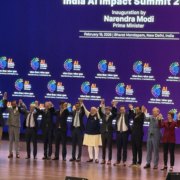
The commitment was revealed during the AI summit held in New Delhi, where technology leaders and policymakers gathered to discuss the future of digital transformation in lower-income regions.

The Global South includes nations primarily located in the southern hemisphere that are still building their technological and economic capacity. Microsoft’s initiative aims to accelerate AI adoption in these regions by improving infrastructure and access to advanced digital tools.

India remains a central focus of this strategy. Last year, Microsoft unveiled $17.5 billion in AI-related investments in the country, reinforcing its position as a key growth market with rapidly expanding digital demand.

The broader initiative reflects increasing efforts by major technology companies to extend AI capabilities beyond traditional technology hubs, enabling wider participation in the global digital economy.

Meta Revives Smartwatch Project for 2026 Launch

Meta Platforms is reportedly restarting its smartwatch initiative as part of its expanding wearable technology strategy. The revived project, known internally as Malibu 2, is expected to introduce a device focused on health monitoring and integrated artificial intelligence capabilities.

The smartwatch is anticipated to include fitness tracking features alongside a built-in Meta AI assistant. This marks a renewed push into wearables after the company previously halted development in 2022 amid broader cost-cutting measures within its Reality Labs division.

The move reflects growing industry interest in AI-powered personal devices, particularly in health and lifestyle applications. Wearable technology is increasingly being positioned as a key interface for artificial intelligence in everyday use.

Meta has already seen strong market traction in smart eyewear through its collaboration with EssilorLuxottica, the parent company of Ray-Ban. Shipments of AI-enabled glasses reached nearly 6 million units last year, highlighting rising consumer demand for intelligent wearables.

Beyond smartwatches, Meta continues to work on multiple augmented and mixed-reality devices. However, the company is reportedly reassessing release timelines to avoid overwhelming consumers with too many new products in a short period.

Earlier internal discussions also indicated delays in certain mixed-reality projects, with some developments now expected closer to 2027.