Yazılar

AI Fears Shake Multiple US Sectors

Concerns over artificial intelligence are spreading beyond the technology sector and weighing on a wide range of industries across U.S. markets.

What began as a selloff in software stocks has now extended to areas such as financial services, real estate, insurance, and logistics. Investors are increasingly questioning which industries may be vulnerable to automation as AI tools evolve rapidly.

Software companies were hit first, with fears that new AI solutions could disrupt long-established business models. The pressure then spread to private credit firms exposed to software lending and to financial brokerages after AI-driven tax planning tools entered the market.

Data analytics companies and legal service providers also saw declines as investors assessed the potential for AI to reduce reliance on traditional advisory services. Meanwhile, real estate service firms and insurance brokers faced losses amid concerns that AI-powered platforms could streamline tasks that currently require human expertise.

Even trucking and logistics stocks declined after AI-based freight optimization tools demonstrated efficiency gains without additional staff.

Market analysts suggest that investor sentiment has shifted toward identifying both winners and losers in the AI transition. While some fear the technology could disrupt established industries, others believe certain sectors will adapt by using AI to enhance rather than replace existing operations.

SiTime Tech Could Be Used in Billions of Renesas Chips

SiTime’s technology could ultimately be embedded in billions of chips made by Japan’s Renesas, SiTime’s chief executive said, following a landmark acquisition deal between the two firms. SiTime shares surged nearly 18% after the company announced a transaction worth up to $3.2 billion to acquire timing assets from Renesas.

SiTime expects the acquired assets to generate about $300 million in revenue in the first year after the deal closes, anticipated by the end of 2026—nearly doubling the company’s fiscal 2025 sales. The agreement also brings Renesas CEO Hidetoshi Shibata onto SiTime’s board and includes plans for Renesas to integrate SiTime’s timing technology into its chips.

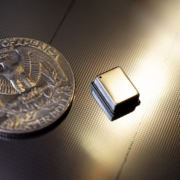
At the center of the deal is SiTime’s resonator technology, which is smaller and more resilient to temperature changes than traditional solutions. That makes it especially suitable for automotive applications, a core market for Renesas microcontrollers. SiTime CEO Rajesh Vashist said the collaboration could result in the first microcontrollers that require no external timing components.

While revenue impact will take time due to design, qualification, and production cycles, Vashist said the scale could be vast. If widely adopted across Renesas products, the technology could be integrated into billions of chips over the coming years, marking a major expansion opportunity for SiTime.

Global Chip Sales Set to Reach $1 Trillion on AI Boom

Global semiconductor sales are expected to reach $1 trillion this year, according to the Semiconductor Industry Association, as massive investment in artificial intelligence infrastructure continues to drive demand. The industry group said chip sales totaled $791.7 billion in 2025, up 25.6% from the previous year, and momentum is expected to accelerate further.

Advanced computing chips led the growth, fueled by surging demand for AI workloads. Sales of high-performance processors made by Nvidia, Advanced Micro Devices, and Intel rose nearly 40% in 2025, reaching about $302 billion. These chips form the backbone of AI data centers being built by major technology firms worldwide.

Memory chips were the second-largest segment, with sales climbing 34.8% to $223.1 billion as prices surged amid AI-driven shortages. The impact of AI has spread across the entire semiconductor supply chain, benefiting not only the largest manufacturers but also smaller firms supplying specialized components.

Industry executives remain optimistic about near-term demand. According to the association’s leadership, order books across Silicon Valley are full, suggesting a strong outlook through 2026 even as uncertainty remains over the longer-term pace of AI infrastructure build-outs.