
Yazılar

Nike says it is investigating possible data breach

Nike said it is investigating a potential data breach after a cybercrime group claimed to have leaked a large volume of data linked to the company’s business operations. The sportswear giant said consumer privacy and data security remain a priority as it assesses the situation and works to understand the scope of the incident.

The ransomware group World Leaks alleged it had published around 1.4 terabytes of Nike-related data. The claim could not be independently verified, and the company declined to comment on whether any ransom demand had been made or paid. It was also unclear whether the incident affected data connected to Nike’s wholesale partners.

The investigation comes at a sensitive time for Nike, which has been working to regain market share lost to smaller rivals. Data breaches have increasingly disrupted major corporations in recent years, often leading to heavy financial losses and operational damage.

VinFast teams up with Autobrains to develop low-cost self-driving tech

Vietnamese electric vehicle maker VinFast has partnered with artificial intelligence company Autobrains to develop advanced autonomous driving technology, including a low-cost “Robo-Car” system. The collaboration is aimed at accelerating VinFast’s self-driving ambitions while reducing costs by moving away from expensive sensor-heavy approaches.

The partnership will focus on improving driver assistance systems for upcoming VinFast electric vehicles, building on the company’s existing Level 2 autonomy capabilities. Pilot testing of the enhanced technology is already underway on the VF 8 and VF 9 models, with plans to gradually roll out more advanced features across VinFast’s vehicle lineup.

In addition, the companies are exploring a new Robo-Car architecture designed to enable higher levels of autonomy without relying on costly LiDAR sensors, radar systems or high-definition maps. Similar to Tesla’s strategy, the system uses seven standard cameras combined with a compact, high-performance computing chip. Testing is currently taking place in controlled zones in Hanoi, with expansion planned to larger cities and international markets.

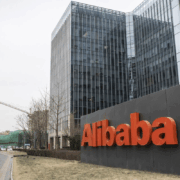
Texas governor bars state employees from using Shein, Alibaba products

Texas Governor Greg Abbott has ordered a ban on state employees using products from several Chinese-owned companies, including Shein, Alibaba and TP-Link, citing concerns over data security and the privacy of Texans. The restriction applies to state-owned devices and networks and covers physical hardware, software and artificial intelligence tools.

The list of prohibited companies also includes online shopping platform Temu, battery maker CATL, Chinese drone manufacturer Autel and artificial intelligence firm iFlyTek. Abbott said the move was aimed at preventing potential access by the Chinese government to sensitive data handled by Texas state agencies.

The decision follows a broader trend among U.S. state and federal officials to limit the use of technology linked to China on security grounds. While Texas has taken a firm stance, the move comes as Washington and Beijing reached a temporary easing of tensions last October after years of trade and technology disputes.

Abbott’s order reflects ongoing concerns about foreign technology in government systems and adds Texas to a growing list of U.S. jurisdictions imposing restrictions on Chinese-linked products in the name of cybersecurity and national security.