Yazılar

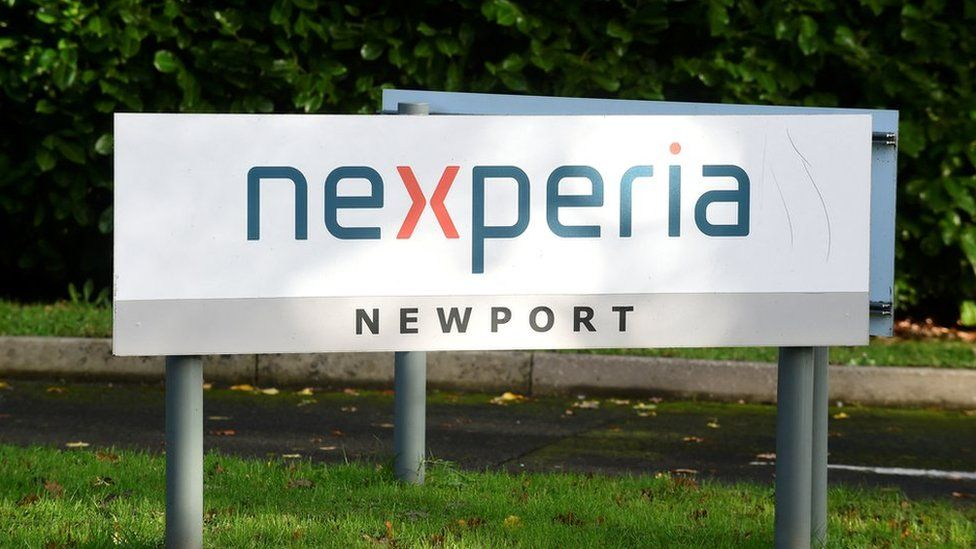
Nexperia Warns It Cannot Guarantee Quality of China-Made Chips After October 13

Dutch semiconductor manufacturer Nexperia said it expects to resolve the ongoing crisis over control of the company but cautioned customers that chips produced in China after October 13 may not meet its quality or authenticity standards.

The warning follows a turbulent period for the firm, which saw the Dutch government seize control of Nexperia on September 30 amid national security concerns, and China respond by blocking chip exports on October 4. The resulting standoff has disrupted supply chains for automakers and electronics manufacturers that rely on Nexperia’s components.

The company said its operations outside China — including facilities in Europe, Malaysia, and the Philippines — remain unaffected and are functioning normally.

In a statement, Nexperia welcomed assurances that, under a new U.S.-China agreement, it will be exempt from American export restrictions for one year. Beijing has also said it will allow exports on a “case-by-case” basis.

Nexperia’s Chinese parent company, Wingtech Technology, remains under U.S. restrictions, and its founder Zhang Xuezheng was suspended as Nexperia CEO by a Dutch court on October 7, contrary to earlier reports suggesting he retained control.

While most of Nexperia’s chips are manufactured in Europe, about 70% are packaged and distributed in China, where the local unit has declared operational independence and claims to have sufficient inventory to meet demand through 2025.

The Dutch firm said it remains committed to maintaining its Chinese operations while seeking alternative packaging and supply solutions to ensure “product availability in a sustainable manner.”

Netflix Introduces Viewer-Based Metric as Ads Reach 190 Million Global Viewers

Netflix announced on Wednesday that advertisements on its platform now reach more than 190 million monthly active viewers worldwide, as the company shifts to a new measurement system that counts individual viewers rather than subscriber accounts. The move underscores Netflix’s growing emphasis on advertising as a key revenue stream alongside its core subscription business.

The new metric, called Monthly Active Viewers (MAVs), counts anyone who watches at least one minute of ad-supported programming and adjusts for household size using Netflix’s internal data. The company said the change provides a “more comprehensive count” of how many people are actually viewing its content.

Netflix also reported significant progress in its advertising operations. Co-CEO Greg Peters said the company recorded its best-ever ad sales quarter in Q3 and remains on track to more than double its ad revenue this year. “We’ve established the fundamentals of the business and see a lot of room for growth,” Peters said.

As part of its advertising expansion, Netflix began testing dynamic ad insertion (DAI) during live-streamed WWE Raw and SmackDown events. The feature, which tailors ads in real time for each viewer, will be deployed in six countries — including the U.S., UK, Germany, Mexico, Brazil, and Canada — for the upcoming NFL Christmas Gameday, before rolling out to more live events in 2026.

The company’s in-house Netflix Ads Suite, launched earlier this year, is now available across all 12 markets offering ad-supported plans.

Apple to Integrate Google’s Gemini AI Model to Power New Siri, Bloomberg Reports

Apple plans to use Google’s massive 1.2 trillion-parameter Gemini AI model to power the next generation of its Siri voice assistant, according to a Bloomberg report published Wednesday. The deal, expected to be finalized soon, would see Apple pay roughly $1 billion annually for access to Google’s advanced AI technology.

The partnership marks a major step in Apple’s artificial intelligence ambitions, as it seeks to close the gap with rivals like Microsoft and OpenAI in generative AI. The Gemini model — one of the world’s most powerful — is set to serve as a temporary solution while Apple continues developing its own large-scale AI systems.

Bloomberg reported that the Gemini integration would enable Siri to handle more complex queries, offer improved conversational capabilities, and process natural language more fluidly than before. Apple’s current in-house models are far smaller in scale and capability compared with Google’s.

Neither Apple nor Alphabet has commented on the report. The collaboration underscores the growing trend among major tech firms to partner on AI development, even as they compete fiercely in the space.

Apple’s use of a Google-built AI model mirrors its long-standing partnership with the search giant, whose engine already powers Safari search functions on iPhones — another deal worth billions annually.