Yazılar

China’s CXMT Corp Begins IPO Preparation Amid Push to Expand DRAM Chip Business

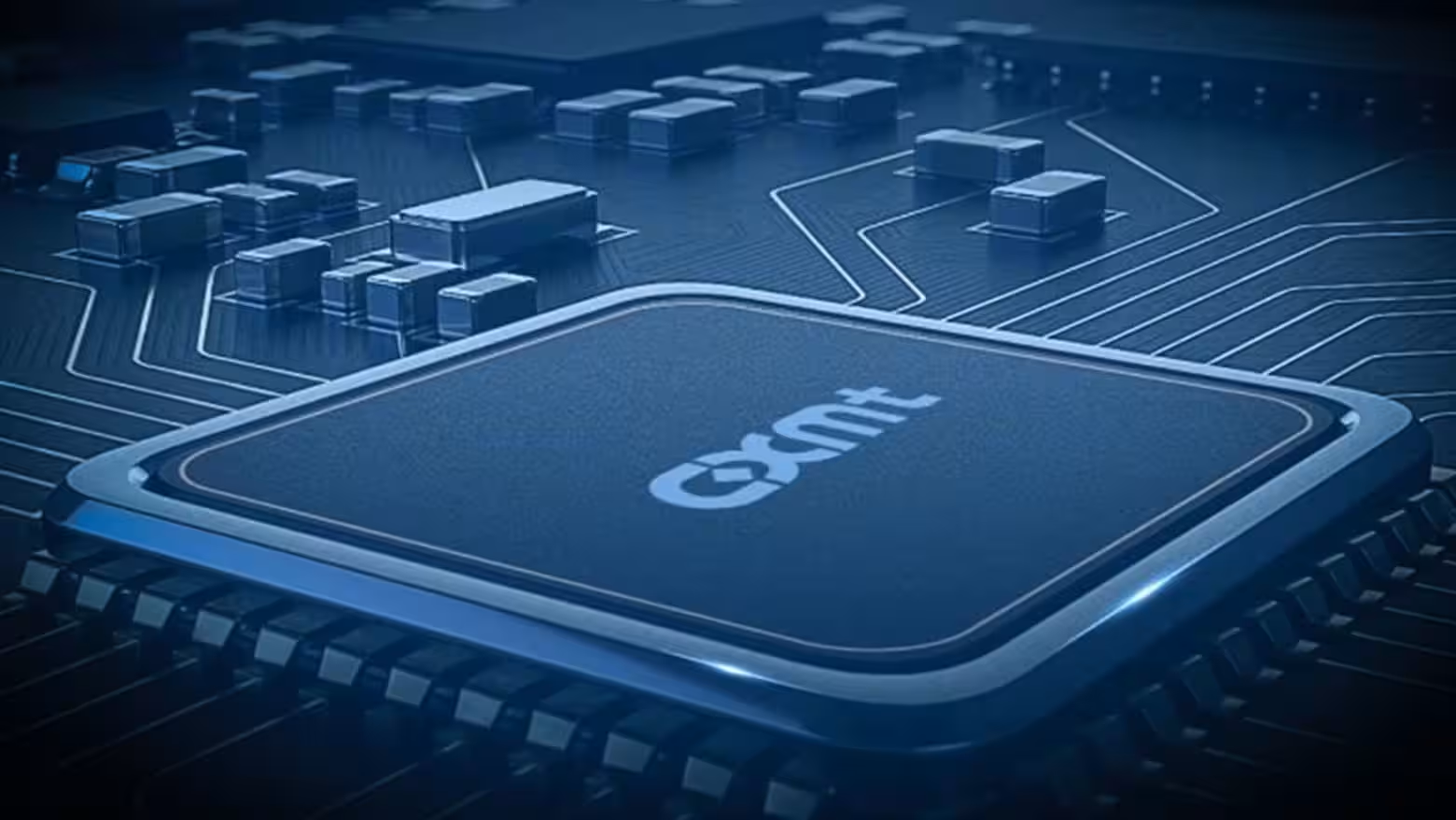
CXMT Corporation, the parent company of Chinese DRAM chipmaker ChangXin Memory Technologies, has started the initial preparations for an initial public offering (IPO), according to a document released by China’s securities regulator.


Summary:

  • IPO Preparation:
    CXMT has entered the “counselling process” for an IPO, having hired state-owned investment banks China International Capital Corporation and CSC Financial to assist. However, details on the timing or location of the IPO remain undisclosed.

  • Company Profile:
    CXMT is a major player in China’s drive to develop a domestic dynamic random-access memory (DRAM) chip industry, a sector historically dominated by firms from the U.S., Japan, and South Korea. Founded in 2016 with state backing, CXMT oversees subsidiaries including ChangXin Memory Technologies.

  • Production Facilities:
    The company operates two semiconductor foundries in China—one in Hefei, Anhui Province, and a newer facility in Beijing, with production ramping up since September 2023. Monthly production capacity is estimated at around 200,000 12-inch wafers.

  • Regulatory Challenges:
    CXMT narrowly avoided being added to the U.S. Entity List in May but remains subject to U.S. export restrictions from October 2022, which limit China’s ability to manufacture advanced DRAM chips.

  • No Further Details:
    The document did not specify which assets will be part of the IPO or whether the CXMT subsidiary itself will be listed. The company did not immediately respond to requests for comment.

Trump Announces Upcoming Talks with China on TikTok Deal

U.S. President Donald Trump stated on Friday that talks with China regarding a possible TikTok deal will begin early next week, with discussions likely on Monday or Tuesday.

Summary:

  • Trump said the U.S. “pretty much” has a deal for the sale of TikTok’s U.S. operations.

  • The talks could involve Chinese President Xi Jinping or his representatives.

  • Last month, Trump extended the deadline for ByteDance, TikTok’s China-based parent company, to divest its U.S. assets to September 17.

  • Earlier plans to spin off TikTok’s U.S. operations into a majority U.S.-owned company stalled after China indicated it might not approve the deal amid escalating U.S.-China tariff tensions.

  • Trump expressed cautious optimism about the deal being approved by China, citing a positive personal relationship with President Xi.

  • He emphasized that the deal would be beneficial for both countries.

Google Faces Setback as EU Court Adviser Supports Antitrust Regulators

Alphabet’s Google encountered a potential setback on Thursday after an adviser to Europe’s highest court sided with EU antitrust regulators over a landmark €4.34 billion ($4.98 billion) fine imposed seven years ago.

The European Commission ruled in 2018 that Google had abused its dominant position by using its Android mobile operating system to block competitors. While a lower court upheld the ruling in 2022, it slightly reduced the fine to €4.1 billion. Google subsequently appealed to the Court of Justice of the European Union (CJEU).

Juliane Kokott, Advocate-General at the Luxembourg-based CJEU, issued a non-binding opinion recommending the court reject Google’s appeal and confirm the reduced fine. Kokott stated, “The legal arguments put forward by Google are ineffective.”

She dismissed Google’s claim that regulators should assess the situation by comparing Google with a hypothetical, equally efficient competitor. Kokott explained, “Google held a dominant position in several markets of the Android ecosystem and thus benefited from network effects that enabled it to ensure that users used Google Search.”

Judges typically follow the Advocate-General’s opinion in about 80% of cases. A final ruling is expected in the coming months.

Google responded by emphasizing Android’s role in creating choice and supporting businesses globally, expressing disappointment with the opinion. A spokesperson said, “If followed by the Court, [the opinion] would discourage investment in open platforms and harm Android users, partners, and app developers.”

The regulators’ investigation found Google had imposed illegal practices dating back to 2011, including requiring manufacturers to pre-install Google Search and Chrome browser alongside Google Play on Android devices. Google also paid manufacturers to pre-install only Google Search and prevented the use of rival Android systems.

Google’s Android runs on approximately 73% of the world’s smartphones, according to Statcounter.

This fine is part of a broader enforcement effort against Google, which has amassed €8.25 billion in penalties across three antitrust cases over the past decade, with additional investigations ongoing.

Case Reference: C-738/22 P Google and Alphabet v Commission