Yazılar

Taiwan Investigates SMIC for Alleged Illegal Recruitment of Tech Workers

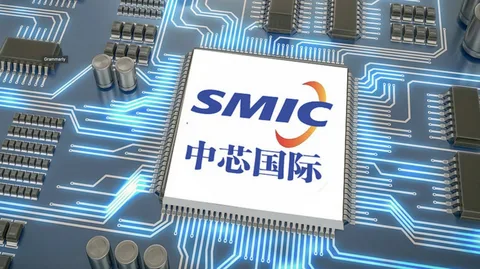
Taiwanese authorities are investigating whether China’s top semiconductor manufacturer, SMIC (Semiconductor Manufacturing International Corporation), has been involved in illegally luring Taiwanese tech workers. According to Taiwan’s Justice Ministry’s investigation bureau, SMIC is suspected of using a shell company posing as a Samoan firm to recruit engineers on the island, specifically targeting the semiconductor talent in Hsinchu County, home to Taiwan’s semiconductor industry hub and TSMC (Taiwan Semiconductor Manufacturing Company).

The investigation is part of Taiwan’s broader effort to combat illegal activities aimed at stealing know-how and attracting talent from its advanced technology sector. Taiwan has long been a global leader in semiconductor manufacturing, making its high-tech workforce a prime target for Chinese firms, especially amid growing geopolitical tensions and U.S. export restrictions on China’s semiconductor industry.

Taiwan’s investigation has been extensive, with 180 agents conducting raids at 11 companies suspected of engaging in talent poaching. The authorities have already questioned 90 people and seized evidence from 34 premises. Since 2020, more than 100 such cases have been investigated.

SMIC, which has been increasing its efforts to expand its production capacity and counter U.S. sanctions, has not yet responded to requests for comment regarding the allegations.

China’s DeepSeek Releases V3 AI Model, Boosting Competition with OpenAI

Chinese AI startup DeepSeek has launched a major upgrade to its V3 large language model, DeepSeek-V3-0324, marking a significant step in its rivalry with U.S. tech giants such as OpenAI and Anthropic. The new model, available through the AI development platform Hugging Face, showcases notable improvements in reasoning and coding abilities, setting a new benchmark for performance in the AI space.

Benchmark tests indicate that the V3 model has outperformed its predecessor across multiple technical metrics, solidifying DeepSeek’s growing presence in the competitive AI market. DeepSeek, which has quickly become a key player in the global AI landscape, has been pushing forward with a series of model releases, including the V3 launch in December and the R1 model earlier in January.

The company’s rise is seen as part of a broader trend where Chinese AI firms are intensifying competition with Western companies, offering similar capabilities at lower operational costs. DeepSeek’s rapid development positions it as a formidable contender in the global AI race.

PsiQuantum Raising $750 Million to Advance Quantum Computing Technology

PsiQuantum, a quantum computing startup, is in the process of raising at least $750 million at a $6 billion pre-money valuation, as reported by sources familiar with the matter. BlackRock is reportedly leading the fundraising initiative, which has not yet been finalized.

The company distinguishes itself from other quantum computing startups by modifying traditional manufacturing techniques from the semiconductor industry, using existing photonics technology. This technology, commonly used for fiber-optic communications, is being applied at a factory operated by GlobalFoundries in New York. PsiQuantum aims to produce millions of quantum chips, with plans to scale production significantly, a process that requires substantial investment.

Quantum computing is poised to solve problems that would be impossible for conventional computers, such as simulating molecular interactions and predicting material behaviors. This technology holds the potential to revolutionize fields like battery development and drug discovery. Major tech companies, including Alphabet’s Google, Microsoft, and Amazon, are also pursuing quantum computing, with Nvidia recently announcing plans for a quantum computing research center in Boston.

PsiQuantum has partnerships with the U.S. and Australian governments to build quantum computers in Chicago and Brisbane, respectively. Despite the long-standing history of quantum computing, advancements have only recently been made in reducing errors and improving chip reliability. PsiQuantum aims to have a functional quantum machine by 2029, a goal echoed by Google, which predicts useful quantum applications within the next five years.