Yazılar

Consumer Reports Calls on Congress to Reject Proposed Electric Vehicle Tax Fees

Consumer Reports, a leading consumer advocacy organization, urged Republican lawmakers on Wednesday to abandon a proposal to impose an annual fee on electric vehicles (EVs) aimed at funding road repairs. The plan initially calls for a $250 yearly fee on EVs, with Senator Bernie Moreno proposing to increase this to $500 for electric cars and $250 for plug-in hybrids.

Consumer Reports warned the fees would impose a disproportionate financial burden on EV owners, who could pay between three and seven times more than owners of comparable gasoline-powered vehicles in federal gas taxes. The proposed fees could notably affect owners of Tesla, General Motors, and other electric vehicle brands.

Chris Harto, a senior policy analyst at Consumer Reports, criticized the fees as “punitive taxes designed to confiscate fuel savings from consumers who just want to save money for their families.”

The broader legislative context includes the U.S. House dropping a previously proposed $20 federal vehicle registration fee for all vehicles starting in 2031. The House bill also seeks to end the $7,500 new EV tax credit by the end of 2024 for most automakers, repeal a $4,000 used EV tax credit, dismantle vehicle emissions regulations, and terminate an Energy Department loan program that supports green vehicle technology development. Additionally, it aims to phase out EV battery production tax credits by 2028.

Ford has expressed concern about the bill’s provisions, particularly the elimination of EV battery production credits tied to Chinese technology, which jeopardizes its $3 billion investment in a Michigan plant currently 60% complete and expected to employ 1,700 workers.

Separately, President Donald Trump plans to sign resolutions that block California’s EV sales mandates and diesel engine regulations, according to industry and House aides.
Tesla Aims to Launch Public Robotaxi Rides on June 22, CEO Musk Announces

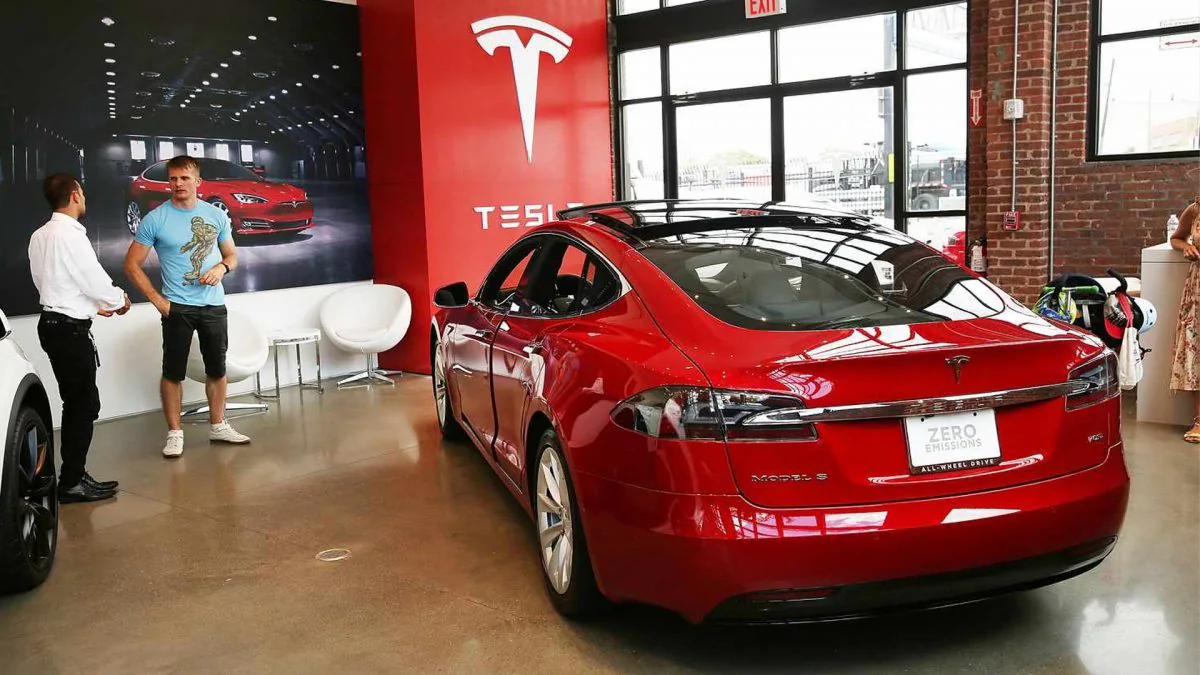
Tesla plans to begin offering public rides on its self-driving robotaxis starting June 22, CEO Elon Musk said Tuesday, marking a significant milestone in the company’s autonomous vehicle ambitions. The initial rollout will take place in Austin, Texas, with about 10 to 20 Model Y SUVs operating within a limited area under remote human supervision.

Musk emphasized Tesla’s cautious approach to safety, noting that the date might change as the company remains “super paranoid about safety.” He also revealed that starting June 28, Tesla vehicles will be able to autonomously drive themselves from the factory to customers’ homes.

This robotaxi service is critical for Tesla’s future as electric vehicle sales face increasing competition and controversies surrounding Musk, particularly his political views and associations. The company intends to expand the robotaxi service to other states later in the year, including California, which has more stringent autonomous vehicle regulations.

Tesla has been testing its Full Self-Driving (FSD) software in Austin, with Musk sharing videos showing Model Y vehicles navigating public streets without a human driver. However, details remain scarce about the exact operational zones, the level of remote oversight, or how consumers will access the service.

Tesla’s Self-Driving Strategy Threatened by Chinese Auto and Tech Giants

Chinese electric vehicle (EV) makers, led by BYD, are increasingly challenging Tesla not only in the affordable EV sector but now also in the race to develop self-driving technology. BYD’s aggressive pricing strategy—offering its advanced “God’s Eye” driver-assistance system for free—poses a direct threat to Tesla’s expensive Full Self-Driving (FSD) package, priced at nearly $9,000 in China.

According to Shenzhen-based BYD investor Taylor Ogan, God’s Eye outperforms Tesla’s FSD. Other Chinese competitors such as Leapmotor and Xpeng are also offering highly capable driver-assistance systems in vehicles costing as little as $20,000. This surge in advanced autonomous technology is heavily backed by the Chinese government, creating fierce competition within the world’s largest auto market.

Teardown analyses reveal that BYD’s assisted-driving hardware costs are similar to Tesla’s, despite BYD’s systems incorporating additional components like radar and lidar that Tesla omits in favor of a camera-only approach. Lower sensor costs in China—up to 40% cheaper than in Europe and the U.S.—helped Chinese firms maintain a cost advantage while delivering more comprehensive systems.

The competitive pressure from China coincides with broader challenges for Tesla CEO Elon Musk, whose global EV sales have been slipping. As Tesla shifts its focus toward robotaxis and autonomy to sustain its market valuation—currently around $1 trillion—the company now faces stiff competition from Chinese firms who are also advancing rapidly in autonomous vehicle development.

Huawei has emerged as a key player by partnering with major Chinese automakers such as Chery, SAIC, and Changan to supply driver-assistance technology. Reuters journalists recently observed Huawei’s Aito M9 autonomous system successfully navigating the congested streets of Shenzhen, showcasing China’s significant progress in real-world autonomous driving conditions.

Meanwhile, Tesla faces regulatory hurdles in China that prevent the company from using locally collected driving data to improve its AI models abroad. Negotiations to transfer such data to the U.S. have so far been unsuccessful. In contrast, Chinese companies benefit from Beijing’s policy support, government subsidies, and the massive scale of domestic EV sales, which provide extensive on-road data to refine their autonomous systems.

BYD’s decision to offer God’s Eye for free may reduce its 22% gross margins but is expected to boost sales volume, enhancing its AI capabilities through expanded data collection. The company sold 4.2 million vehicles last year—more than twice Tesla’s output—further improving its economies of scale and bargaining power with suppliers.

The intense competition in China’s EV sector has driven rapid technological innovation and reduced costs, allowing companies like BYD to pressure suppliers for further price reductions. This aggressive environment is viewed as entering a “knockout round” of competition, as described in a recent BYD communication to its supply chain partners.

Tesla, preparing to launch a limited robotaxi trial in Austin, Texas, with 10 to 20 vehicles, remains behind its Chinese rivals in delivering fully autonomous solutions. Tesla has yet to release a fully unsupervised version of FSD capable of true hands-off driving, while Chinese companies are advancing toward Level 3 autonomy certification under new regulatory frameworks.