Yazılar

Lyft to Launch Mobileye-Powered Robotaxis in Dallas by 2026

Lyft (LYFT.O) has announced plans to roll out fully autonomous robotaxis in Dallas, powered by Mobileye’s technology (MBLY.O), “as soon as 2026,” according to CEO David Risher. The announcement led to a 4.6% rise in Lyft’s shares, while Mobileye’s stock surged by 17%.

As automakers and tech companies heavily invest in driverless technology, the move is seen as a significant step toward the future of mobility. Lyft’s larger competitor, Uber (UBER.N), has already partnered with Waymo, Alphabet’s self-driving unit, which plans to launch a self-driving taxi service in Austin, Texas, exclusively on Uber’s platform next month.

Marubeni, a Japanese conglomerate experienced in managing fleets, will finance and own the Mobileye-equipped vehicles, which will be available for rides through Lyft’s app. This partnership follows Mobileye’s announcement in November that it would collaborate with Lyft to bring autonomous vehicles to the ride-hailing network.

Waymo has already expanded its autonomous ride-hailing service to several cities, including Miami, Phoenix, Los Angeles, San Francisco, and Austin, with further plans for expansion in 2025. Meanwhile, Tesla (TSLA.O) is set to begin testing its driverless technology in Austin this June, though it has not yet outlined details for a paid service. Lyft’s robotaxi plans were first reported by TechCrunch.

Tesla’s Robotaxi Rollout in Texas Raises Concerns Over Safety and Regulation

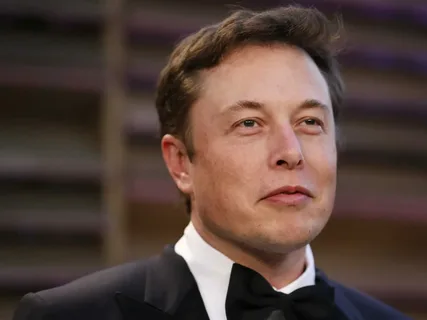
Elon Musk announced in late January that Tesla plans to launch its autonomous ride-hailing service, which he refers to as “robotaxis,” by June in Austin, Texas. This announcement has raised questions regarding Tesla’s willingness to push unproven driverless technology onto public streets, especially in a state with minimal regulatory oversight.

Tesla has been criticized for accidents involving its driver-assistance systems, Autopilot and Full Self-Driving (FSD), blaming customers for accidents while advising them to remain ready to take control of the vehicle. With this new initiative, Musk aims to deploy fully autonomous taxis, putting the company directly in the line of responsibility for any crashes, according to legal experts.

Despite years of promises about fully self-driving vehicles, Tesla has failed to deliver. Musk has set a goal to launch these autonomous taxis in Texas, a state with almost no regulatory control over autonomous vehicles. Texas law allows companies to operate driverless cars on public roads as long as they are registered, insured, and equipped to record crash data, without needing approval from a state agency.

Musk’s Tesla headquarters relocation to Austin in late 2021 was partly motivated by Texas’s hands-off regulatory approach, a stance that aligns with Musk’s broader political views. Critics, including legal experts, believe that Texas’s lack of oversight could allow Tesla to bypass important safety and testing procedures, potentially endangering public safety. Unlike in California, where companies like Waymo and Cruise have had to log millions of miles under strict regulations to gain approval for paid robotaxi services, Tesla’s approach will likely face far fewer hurdles.

Despite promising an unsupervised version of FSD in 2023, Tesla has logged just 562 miles of testing in California, far fewer than other autonomous vehicle companies. Even so, Musk’s plans for June have left investors and experts guessing. Musk’s promise of a fully autonomous ride-hailing system lacks details about scale, availability, or how it will function in practice.

Legal experts also believe that Tesla may begin with limited tests in Austin, potentially in controlled areas with human intervention via remote control to prevent accidents. However, residents in Austin have already raised concerns about safety, citing multiple near-miss incidents involving other robotaxis on the streets. Local authorities have also struggled with enforcement, as Texas law allows driverless vehicles to operate with limited oversight, leaving cities like Austin feeling powerless.

Musk Speaks at JPMorgan Event on Government Reshaping Efforts

Tesla CEO Elon Musk spoke at a JPMorgan Chase conference on Thursday, discussing his efforts to reshape the federal government, a task he was assigned by President Donald Trump. The conference, held in Miami, was attended by JPMorgan CEO Jamie Dimon and hosted by Mary Erdoes, CEO of JPMorgan’s asset and wealth management division. Around 200 of JPMorgan’s largest clients were present at the event.

Musk’s conversation, moderated by David Rubenstein, co-founder of private equity firm Carlyle Group, featured a wide range of topics. Among the key points was Musk’s work with the Department of Government Efficiency (DOGE), which he leads. DOGE’s ambitious goals include eliminating entire federal agencies and cutting three-quarters of federal government jobs.

JPMorgan declined to comment on the event, and neither Musk nor Carlyle responded to requests for comment.

The event marked a shift in the relationship between Musk and Dimon, who had previously been involved in a prolonged legal battle. The two business leaders, who were once adversaries due to Tesla’s 2021 lawsuit over Musk’s controversial “funding secured” tweet, resolved their differences in November 2023 when both companies dropped their claims against each other.