Yazılar

Rights Advocates Raise Concerns Over U.S. Plan to Use AI for Student Visa Revocation

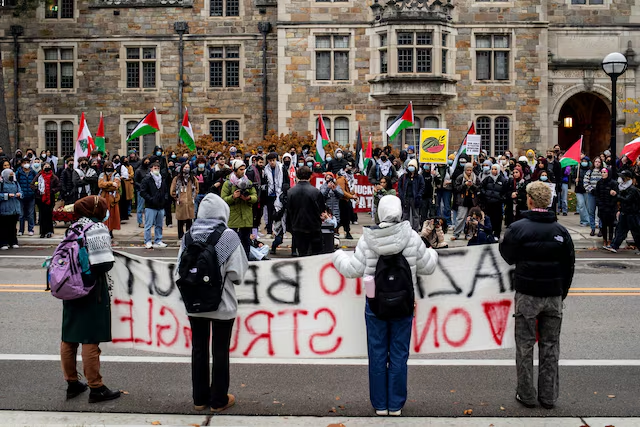
Rights advocates, including free speech groups, have expressed concerns after reports surfaced that the U.S. State Department plans to use artificial intelligence (AI) to revoke the visas of foreign students accused of supporting Palestinian Hamas militants. The initiative, dubbed “Catch and Revoke,” is set to involve AI-assisted reviews of social media accounts belonging to tens of thousands of student visa holders.

This move has raised alarm among groups like the Foundation for Individual Rights and Expression (FIRE) and pro-Palestinian organizations. They argue that AI cannot accurately assess the nuances of expressions related to the highly complex and long-standing Israeli-Palestinian conflict. They also warn that relying on AI for such sensitive matters could infringe on First Amendment rights to free speech and assembly.

According to reports, the State Department is reviewing news reports of anti-Israel demonstrations and lawsuits alleging antisemitism related to foreign nationals. Fox News additionally reported that the department had revoked the visa of a student involved in what it described as “Hamas-supporting disruptions.”

Sarah McLaughlin, a scholar at FIRE, emphasized that AI tools are incapable of grasping the subtleties of political expression concerning the Israeli-Palestinian conflict. The American-Arab Anti-Discrimination Committee called the reported plan an “alarming erosion of constitutionally protected free speech and privacy rights.”

While the State Department did not comment directly, Secretary of State Marco Rubio stated that the U.S. has “zero tolerance for foreign visitors who support terrorists,” reaffirming that violations of U.S. law, including by international students, could lead to visa denial, revocation, and deportation.

This initiative follows actions by the Trump administration, which has taken a hard stance on pro-Palestinian protests, including pledging to deport non-citizen students involved in such protests. Additionally, Trump has threatened to cut federal funding to educational institutions that allow what he deems illegal protests.

The broader context involves the U.S. designating Hamas as a “foreign terrorist organization,” following the group’s deadly October 2023 attack that killed over 1,200 people. Israel’s subsequent military actions in Gaza have led to significant casualties and displacement, further intensifying global debate.
Cuts to USAID Halt U.S. Farm Research at Universities, Sources Say

The Trump administration’s dismantling of the U.S. Agency for International Development (USAID) has caused farm research laboratories at land-grant universities in 13 states to cease operations, according to six lab directors. The closures mark another blow to U.S. agriculture, following efforts by President Donald Trump to overhaul the federal government. The halted research was designed to improve seed and equipment technology and develop international markets for U.S. agricultural products.

The shutdowns have compounded difficulties already faced by farmers, who have experienced disruptions to government food aid programs, agricultural grants, and loans. Land-grant universities, which were established on land granted by the federal government, have been particularly affected.

“For U.S. farmers, this is not good,” said Peter Goldsmith, head of the University of Illinois’ Soybean Innovation Lab, one of the affected facilities. The State Department did not provide a response to inquiries about the closures.

The 17 laboratories that received stop-work orders were part of USAID’s Feed the Future Innovation Labs program, which partnered with countries such as Malawi, Tanzania, Bangladesh, and Rwanda to conduct agricultural research. This research benefited U.S. farmers by developing production practices that could be applied domestically or providing early warnings about potential pest threats.

David Hughes, director of the USAID Innovation Lab on Current and Emerging Threats to Crops at Penn State University, said the shutdown limits their ability to help farmers fight pests and diseases. One halted project focused on controlling a virus harming banana crops in Tanzania.

David Tschirley, who chairs the Feed the Future Innovation Lab Council and runs a USAID-funded lab at Michigan State University, said the lab network employs about 300 people and collaborates with up to 4,000 partners abroad. “It presents an American face to the world that is a very appreciated face,” Tschirley said, emphasizing the research’s role in promoting national security.

Stop-work orders were issued to all 17 labs at the end of January after Trump froze most foreign aid. Since then, the labs have received no further guidance from the State Department. Some universities have attempted to cover costs temporarily, with mixed success.

At Michigan State, Tschirley’s lab has been allowed to retain employees under the assumption that USAID will eventually approve funding. However, Goldsmith laid off all 30 staff members at his lab last week and plans to close it entirely by April 15. His lab had previously assisted African farmers with soy planting and helped companies establish soy-processing plants.

Some agribusiness partners of the labs include Bayer, Corteva, BASF, and Archer-Daniels-Midland. Bayer stated it is assessing the funding halt, while other companies did not comment.

The funding freeze is part of broader actions by Trump to reshape the federal government. For example, U.S. commodity purchases were temporarily suspended following Trump’s January 24 order halting most foreign aid. Additionally, federal farm program payments have been delayed due to Trump’s directive freezing loans and grants, though this order has been blocked in court.

Binance and SEC Seek Delay in Legal Battle as New US Crypto Policy Develops

Binance and the U.S. Securities and Exchange Commission (SEC) have jointly requested a 60-day pause in the SEC’s lawsuit against the crypto exchange. This motion, filed on Monday, comes amid the formation of a new SEC task force aimed at regulating the cryptocurrency industry, which may influence the outcome of the case.

The stay request marks a shift away from the SEC’s aggressive crypto enforcement under previous Democratic leadership. The task force, launched last month, is expected to play a role in shaping regulations that could impact the resolution of ongoing cases, including Binance’s. This development is seen by some as a sign of the SEC’s potential pivot toward a more crypto-friendly stance, aligning with President Donald Trump’s vision to establish the U.S. as a global leader in the crypto space.

The SEC’s ongoing lawsuit, filed in June 2023, accuses Binance and its founder, Changpeng Zhao, of inflating trading volumes, diverting customer funds, and misleading investors regarding market surveillance controls. Binance has consistently denied the charges, claiming the case is without merit. The company is eager to resolve the matter and focus on maintaining its position as a secure and trusted exchange.

While the SEC has declined to comment beyond the court filing, the motion reflects broader changes at the agency, including a shift in leadership priorities under President Trump’s administration. At a Federalist Society event, SEC Commissioner Hester Peirce criticized the previous approach of using enforcement to set policy, suggesting that a new direction was needed.

Some critics, however, view the stay as a sign of the SEC’s shifting stance on crypto. Former SEC official Corey Frayer expressed concern, arguing that delaying the case could signify the agency’s failure to uphold its duties in protecting investors and enforcing securities laws.

Binance’s legal troubles have also included an admission in November 2023 that the exchange violated anti-money laundering laws, with Zhao serving prison time for related charges. Despite these issues, the overall approach to crypto regulation has shifted sharply since President Trump took office, with the administration making efforts to position the U.S. as a more crypto-friendly environment.