
Yazılar

Bitcoin Regains Shine as Investors Rethink U.S. Assets Amid Trade War Fears

Bitcoin is staging a strong comeback, emerging as a viable hedge for investors fleeing U.S. assets amid President Donald Trump’s intensifying trade war and global uncertainty over American economic leadership.

Following an initial slump after Trump’s Liberation Day” tariffs announcement on April 2, bitcoin surged 15% in April, outperforming major stock indices and even gold, long considered a safe-haven during market turbulence. The cryptocurrency is now approaching the $100,000 mark, a level not seen since February.

Key Highlights:

  • Bitcoin gained 33% from its April low.

  • S&P 500 dropped 0.8% in April; Nasdaq rose just 0.8%.

  • U.S. dollar index fell over 4%, underscoring weakening sentiment.

  • Bitcoin has outperformed gold’s 11% rise since April 2.

  • VanEck data shows bitcoin outpaced equities in 10 of 17 trading sessions.

Changing Correlations:

Analysts at Block Scholes note that bitcoin’s historical tight link to equity markets is loosening. It now shows the strongest inverse correlation to the U.S. Treasury yield curve in two years, signaling a potential shift in investor behavior as they turn to bitcoin as a macro hedge rather than a tech proxy.

Ben McMillan of IDX Advisors emphasized bitcoin’s emerging role as a diversification asset, noting reduced volatility levels and rising flows into digital asset funds.

Strategic Reallocation Underway:

According to CoinShares, $5.5 billion has flowed into crypto-focused funds in the past three weeks, including $1.8 billion specifically into bitcoin investment products. Standard Chartered’s Geoff Kendrick predicts bitcoin could hit $120,000 in Q2 2025 if global capital reallocates away from U.S. stocks, bonds, and the dollar.

Yet, bitcoin hasn’t completely decoupled from macro forces. Its 30-day correlation with the S&P 500 has rebounded to 0.87, suggesting a continued sensitivity to broader risk sentiment.

The damage has been done in terms of trust towards the U.S. and dollar assets … but you can’t diversify overnight,” said MarketVector’s Martin Leinweber.

Still, the narrative of bitcoin as a digital alternative to traditional hedges like gold is gaining traction, especially in a world where monetary policy, trade alignments, and fiscal regimes are becoming increasingly unpredictable.
Trump Considers Tariff Reduction to Secure TikTok Deal

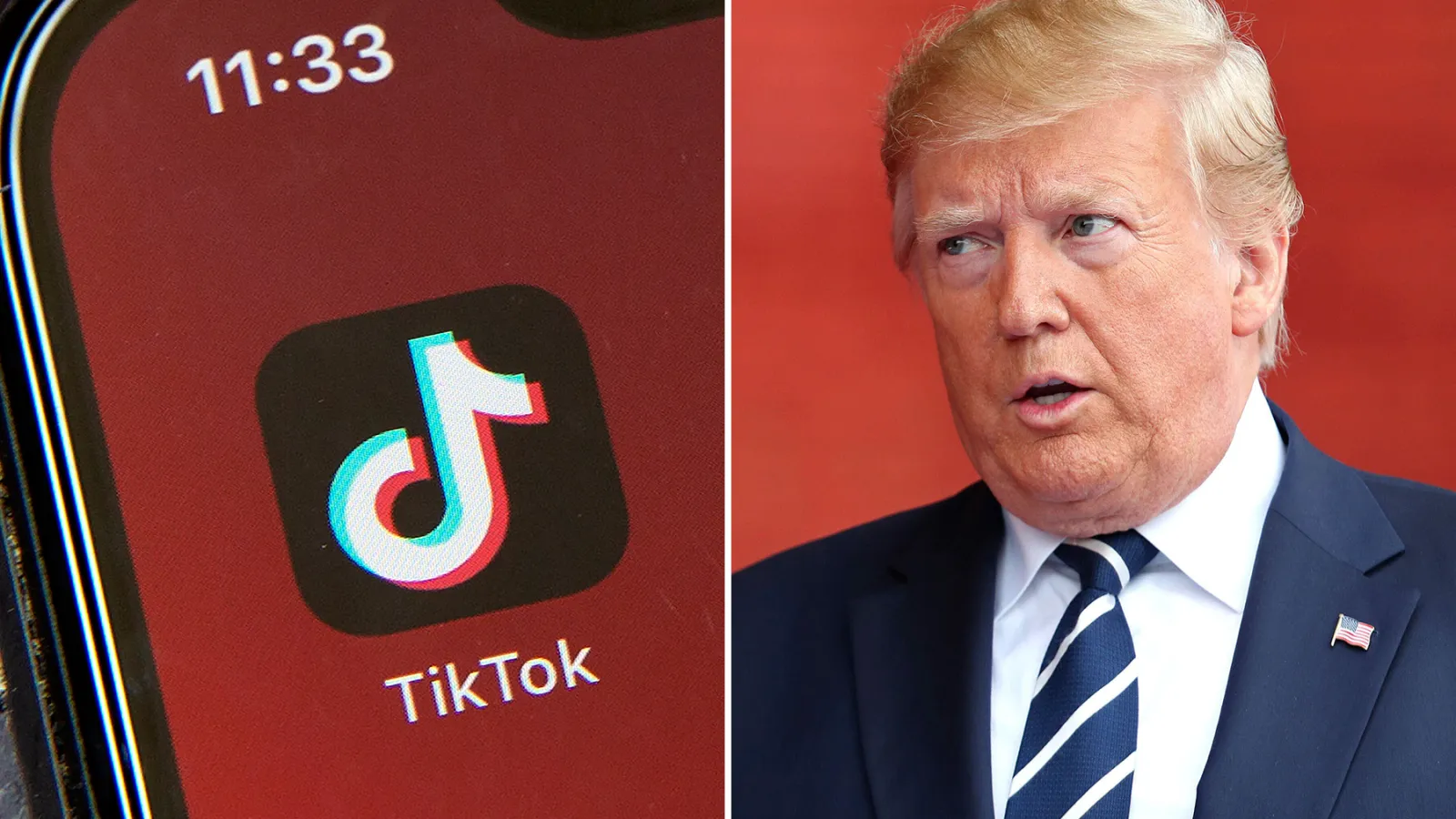
U.S. President Donald Trump announced on Wednesday that he may lower tariffs on China as an incentive for ByteDance to finalize a deal to sell TikTok, which is used by 170 million Americans.

ByteDance faces an April 5 deadline under a 2024 law requiring it to divest TikTok’s U.S. operations or face a ban due to national security concerns. Trump indicated he is open to extending the deadline if necessary to facilitate a deal, acknowledging that China must approve any sale.

“Maybe I’ll give them a little reduction in tariffs or something to get it done,” Trump told reporters, suggesting the administration is willing to use trade policy as leverage.

China’s commerce ministry reiterated its position that it seeks negotiations based on “mutual respect, equality, and mutual benefit.” Meanwhile, Vice President JD Vance has expressed confidence that a resolution will be reached by the April 5 deadline.

Reports indicate that White House-led discussions are moving toward a plan in which ByteDance’s largest non-Chinese investors would increase their stakes and acquire TikTok’s U.S. operations. The White House has taken an unprecedented role in the negotiations, acting almost like an investment bank.

TikTok briefly went offline in January after the U.S. Supreme Court upheld the ban, but Trump later postponed enforcement until April 5. He has signaled he could extend the deadline further if needed.

The proposed divestiture has sparked legal challenges from free speech advocates, who argue the ban could violate the First Amendment by restricting access to foreign media.

Foxconn Says It Can Adapt Production to Trump Tariffs

Foxconn, the world’s largest contract electronics manufacturer and Apple’s primary iPhone maker, announced that it can adjust its production strategy to accommodate potential new U.S. tariffs. This statement was made by Foxconn Chairman Young Liu on Wednesday during a press briefing at the company’s headquarters in New Taipei, Taiwan.

The announcement comes after U.S. President Donald Trump introduced a 25% tariff on all U.S. imports from Mexico and Canada, though the tariff has been paused until March 4. Liu highlighted that Foxconn already operates production facilities in both the United States and Mexico.

“Depending on the tariffs, we will plan different production capacities accordingly,” Liu said. He emphasized that Foxconn is prepared to make necessary adjustments with its U.S.-based partners to meet Trump’s call for more domestic manufacturing.

Liu explained that the company’s flexible global production model minimizes the impact of tariff changes. “For the company, if we don’t manufacture here, we can do it there, so the impact is not too great,” he noted.

However, Liu expressed concern about the broader implications of tariffs, stating that they would not benefit the global economy and could reduce market size.