Yazılar

Trump to Extend TikTok Sale Deadline for Third Time, White House Confirms

U.S. President Donald Trump will extend the June 19 deadline for ByteDance, TikTok’s China-based parent company, to divest the app’s U.S. assets by 90 days, according to the White House. This marks the third extension of the deadline imposed by a law requiring either a sale or shutdown of TikTok in the United States unless significant progress toward divestment was made.

White House Press Secretary Karoline Leavitt said on Tuesday that Trump plans to sign another executive order this week to keep TikTok operational, pushing the deadline to mid-September. She emphasized the administration’s intention to ensure the sale is completed so Americans can continue using TikTok with confidence in their data’s security.

Trump previously extended the deadline twice: initially delaying enforcement from January to early April, then again to June 19. He cited TikTok’s popularity among young voters in the 2024 election as a reason for the extensions. On Tuesday, Trump told reporters aboard Air Force One that he expected to extend the deadline again and expressed optimism that Chinese President Xi Jinping would approve the deal.

The law mandated TikTok’s shutdown by January 19 unless ByteDance completed the sale of its U.S. operations or demonstrated significant progress. Negotiations have aimed to spin off TikTok’s U.S. operations into a new, majority U.S.-owned company, but progress stalled after China signaled it would not approve the deal, especially following Trump’s announcements of steep tariffs on Chinese goods.

Democratic senators have criticized the extensions, questioning Trump’s legal authority to continue delaying enforcement and expressing concerns that the proposed deal would not satisfy legal requirements.

China’s Criticism of CK Hutchison Deal Increases Stakes for TikTok U.S. Sale

China’s recent criticism of CK Hutchison’s (0001.HK) move to sell its ports business has raised the political stakes for major Chinese business divestments, particularly the potential sale of TikTok’s U.S. assets. This criticism is seen as a precursor to increased scrutiny of deals involving Chinese companies selling to American buyers, analysts suggest.

CK Hutchison’s decision to sell assets near the Panama Canal to a BlackRock-led consortium on March 4 has drawn attention from Beijing, which views the sale as a betrayal of Chinese interests. The Hong Kong and Macau Affairs Office reposted commentaries accusing CK Hutchison of neglecting national interests, with Chinese regulators launching an investigation into the deal. This follows previous concerns from U.S. President Donald Trump, who praised the transaction, calling it a “reclaiming” of the canal.

The political ramifications of CK Hutchison’s sale are seen as a significant indicator of how Beijing might respond to other high-profile sales, such as ByteDance’s potential divestment of TikTok’s U.S. operations. Chinese officials have made it clear that they do not want ByteDance to be forced to sell TikTok to U.S. investors, indicating a broader political sensitivity surrounding Chinese companies’ control over their operations and the potential for U.S. intervention.

China’s reaction to the CK Hutchison deal underscores its attempt to project a strong stance against U.S. pressure while also balancing the desire to maintain diplomatic relations with the United States. As tensions between the U.S. and China continue to escalate, the scrutiny of these high-stakes transactions highlights the complex political and economic dynamics at play.

Four Ways DeepSeek Could Change Everything

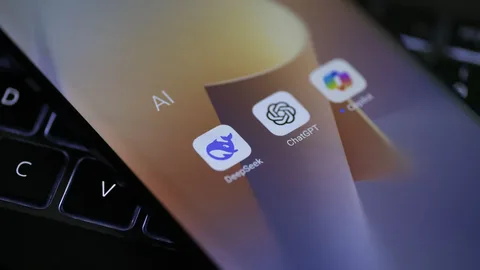
The release of DeepSeek’s highly effective and cost-efficient large language model has made waves in the AI industry, promising far-reaching implications for technology, trade, and U.S.-China economic relations. While the immediate market impact may have been brief, the long-term effects could be profound. Here are four predictions on how DeepSeek might shape the future:

  1. Artificial Intelligence Costs Will Continue to Plummet
    Innovations typically aim to achieve more with less, and AI is no different. Before DeepSeek’s release, the costs of leading AI models had already fallen by about 80% annually over the past two years. DeepSeek has accelerated this trend by making AI models 30 times cheaper compared to market leader OpenAI, through algorithmic advancements and aggressive pricing strategies. This deflationary trend is expected to persist as more research and competition in the AI field drive costs lower.

  2. The AI Economic Pie Will Get Bigger and Be Sliced Differently
    As AI becomes more affordable and accessible, demand is expected to grow, following the concept of Jevons paradox, which suggests that more efficient technology leads to greater consumption of resources. As foundational models become commoditized, the focus will shift to applications, pushing more resources toward the deployment of AI in specific tasks, or “inference,” rather than training models. This shift could spark increased demand for custom-designed chips like XPUs, optimized for specific AI applications, as opposed to traditional GPUs. Nvidia has already observed that demand for inference chips is growing faster than for training chips, signaling a broader industry shift.

  3. U.S. Chip Export Controls Will Deserve Careful Reassessment
    DeepSeek’s success came from utilizing less advanced and fewer chips than its U.S. counterparts, illustrating how innovation can thrive even under constraints. Despite ongoing U.S. export controls that may limit DeepSeek and other Chinese companies in the short term, these restrictions are unlikely to halt their progress. The U.S. risks isolating its chip technologies from China’s market, potentially on a permanent basis. Additionally, the export controls may undermine U.S. efforts to address trade imbalances with China, as the country may opt to focus on developing its own capabilities rather than relying on U.S. imports.

  4. U.S. and Chinese Tech Leaders’ Interests May Align
    While initially concerning to U.S. investors, DeepSeek’s breakthrough and its open-source model have been embraced by many major U.S. tech companies. Cloud platforms like Microsoft, AWS, and Hugging Face are already incorporating models based on DeepSeek’s R-1, noting that cheaper large language models should increase demand for their cloud services, boosting their revenue streams. In the long run, businesses across both countries could benefit from the productivity gains and cost savings that AI applications offer. This could foster potential collaboration between U.S. and Chinese tech leaders, despite existing tensions. The evolution of AI presents a tremendous opportunity for both superpowers to collaborate, especially as they pursue artificial general intelligence, though ongoing geopolitical conflicts could limit this cooperation.