Yazılar

China Presses Tech Firms Over Nvidia H20 AI Chip Purchases Amid Security Concerns

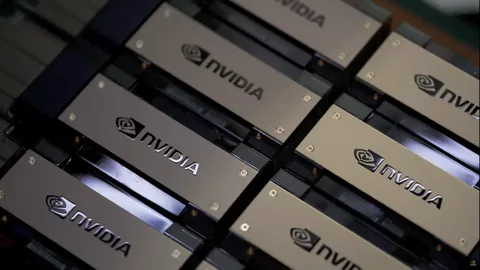
Chinese regulators have questioned major domestic tech firms, including Tencent, ByteDance, and Baidu, over their purchases of Nvidia’s H20 AI chips, sources told Reuters. The Cyberspace Administration of China (CAC) and other agencies asked companies to justify why they were opting for U.S. chips instead of domestic alternatives and raised concerns that data submitted to Nvidia for U.S. government review could expose sensitive client information.

While Beijing has not issued a direct ban on Nvidia’s H20, companies were cautioned about its use in government-related or security-sensitive projects. Bloomberg earlier reported that firms received official notices discouraging reliance on the chip, while The Information claimed ByteDance, Alibaba, and Tencent were ordered to halt purchases outright. These reports could not be independently confirmed by Reuters.

Nvidia defended the H20, stressing it is “not a military product or for government infrastructure,” while noting China has never relied on U.S. chips for government operations. The chipmaker designed the H20 specifically for China after U.S. export curbs in late 2023 restricted sales of its most advanced processors. Although Washington briefly banned its sale this year, the Trump administration reversed the decision in July, restoring limited access.

The scrutiny threatens a key revenue source for Nvidia, which made $17 billion from China last fiscal year — about 13% of its global revenue. State media have recently amplified criticism, portraying the H20 as technologically inferior and a security risk. Meanwhile, Chinese chipmakers like Huawei are working to produce domestic AI processors rivaling Nvidia’s offerings, though U.S. sanctions on advanced equipment remain a hurdle for large-scale production.

The tensions underscore Beijing’s push for self-sufficiency in semiconductors as Washington weighs tighter controls. U.S. President Donald Trump has hinted he may allow Nvidia to sell a scaled-down version of its Blackwell AI chip in China, even as concerns grow over the military applications of advanced AI. At the same time, an unusual deal now requires Nvidia and AMD to share 15% of China chip sales revenue with the U.S. government.
Judge Warns Trump’s Executive Order Could Undermine Huawei’s Defense in U.S. Criminal Case

A U.S. federal judge overseeing the criminal case against Huawei raised concerns this week that President Donald Trump’s executive order revoking security clearances from lawyers at Jenner & Block, one of the law firms representing Huawei, could impair the Chinese telecom giant’s right to a fair trial.

At a hearing in Brooklyn federal court, U.S. District Judge Ann Donnelly questioned how the revocation of clearances—specifically for Jenner attorney David Bitkower, a former senior federal prosecutor—might delay or disrupt Huawei’s defense.

It’s an issue in terms of the right to counsel… We’ve got a trial scheduled for January,” Donnelly said, adding that getting new attorneys cleared in time may pose a logistical and constitutional challenge.

Background:

  • Trump’s executive order targets four prominent law firmsJenner & Block, WilmerHale, Perkins Coie, and Susman Godfreyciting their involvement in legal matters deemed misaligned with his administration’s priorities.

  • The order suspends existing security clearances, restricts access to government officials, and cancels federal contracts linked to their clients.

  • In response, Jenner & Block sued the Trump administration in Washington, D.C., seeking to overturn the order. A ruling is expected soon.

Impact on Huawei Case:

Jenner & Block represents Huawei in a major federal case involving charges of racketeering and trade secret theft, stemming from a 2020 superseding indictment filed by the U.S. Justice Department. The government alleges that Huawei engaged in a long-running conspiracy to steal technology from American firms.

Bitkower and his team require security clearance to review classified materials relevant to Huawei’s defense. With clearances now suspended, Judge Donnelly pressed prosecutors to find a solution.

A Justice Department representative said the agency would work to secure clearance for another attorney on the defense team—but didn’t guarantee timelines.

Ongoing Fallout:

  • WilmerHale, another targeted firm, disclosed that two of its lawyers also lost their security clearances following Trump’s executive order.

  • Jenner, in its April 8 court filing, said all its relevant security clearances had been suspended, directly affecting its ability to represent clients in national security-sensitive cases.

Huawei has denied wrongdoing, arguing it is being politically targeted by the U.S. government. Neither the company nor Jenner & Block commented on the latest hearing.

The case underscores how political decisions by the executive branch are intersecting with due process rights, particularly in high-profile national security and international trade cases.

China Equity Issuance Doubles as Tech Race Draws Global Investors

China’s stock markets are seeing renewed interest from global investors, with equity issuance in the first quarter of 2025 nearly doubling compared to the previous year. The surge, totaling $16.8 billion, reflects a shift in investor sentiment as government scrutiny of technology firms eases and emerging tech players like AI software developer DeepSeek gain traction.

The first-quarter equity issuance represents a 119% increase compared to the same period in 2024. Investment activity is being driven by a re-rating of China’s stock market, with investors shifting their focus from caution to seeking opportunities. Despite ongoing risks, especially regarding U.S.-China tensions, China’s valuation gap compared to other global markets is becoming more apparent, attracting long-term investors.

In Hong Kong, the Hang Seng Index has surged 21% this year, outperforming international markets. The MSCI China index is also trading at lower price-to-earnings ratios compared to U.S. and other global markets, making it an attractive option for global investors.

Key to this shift in investor outlook is the easing of government restrictions on China’s tech sector, highlighted by a summit led by President Xi Jinping with top tech leaders. The rise of DeepSeek, an AI company, has further fueled optimism in China’s tech market. The Chinese government’s support for private tech companies, especially in AI, quantum computing, and semiconductors, is being seen as a positive development for foreign investors.

Chinese companies, including those in the AI sector, are helping to drive IPO activity in Hong Kong. With continued strong support from mainland and Hong Kong regulators, the market’s recent surge in activity is expected to remain sustainable.