Yazılar

Japan’s TDK Accelerates Launch of Next-Gen Silicon Anode Batteries Amid Strong Smartphone Demand

TDK Corp, a leading Japanese electronics components manufacturer and key Apple supplier, is fast-tracking the rollout of its next-generation silicon anode batteries, CEO Noboru Saito told Reuters. Originally scheduled for summer, shipments of the third-generation high-energy batteries will begin very soon.”

The move comes amid surging interest from smartphone makers, as silicon anode batteries promise higher energy density than conventional lithium-ion technologies—allowing for longer battery life and thinner designs.

Key Highlights:

  • Silicon anode batteries, while still a small part of TDK’s portfolio, represent a strategic focus as smartphone OEMs seek energy efficiency gains.

  • TDK plans to launch its fourth-generation battery sometime next year.”

  • More than half of TDK’s capital investment over the next three years will go toward its energy segment, which includes battery R&D and production.

Broader Strategic Outlook:

Founded in 1935, TDK has transformed from a household name in cassette tapes to a critical supplier of batteries, sensors, and capacitors for the global tech industry. As demand for smartphones, wearables, and IoT devices accelerates, TDK is positioning its advanced battery tech as a growth engine.

CEO Saito, who has led the company since 2022, also flagged geopolitical risk, particularly from the U.S.–China trade tensions under President Donald Trump’s administration. TDK’s latest forecast included both base and risk-adjusted scenarios to reflect uncertainty in U.S. electronics demand.

I remain concerned,” Saito said, referring to potential impacts on the U.S. smartphone market, a key revenue source for TDK and its clients.

Despite these external pressures, TDK’s acceleration of cutting-edge battery technology underscores its commitment to staying ahead in energy innovation and meeting OEM demand for more compact, powerful power solutions.
Applied Materials Misses Q2 Revenue Target as Export Controls Weigh on Sales

Applied Materials missed Wall Street expectations for second-quarter revenue, reporting $7.10 billion versus the estimated $7.13 billion, as U.S. export restrictions on semiconductor equipment to China and slower investment in certain markets impacted performance.

Shares of the Santa Clara-based chipmaking equipment giant fell more than 5% in extended trading following the earnings release.

Segment Performance and Key Challenges:

  • Revenue from Semiconductor Systems, the company’s largest business segment, came in at $5.26 billion, below analysts’ forecast of $5.32 billion.

  • Sales in the ICAPS marketcovering IoT, communication, automotive, power, and sensorsslowed, although this was partially offset by strong demand for advanced-node chipmaking equipment.

Impact of Export Controls:

  • The U.S. government’s export restrictions, announced in December, now prevent shipment of advanced chipmaking tools to China — Applied Materials’ largest overseas market.

  • As a result, revenue from China fell to 25% of total sales, down sharply from 43% a year earlier.

  • Analyst Kinngai Chan of Summit Insights Group said the export controls are clearly impacting results, but added:

    We think the company can overcome this headwind over time as spending on advanced process nodes picks up in the second half of 2025 and into 2026.”

Profit and Outlook:

  • Despite the revenue miss, adjusted Q2 earnings per share were $2.39, beating the $2.31 consensus.

  • Applied Materials provided Q3 revenue guidance of $7.20 billion ± $500 million, roughly in line with analyst estimates of $7.19 billion.

  • CFO Brice Hill downplayed concerns, stating:

    Despite the dynamic economic and trade environment, we have not seen significant changes to customer demand.”

Summary:

While strong demand for advanced chips offers a long-term buffer, current headwinds from trade restrictions and market softness in core segments are affecting short-term performance. Investors remain cautious amid geopolitical friction and shifting global chip manufacturing strategies.

Foxconn Cuts Full-Year Outlook Despite AI Boom, Citing Taiwan Dollar Strength and Tariff Risks

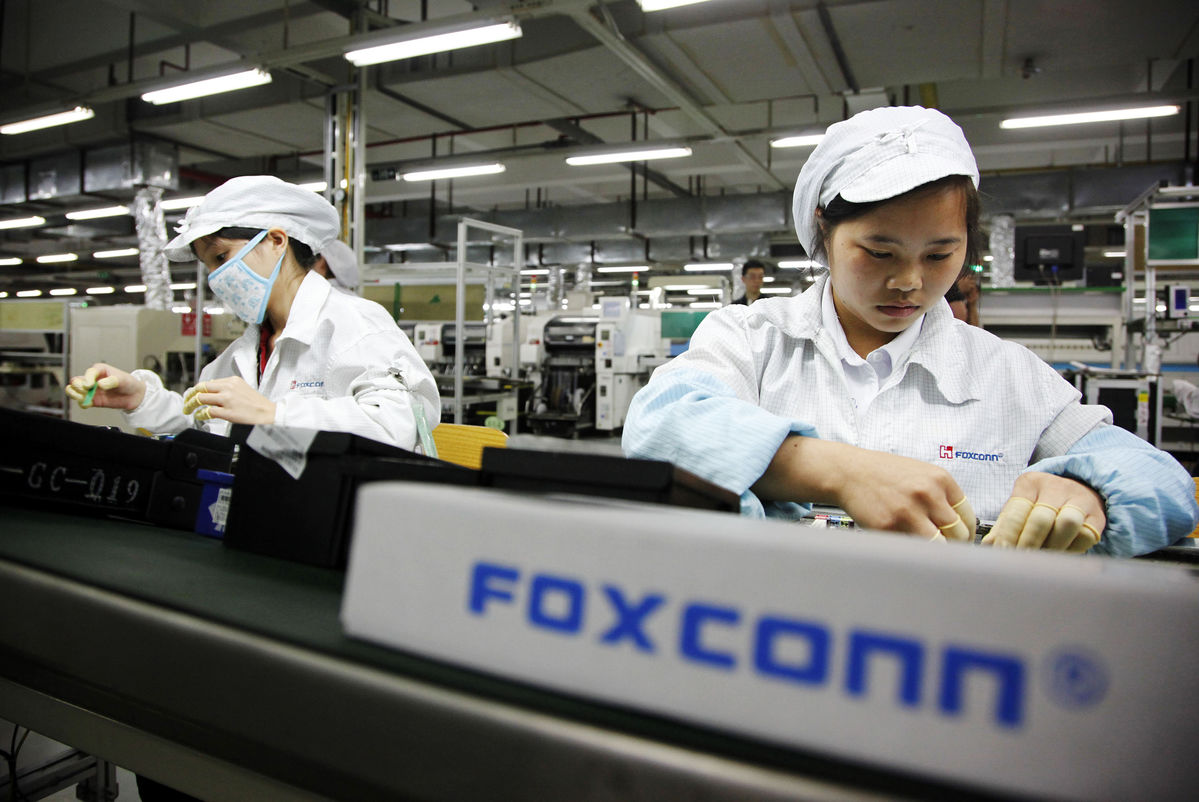
Foxconn, the world’s largest electronics contract manufacturer and a key supplier to Apple and Nvidia, downgraded its full-year growth outlook on Wednesday, pointing to the recent appreciation of the Taiwan dollar and ongoing tariff uncertainties tied to U.S. trade policy.

Although AI server demand remains strong and drove a 91% year-on-year surge in Q1 profit, Foxconn Chairman Young Liu struck a more cautious tone, dialing back earlier projections of “strong growth” for 2025 to a revised outlook of “significant growth.”

💱 Currency & Trade Pressure

  • The Taiwan dollar’s appreciation against the U.S. dollar, possibly linked to unconfirmed Washington-Taipei currency coordination, is impacting Foxconn’s converted revenues.

  • Liu noted the exchange rate issue “may affect the performance of the revenue amount after conversion into Taiwan dollars.”

  • The U.S.-China trade landscape, despite a recent 90-day tariff truce, still weighs heavily on global supply chains. Foxconn’s footprint in China and Mexico exposes it to ongoing tariff volatility.

Rapid changes in U.S. tariff policies and exchange rate fluctuations add to uncertainty. We are adjusting our outlook accordingly,” said Liu.

⚙️ Growth in AI and Automotive Still Intact

  • AI server revenue expected to grow at high double-digit rates YoY in Q2.

  • January–March revenue rose 24.2% YoY, a record for Q1.

  • Net profit hit T$42.12 billion ($1.39 billion), beating the T$37.8 billion consensus from analysts (LSEG).

  • Nvidia aims to produce $500B worth of AI servers in the U.S. over four years with help from Foxconn and TSMC.

🚗 EV Expansion and Japan Ties

Foxconn is also pushing ahead in electric vehicles:

  • Its EV arm Foxtron signed an MOU with Mitsubishi Motors last week.

  • Talks continue with Japanese automakersincluding possible cooperation with Nissan, though no formal stake has been announced.

There is some progress with Japanese firms, but nothing to disclose yet,” said Liu.

📉 Market Reaction & Outlook

  • Foxconn shares are down 11.4% YTD, underperforming the Taiwan index (down 5.4%).

  • Shares rose 3.2% on Wednesday ahead of the earnings call, buoyed by strong AI server results but tempered by macroeconomic caution.

While Foxconn’s AI and EV sectors remain growth pillars, currency dynamics and geopolitical frictions—especially with the Trump administration’s aggressive tariff stanceare pushing the firm toward risk-adjusted forecasting in 2025.