Yazılar

TSMC Posts Record Profit, Projects Strong Growth Amid AI Surge

Taiwan Semiconductor Manufacturing Co. (TSMC) has reported a record quarterly profit, signaling robust demand for chips, particularly those used in artificial intelligence (AI) processing. The world’s largest contract chipmaker posted a 57% increase in net income, reaching T$374.68 billion ($11.4 billion) for the quarter ending December 31, 2024. This performance matched analyst expectations, with revenue climbing 39% year-on-year.

Looking ahead, TSMC is projecting significant revenue growth in the first quarter of 2025, with a forecast of approximately 37% growth, bringing in between $25 billion and $25.8 billion. For the full year, the company expects a revenue increase between 20% and 30%, driven by strong AI demand.

Despite a thriving business, TSMC faces challenges from U.S. technology restrictions targeting China. The Biden administration’s recent announcement of tighter controls on AI chip exports has raised concerns, although TSMC’s CEO, C.C. Wei, expressed confidence that these restrictions would be manageable. Wei noted that the company is applying for special permits for clients affected by these curbs and is optimistic about securing approval.

TSMC is also expanding its global footprint with ongoing construction of new fabrication plants (fabs) in the U.S., Japan, Germany, and Taiwan. The company expects its capital expenditure for 2025 to reach between $38 billion and $42 billion, a potential increase of 41%.

The AI boom has significantly boosted TSMC’s stock, making it Asia’s most valuable company. Its stock price surged 81% last year, outperforming the broader market, which saw a 28.5% gain. On Thursday, ahead of the earnings call, TSMC’s shares rose by 3.8%.
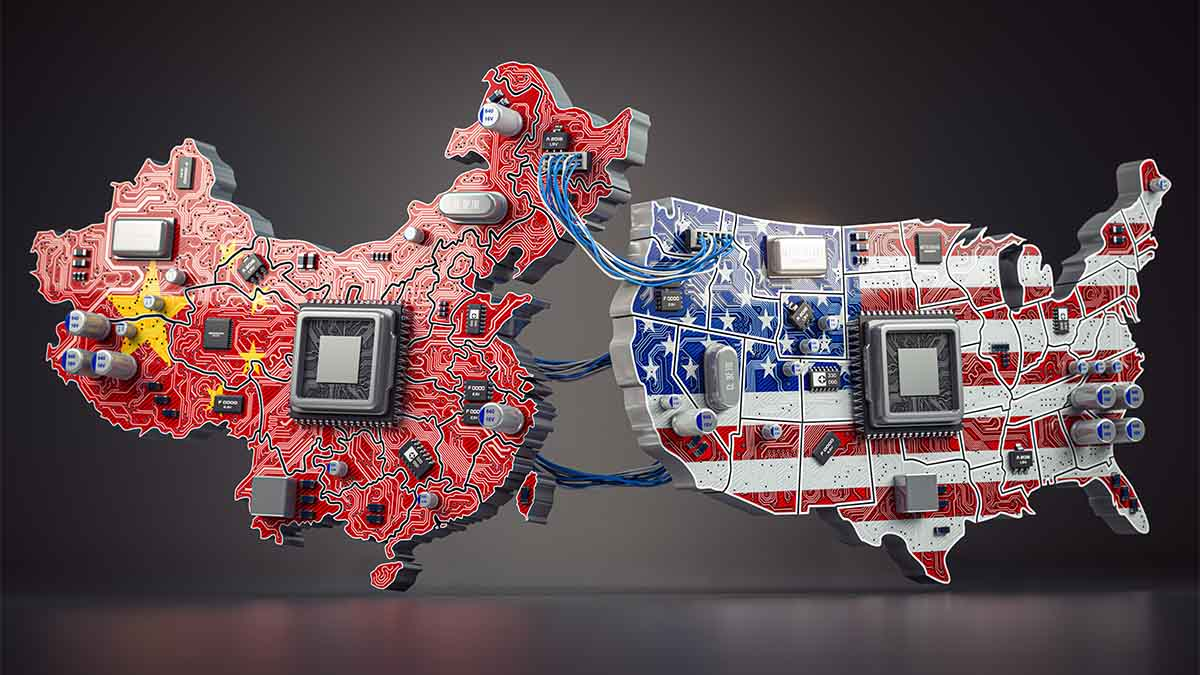
 

U.S. Tightens Chip Export Controls Amid China’s Semiconductor Advances

The Biden administration has unveiled new export controls targeting critical technologies, including quantum computing and advanced semiconductor goods, as China makes significant strides in the global chip industry. Announced by the U.S. Department of Commerce, the new rules encompass quantum computers, advanced chipmaking tools, high-bandwidth chips critical for AI, and components related to metals and alloys. These restrictions are rooted in national security concerns and align with ongoing efforts to limit China’s technological advancements.

While China was not specifically named, the controls are consistent with a series of actions taken by the U.S. to curb Beijing’s developments in AI and computing technologies. The U.S. has also been working closely with international partners like Japan and the Netherlands, which have implemented similar controls. A 60-day public comment period will precede the finalization of these new rules.

The new export rules underscore the intensifying competition between the U.S. and China in areas like quantum computing, which both nations view as transformative for future technological leadership. As China continues to invest heavily in its chip-making industry to reduce reliance on foreign technologies, a recent analysis found that China’s semiconductor technology is now just three years behind the global leader, Taiwan Semiconductor Manufacturing Co. (TSMC).

Despite U.S. efforts to maintain technological superiority, there is some resistance within the global semiconductor industry. Companies like ASML, which have been restricted from selling advanced equipment to China, have expressed concerns about the economic impact of these controls. Similarly, South Korea has called for additional incentives from the U.S. to justify compliance with further export curbs. China, meanwhile, argues that the U.S.-led restrictions are anti-competitive and disrupt the global semiconductor supply chain.

These developments highlight the growing geopolitical tensions in the tech industry, with the U.S. seeking to protect its technological edge while China accelerates its self-sufficiency drive in critical technologies.