
Yazılar

ESPN-NFL Deal Faces U.S. Justice Department Antitrust Review Amid Competition Concerns

The National Football League’s deal with Walt Disney’s ESPN, involving Disney acquiring the NFL Network and other media assets in exchange for the NFL receiving a 10% equity stake in ESPN, is expected to face a thorough antitrust review by the U.S. Department of Justice (DOJ).

Legal experts warn the transaction could raise significant competition concerns by potentially giving Disney greater control over sports broadcasting, which might reduce competition and increase costs for consumers. Andre P. Barlow, a partner at Doyle, Barlow & Mazard, noted the deal might lead to higher prices for streaming services or game access due to Disney’s dominance in sports media.

The DOJ’s Antitrust Division is anticipated to take up to 12 months to review the deal amid ongoing scrutiny of Disney’s recent acquisition attempts, including a controlling stake in Fubo TV, a sports streaming service.

This regulatory attention coincides with concerns raised in the U.S. Senate about rising costs for sports fans as more games move to streaming platforms. Senate Commerce Committee Chair Ted Cruz highlighted the cultural importance of sports and questioned why it is becoming increasingly difficult and expensive to watch games.

The NFL has reportedly engaged with about 30 congressional offices to discuss the deal’s potential to increase consumer choice. Under the agreement, ESPN would incorporate the NFL Network into its sports programming and streaming service, and merge fantasy football offerings with the NFL’s. The NFL would retain streaming rights to NFL RedZone, while ESPN would distribute it to cable and satellite providers.

Disney’s previous large-scale acquisition of 21st Century Fox assets in 2018 received rapid approval, although it required divestment of regional sports networks. Experts expect the current NFL-ESPN deal to undergo more detailed scrutiny.

Political factors may further complicate the process, including former President Trump’s past interventions related to NFL team naming controversies and lawsuits affecting media mergers.

Currently, ESPN is 80% owned by ABC Inc., a Disney subsidiary, and 20% by Hearst. The deal would reduce ABC’s stake to 72% and Hearst’s to 18% to accommodate the NFL’s 10% ownership.
Circle, Coinbase Surge as Senate Passes Landmark Stablecoin Bill

Shares of Circle and Coinbase soared on Wednesday after the U.S. Senate passed a landmark bipartisan bill to regulate stablecoins — a milestone that could legitimize and accelerate the growth of this key part of the cryptocurrency industry.

The legislation, known as the GENIUS Act, marks a rare moment of bipartisan agreement on crypto oversight and opens the door for broader adoption of dollar-pegged digital tokens, which aim to combine the convenience of crypto with the stability of fiat currencies.

Circle (CRCL.N) — the issuer of the USDC stablecoin — saw its stock climb 33.8%, closing at $199.59, more than six times its $31 IPO price earlier this month. Coinbase (COIN.O), which co-founded USDC with Circle, rose 16%, while crypto-friendly Robinhood gained 4.5%.

“History is being made,” said Circle CEO Jeremy Allaire on X. He predicted the legislation would enhance U.S. economic competitiveness for “decades to come.”

The bill must still be passed by the Republican-controlled House of Representatives before heading to President Donald Trump, who is expected to sign it by the end of summer.

If enacted, the bill would require stablecoins to be fully backed by liquid assets such as U.S. dollars or short-term Treasuries, with monthly public reserve disclosures — providing a regulatory framework that backers say will boost investor confidence and encourage institutional adoption.

Circle’s USDC is the second-largest stablecoin, with a market cap of $61.4 billion, and has helped power a 51% rise in Coinbase’s stablecoin revenue in Q1 alone. Analysts now see stablecoins evolving beyond crypto into a universal internet payment rail, comparable to digital cash.

“This bill could transform stablecoins from niche financial tools into core internet infrastructure,” wrote analysts at Bernstein.

Other corporates are reportedly exploring launching their own stablecoins, encouraged by the clarity the GENIUS Act promises. Meanwhile, analysts at KBW noted that the bill could also act as a tailwind for cryptocurrencies like bitcoin, which often trade alongside stablecoin demand.

Industry observers say the GENIUS Act is one of two key crypto bills that could become law in 2025 — a turning point for a sector long hindered by regulatory uncertainty.

Stablecoins Hit Record $251.7 Billion Market Cap as U.S. Senate Advances Regulatory Bill

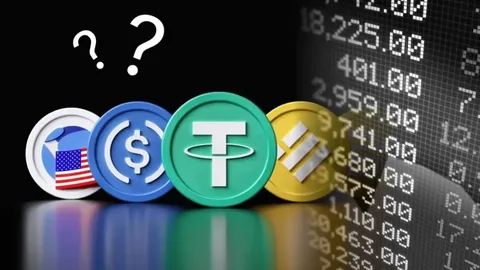
The market capitalization of stablecoins surged to a record $251.7 billion on Wednesday, marking a 22% increase so far in 2025, according to data from CoinDesk. The milestone coincides with a significant regulatory breakthrough as the U.S. Senate passed a bill aimed at bringing clarity and legitimacy to the fast-growing digital asset class.

Stablecoins — cryptocurrencies pegged to traditional currencies like the U.S. dollar — have become vital tools for crypto traders, allowing them to quickly move between assets without exposure to market volatility. But their growing role in digital finance has also sparked concerns about financial stability, prompting U.S. lawmakers to step in.

The new Senate-approved bill would, if signed into law, require stablecoins to be:

  • Fully backed by liquid assets, such as U.S. dollars or short-term Treasury bills, and

  • Subject to monthly public disclosure of reserve composition by issuers.

The proposed framework is being hailed by many in the crypto industry as a major legitimizing step. Proponents argue that with clear rules and reserve transparency, stablecoins could be used for instant global payments and could serve as a bridge between traditional finance and decentralized systems.

However, critics remain cautious. Some analysts warn that a growing reliance on stablecoins could tighten the link between the crypto market and traditional financial infrastructure, increasing systemic risk if not carefully managed.

Still, the surge in stablecoin market cap reflects renewed investor confidence. The bill’s advancement sends a clear message: regulation is coming, and the market is preparing to embrace it.