Yazılar

China Responds to Trump’s Proposal for 50% U.S. Ownership of TikTok

China’s foreign ministry on Monday emphasized that companies should be allowed to make independent decisions regarding their operations and business deals, in response to U.S. President-elect Donald Trump’s suggestion of a 50% U.S. ownership stake in TikTok.

Key Points:

  • China’s Position: The Chinese government reiterated that businesses should retain autonomy over their operations and decisions, regardless of foreign government interventions or proposals. This statement came in light of Trump’s recent proposal for a U.S.-based ownership structure for the popular short-video platform TikTok, which has raised national security concerns in the U.S.
  • Trump’s Proposal: The former U.S. president suggested that a 50% U.S. ownership in TikTok could address security and data privacy concerns raised by his administration, particularly due to TikTok’s Chinese ownership.
  • Political Tensions: The exchange underscores the growing geopolitical tensions between China and the U.S., with both sides asserting their interests in the operations of global tech companies. China’s response signals its opposition to external interference in the business decisions of Chinese firms.
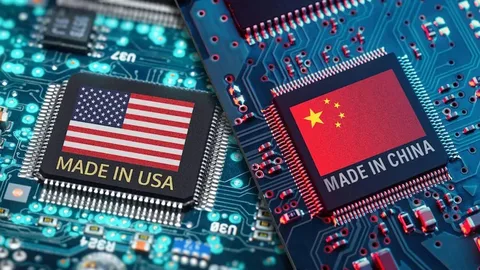
China’s Export Ban to Push Antimony Prices to Record Highs

China’s recent export ban on critical minerals, including antimony, has caused significant price increases and is expected to push antimony prices to new all-time highs. The ban, which also includes gallium and germanium, is part of China’s strategy to restrict the flow of these crucial materials, especially to the United States, amid growing trade tensions between the two nations.

Antimony, widely used in semiconductors and military applications, has seen its price surge by about 250% in 2024. As of December 31, prices were already trading between $39,500 and $40,000 per metric ton in Rotterdam, and traders expect the price to exceed $40,000 per ton following the export restrictions. These prices are significantly higher than in previous years, with some traders already selling small quantities at the $40,000 mark. Non-Chinese suppliers are also expected to raise their prices to capitalize on the growing demand.

China is the world’s dominant producer of antimony, contributing nearly 50% of global supplies, which were estimated at 83,000 tons in 2024, according to the U.S. Geological Survey. As a result, the country’s export ban has prompted concerns over a global supply shortage. While the U.S. has made efforts to diversify its supply chains away from China by sourcing more materials from Southeast Asia, the immediate gap left by the ban remains a challenge.

China’s ban is part of a broader trend where it has restricted exports of several critical minerals, signaling a shift toward internal consolidation of mineral production. The U.S. has already adjusted its sourcing strategies for minerals like gallium and germanium, but these curbs have minimal impact since the U.S. has reduced its reliance on Chinese supplies of these materials. However, the market’s response to these bans has been to drive up prices, with traders exploiting the situation to push prices higher.

Experts have raised concerns about China’s growing influence over global mineral markets, prompting speculation that other metals, such as bismuth and manganese, could be targeted for future export restrictions. As the U.S. and other nations seek to reduce their dependence on China for critical minerals, self-sufficiency has become a priority for governments.


U.S. Adds Tencent and CATL to List of Chinese Firms Allegedly Aiding Beijing’s Military

The U.S. Department of Defense has added Chinese tech giant Tencent and battery maker CATL to its list of companies allegedly working with China’s military, a move that could further escalate tensions between the U.S. and China. The “Section 1260H” list, which designates companies that may pose national security risks to the U.S., now includes 134 firms, with Tencent and CATL being two of the most prominent additions.

Tencent, the parent company of the popular messaging app WeChat, and CATL, the world’s largest electric vehicle battery maker, both rejected the accusations. Tencent called the move a “mistake” and stated that its business would not be affected, hinting at possible legal actions. CATL similarly denied any military-related activities and stated that it was not involved in any defense operations.

While the addition to the list does not directly impose sanctions, it could tarnish the companies’ reputations and heighten scrutiny from U.S. businesses and government entities. Lawmakers have long been critical of Chinese companies’ alleged ties to the Chinese government and its military ambitions.

The Pentagon’s move also affects several other Chinese firms, including drone manufacturer Autel Robotics, shipping giant COSCO, and China’s Commercial Aircraft Corporation (COMAC). U.S. lawmakers, such as John Moolenaar, voiced support for the list, warning that these companies pose security risks.

This development comes as the U.S. continues to tighten restrictions on Chinese firms, with some lawmakers calling for further actions against companies like CATL, which has partnerships with U.S. companies like Ford. Ford plans to license CATL’s battery technology for a new plant in Michigan, raising concerns among some in Congress about the potential security implications.

China, through its foreign ministry, condemned the U.S. sanctions and urged the immediate removal of what it termed “illegal unilateral sanctions.” The U.S. is expected to face increasing pressure from both domestic and international stakeholders as tensions over these designations and broader geopolitical issues grow.