Yazılar

South Korea’s Qcells Cuts Pay and Hours for Georgia Workers Amid U.S. Customs Delays

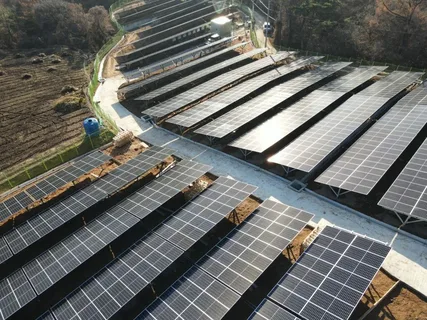
South Korean solar manufacturer Qcells is cutting pay and working hours for about 1,000 employees at its Georgia plants, citing a shortage of imported materials detained by U.S. customs officials. The company will also lay off 300 temporary workers, it said on Friday.

The U.S. Customs and Border Protection (CBP) agency has been holding shipments of solar panel components over concerns that they may contain materials made with forced labor in China. The detentions are part of stepped-up enforcement of the Uyghur Forced Labor Prevention Act, which restricts goods linked to China’s Xinjiang region.

Qcells — a subsidiary of Hanwha Solutions — says none of its materials come from China and that it maintains robust supply chain audits and third-party documentation proving compliance. “Our latest supply chain is sourced completely outside of China,” said company spokesperson Marta Stoepker, adding that some detained shipments have already been released.

With production still slowed at its Dalton and Cartersville facilities, Qcells said the temporary cuts were necessary “to improve operational efficiency until production capacity returns to normal.” Employees will keep their benefits during the reduced schedule.

Despite the disruption, Qcells reaffirmed its commitment to expanding U.S. manufacturing. The company is completing a $2.3 billion solar plant in Cartersville, designed to produce solar ingots, wafers, and cells from polysilicon refined in Washington state — a move aimed at reducing reliance on imports.

“Our commitment to building the entire solar supply chain in the United States remains,” Stoepker said. “We will soon be back on track with the full force of our Georgia team delivering American-made energy.”
Malaysia to discuss semiconductor tariffs with U.S. at ASEAN summit next week

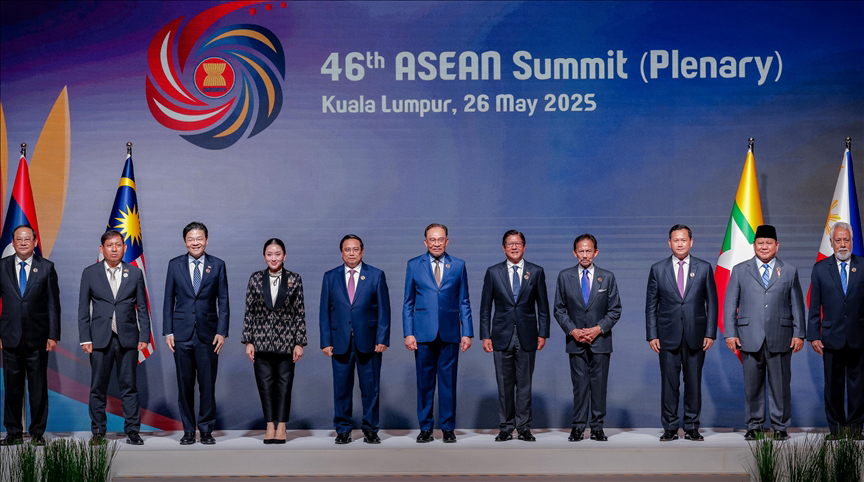
Malaysia plans to hold talks with U.S. Commerce Secretary Howard Lutnick next week on sectoral tariffs, including those on semiconductors, during the ASEAN Leaders Summit in Kuala Lumpur, state media reported on Wednesday.

The discussions come amid rising trade tensions after President Donald Trump’s administration imposed a 19% tariff on Malaysian exports to the U.S. in August. While semiconductors are currently exempt, they remain under review as part of a U.S. national security probe.

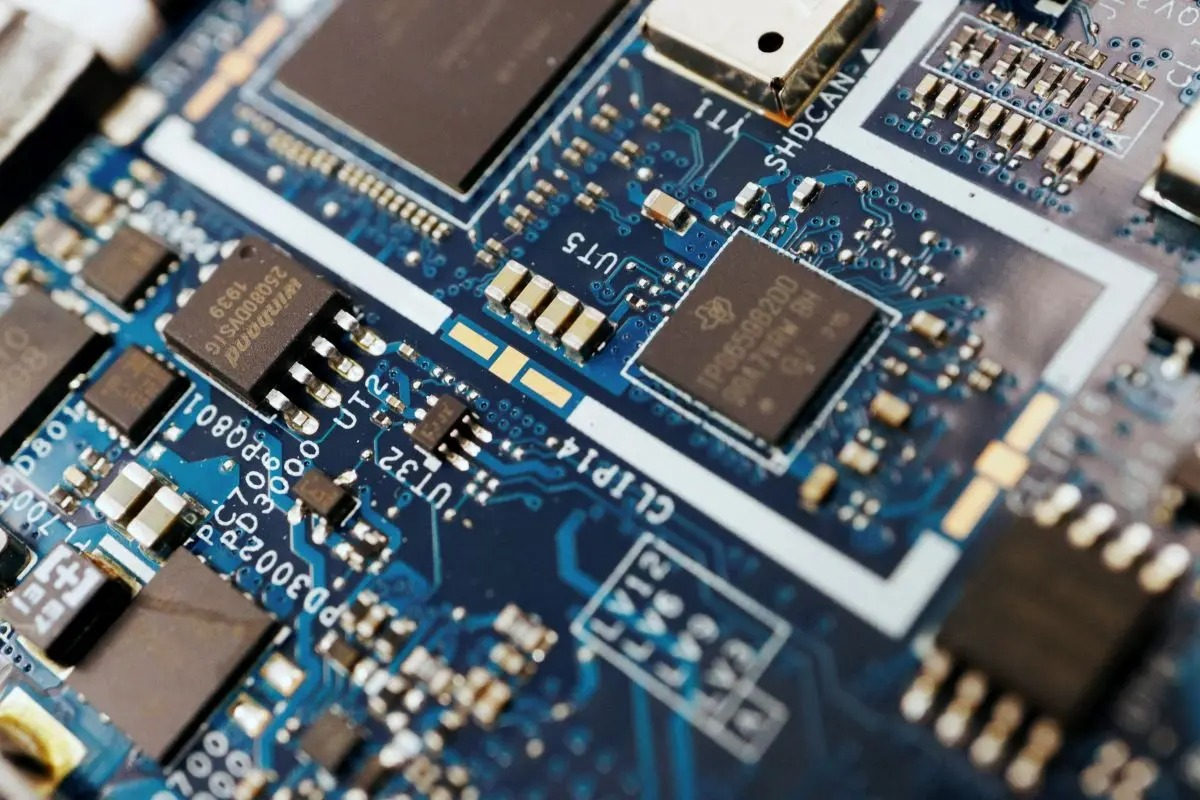
Malaysia is the world’s sixth-largest semiconductor exporter, and officials have warned that removing exemptions on chip exports could hurt competitiveness and disrupt global supply chains. Trade Minister Tengku Zafrul Aziz said he expects to finalize tariff negotiations with Washington during the summit, scheduled for October 26–28.

“I will hold discussions with Lutnick. He will also be attending the ASEAN Leaders Summit next week,” Tengku Zafrul told state news agency Bernama, adding that a final tariff agreement could be signed during the event.

The minister said Malaysia’s agriculture, industrial, and manufacturing sectors, as well as those engaged in U.S. trade and investment, are likely to benefit from the upcoming agreement. Several other ASEAN members are also expected to sign bilateral trade deals with Washington at the summit.

Under current U.S. policy, most Southeast Asian nations face tariffs between 19% and 20%, with Singapore receiving a 10% rate, while Laos and Myanmar have been hit with 40% tariffs.

Taiwan Weighs High-Tech Strategic Partnership with the U.S. Amid Tariff Talks

Taiwan is considering the creation of a high-tech strategic partnership with the United States, as Washington seeks greater Taiwanese investment and industrial cooperation, Taiwan’s top tariff negotiator said on Thursday.

Taiwan — home to the world’s leading contract chip manufacturer, TSMC — currently faces a 20% U.S. tariff on its exports and is looking to negotiate a reduction. The initiative comes as both economies explore deeper technological collaboration amid growing global competition over semiconductor supply chains.

Vice Premier Cheng Li-chiun, who heads Taipei’s delegation in the ongoing tariff talks, said she remains optimistic about reaching a consensus with the U.S. on what she called a “Taiwan model” for investment.

“The current negotiation focus is that the United States expects us to expand investments and engage in supply chain cooperation,” Cheng told reporters in Taipei after returning from Washington.

She emphasized that Taiwan’s approach would not involve relocating its core supply chains, but rather expanding production capacity on U.S. soil in strategic sectors. The plan would include export credit guarantees, joint R&D projects, and the co-development of industrial clusters between the two countries.

TSMC’S ROLE AND THE U.S. EXPECTATIONS

While the U.S. has expressed interest in more domestic semiconductor production, Cheng clarified that TSMC was not directly involved in the latest negotiation round. The company, currently investing $165 billion in chip plants in Arizona, continues to keep most of its production operations in Taiwan.

She also dismissed recent reports that U.S. Commerce Secretary Howard Lutnick had proposed a 50-50 chip production split, saying:

“That idea was not raised in our talks, and it is not something Taiwan would agree to.”

Cheng noted that Washington’s priority appears to be strengthening its domestic chip production to reduce supply chain dependence on Asia, while Taiwan’s long-term strategy is to stay rooted at home but expand globally through bilateral cooperation.

INDUSTRIAL PARTNERSHIP, NOT RELOCATION

The envisioned “Taiwan model,” Cheng said, represents a strategic partnership framework—one where the island’s companies would invest in R&D and manufacturing capacity abroad, supported by governmental financial and policy mechanisms, without shifting their operational core from Taiwan.

Neither the U.S. Commerce Department nor the Office of the U.S. Trade Representative has commented publicly on the discussions, which continued as the U.S. government entered a temporary shutdown this week.

With Taiwan’s semiconductor industry playing a pivotal role in the global AI and electronics boom, both Taipei and Washington are looking to balance national security priorities with economic growth.

“Our aim,” Cheng concluded, “is to remain rooted in Taiwan, deploy around the world, and build bilateral strategic cooperation that supports both sides’ technological ambitions.”