Yazılar

Korea’s NH Venture Targets Investments in Israeli Tech Startups

NH Venture Investment, a branch of NongHyup Financial Group (NH), is looking to invest millions of dollars in Israeli tech startups, aiming to combine Israel’s innovative technologies with Korea’s manufacturing capabilities to create larger global companies. Established in 2019, NH Venture seeks to build on Israel’s deep-tech expertise, including areas such as artificial intelligence, semiconductors, defence, healthcare, and quantum computing.

In July 2024, NH Venture teamed up with OurCrowd, an Israeli investment platform, to establish the Trepont Fund—an $80 million initiative designed to invest in 30 startups across Israel, Korea, and Silicon Valley. CEO Hyun Jin Kim confirmed that NH Venture plans to invest at least $40 million of the fund specifically in Israeli startups. One of the company’s notable investments is in Kardome, an AI voice recognition company that collaborates with Korean giants LG and Hyundai Motors.

During his recent visit to Israel, Kim met with several startups, including Hailo, an Israeli unicorn in the AI space. Kim emphasized the potential for strong collaboration between Israeli innovation and Korean manufacturing, particularly to penetrate the U.S. market. Despite concerns around the ongoing Israel-Hamas conflict, Kim noted that innovation has remained constant in the region, and NH Venture is not deterred by the situation.

The fund is specifically targeting early-stage companies that have already developed proven products. Ely Razin, a partner at OurCrowd, highlighted that Korean interest in Israeli startups has grown, especially following the Israel-Hamas ceasefire.

The relationship between Israel and Korea is well-established, with Samsung, LG, and Hyundai all having venture arms in Israel. Both countries are among the global leaders in research and development.

Seong Ryong Kang, CEO of the Korea-Israel Industrial R&D Foundation, believes the cooperation between the two countries is more seamless compared to other Asian nations due to their complementary industries, and the presence of Korean venture firms in Israel underscores a strong willingness to collaborate.

Flock Safety Raises $275 Million to Fund Manufacturing and R&D Expansion

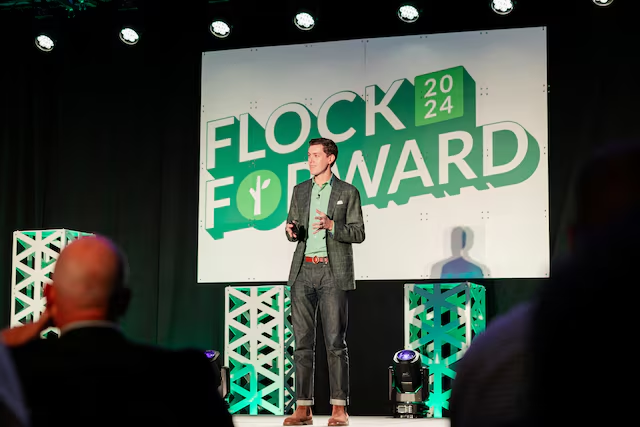
Flock Safety, a U.S.-based startup specializing in surveillance technology, has secured $275 million in new funding, led by Andreessen Horowitz, to expand its operations. The funding will be used to support the development of a manufacturing plant and to further explore new products, including drones.

The investment has valued Flock Safety at $7.5 billion, a significant increase from its previous valuation of $4.8 billion in the previous funding round last year. With this latest funding, the startup’s total capital raised exceeds $950 million, positioning it among the most well-funded startups in the region, according to PitchBook data.

This marks the third investment by Andreessen Horowitz in Flock, a notable move by the venture capital firm. Greenoaks Capital and Bedrock Capital also participated in the funding round.

Flock Safety provides security cameras and software aimed at helping law enforcement agencies and businesses combat crime. The company has reported surpassing $300 million in annual recurring revenue (ARR), reflecting a 70% year-over-year growth. In preparation for an eventual public listing, Flock has brought in Brandon Simins as its new CFO this year, although it has not set a specific timeline for the listing.

A significant part of the funding will go toward the construction of a 100,000-square-foot manufacturing facility in Georgia, where Flock plans to begin the production of U.S.-manufactured drones by 2025. Garrett Langley, CEO of Flock, expressed excitement about bringing more manufacturing to the U.S., stating that it would provide better control over the supply chain and further their mission to combat crime.

Founded in 2017, Flock Safety’s surveillance system leverages artificial intelligence (AI) to provide insights for investigations, such as identifying car plates. The company now serves over 4,800 law enforcement agencies and nearly 1,000 businesses, including major retailers and healthcare providers. Enterprise businesses account for approximately 30% of its revenue.

Investing in startups that sell to law enforcement is somewhat uncommon for Silicon Valley investors, but David George, general partner at Andreessen Horowitz, highlighted Flock’s growth as evidence of the large market for such solutions. “Flock Safety has one of the most compelling ROI (return on investment) equations we’ve ever seen in software or hardware markets,” said George. He added that Flock’s widespread penetration into police departments and its high market share position it for a venture-scale outcome.

French Tech Start-Up Bankruptcies on the Rise, Survey Reveals

A new survey by industry research group ScaleX Invest has revealed a growing wave of bankruptcies among French tech start-ups, potentially challenging President Emmanuel Macron’s vision of Paris as a premier European tech hub.

During his first term, Macron championed the rise of France’s start-up ecosystem, highlighting initiatives like Station F and securing €110 billion in investment pledges during France’s global AI summit in February. However, the latest findings indicate that economic pressures and tightening funding conditions are leading to higher insolvency rates in the sector.

Key Findings of the Survey

  • 10.4% of the 1,487 tech start-ups analyzed face a high risk of bankruptcy.
  • The number of bankruptcies and insolvencies now exceeds the number of new Series A funding rounds.
  • Established start-ups are also struggling: The average failed company had raised €32.5 million, twice as much as in previous years, yet still couldn’t survive market conditions.

One example is Ynsect, a company specializing in insect-based ingredient production using robotics, which filed for a safeguard plan last year.

A Struggle for Funding

The declining valuations and stricter funding climate have made it increasingly difficult for even well-funded scale-ups to secure capital, said Edouard Thibaut, ScaleX Invest’s Chief Operating Officer.

This downturn in France’s tech sector coincides with broader economic concerns, including a global slowdown affecting financial markets. If the trend continues, it could undermine France’s ambitions of competing with Silicon Valley and other global tech ecosystems.