Yazılar

GM Exits Loss-Making Cruise Robotaxi Business Amid Restructuring Efforts

General Motors (GM) has announced its decision to exit the development of robotaxi services at Cruise, its majority-owned autonomous driving unit, marking a significant pivot in the automaker’s strategic priorities. The Detroit-based company revealed on Tuesday that it will no longer fund Cruise’s robotaxi operations, citing the substantial time and financial investment required to scale the business in an increasingly competitive market.

Since 2016, GM has invested over $10 billion into Cruise, but the unit has yet to achieve profitability. Moving forward, Cruise will be integrated into GM’s driver-assistance technology group, signaling a shift away from fully autonomous vehicles. The decision follows GM’s broader strategy to focus on its more profitable lines of business, including gasoline-powered trucks and large vehicles, while scaling back on electric vehicle (EV) initiatives and restructuring its operations in China.

In 2023, GM CEO Mary Barra expressed optimism that Cruise could generate $50 billion in annual revenue by 2030. However, she described the unit as “expendable” on Tuesday, explaining that the high operational costs of running a robotaxi fleet did not align with GM’s core business. Barra emphasized the need for fiscal prudence, noting that the restructuring will cut annual spending on Cruise from $2 billion to $1 billion by June 2024.

While Barra did not specify how many Cruise employees might transition to other roles within GM, the decision reflects broader challenges in the autonomous vehicle (AV) industry.


COSTLY ROAD AHEAD FOR AUTONOMOUS VEHICLES

GM is not the first automaker to retreat from ambitious autonomous driving projects. In October 2022, Ford wound down its Argo AI unit, citing similar financial and technical hurdles. Although competitors like Tesla and Alphabet’s Waymo remain invested in AV technology, the market has proven to be both costly and complex.

Tesla CEO Elon Musk continues to champion the potential of robotaxis and expects regulatory support under President-elect Donald Trump’s administration to facilitate broader deployment. Meanwhile, Waymo is expanding its ride-hailing services in cities such as Los Angeles and Miami, bolstered by a $5.6 billion funding round led by Alphabet.


LEGAL AND OPERATIONAL HURDLES

Cruise’s recent legal challenges have further compounded GM’s decision to abandon its robotaxi ambitions. In October 2023, a Cruise vehicle in San Francisco struck and seriously injured a pedestrian. The company admitted to submitting a false report to federal regulators and agreed to pay a $500,000 fine as part of a deferred prosecution agreement. GM also faced significant financial penalties, including a settlement with the injured pedestrian, while U.S. safety regulators continued to scrutinize the company.

In July, GM shelved plans for a steering wheel- and pedal-free robotaxi, following layoffs of over 25% of Cruise employees and the dismissal of several top executives. GM also withdrew a petition to the National Highway Traffic Safety Administration (NHTSA) that sought approval to deploy up to 2,500 autonomous Origin vehicles annually without human controls.


SHIFTING FOCUS

As GM retreats from autonomous robotaxis, its focus appears to be realigning with its core business of producing conventional vehicles and advancing driver-assistance technologies. While the company once viewed Cruise as a cornerstone of its future mobility strategy, it now sees scaling such operations as a long-term endeavor that no longer aligns with its immediate priorities.

Despite the setbacks, GM shares rose 3.2% in extended trading on Tuesday, reflecting investor confidence in the automaker’s renewed focus on profitability.
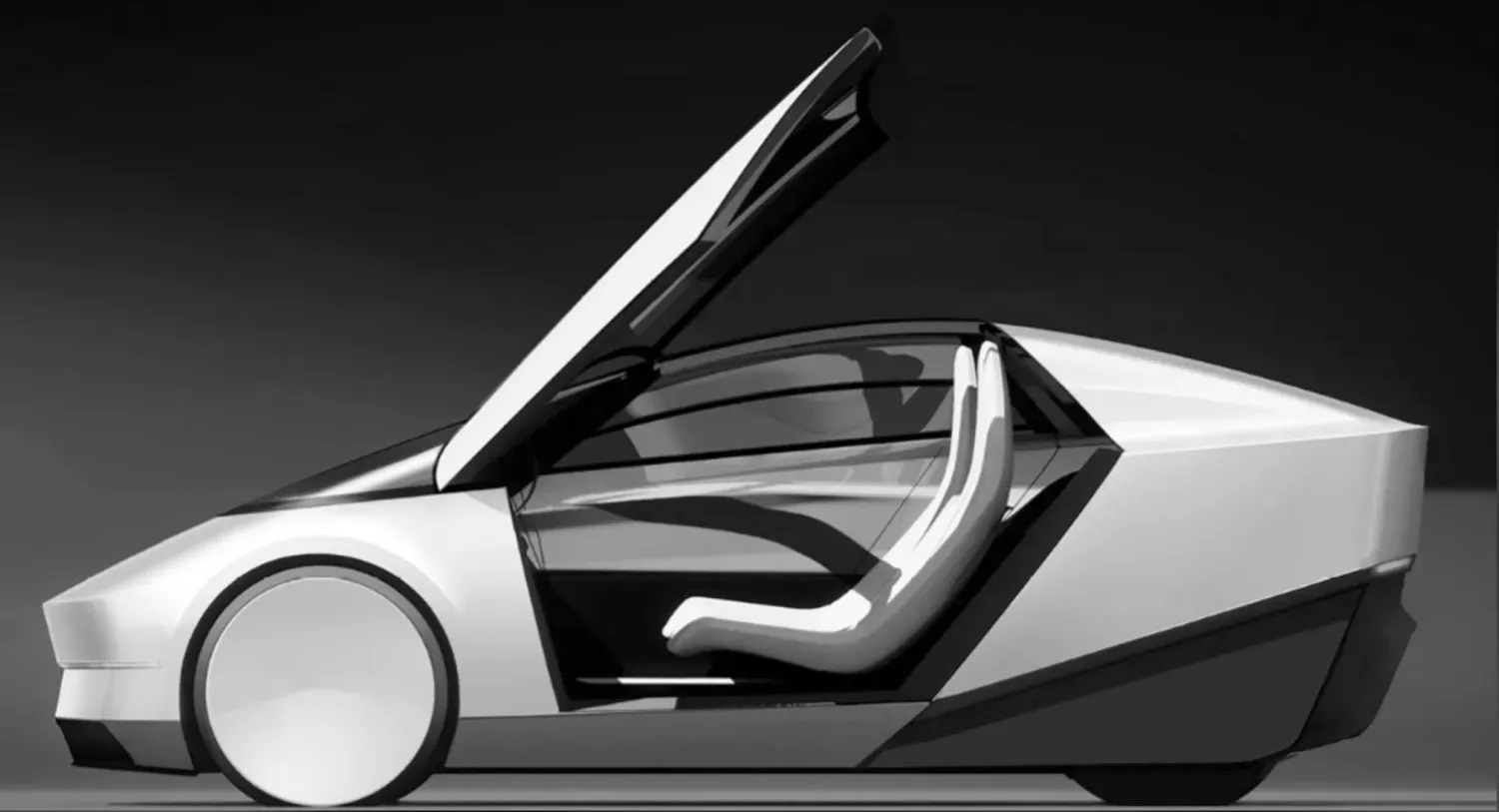
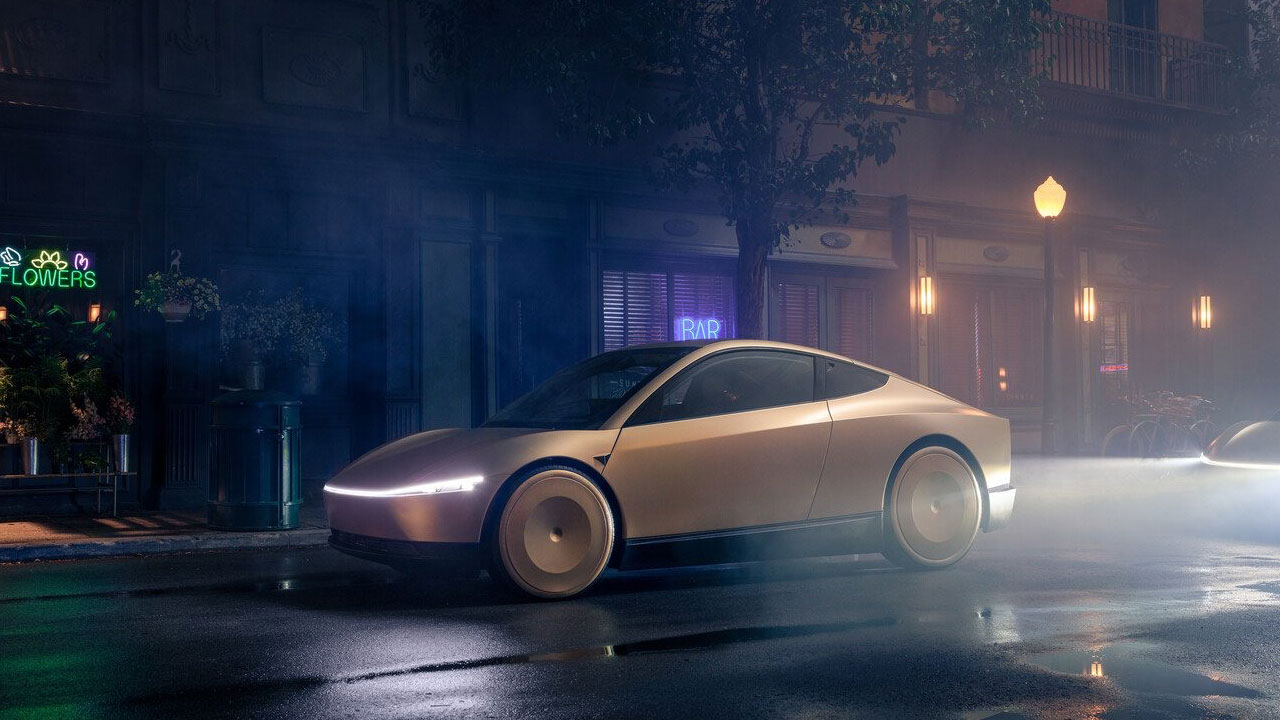
Tesla’s Sporty, Two-Seater Robotaxi Design Puzzles Experts

Tesla’s latest announcement of a two-seater robotaxi, dubbed the Cybercab, has left investors and experts perplexed. Unveiled by CEO Elon Musk at a much-hyped event near Los Angeles, the Cybercab is set to go into production in 2026 and cost less than $30,000. However, the vehicle’s low-slung, sporty coupe design—far from the traditional roomy taxi—has sparked confusion over its practicality for broader market needs.

The key concern raised by experts and investors alike revolves around the vehicle’s seating capacity and suitability as a taxi. Most people expect taxis to accommodate multiple passengers and have room for luggage, making the two-seater design puzzling. As Jonathan Elfalan, vehicle testing director at Edmunds.com, pointed out, “When you think of a cab, you think of something that’s going to carry more than two people.”

Tesla’s stock tumbled 9% on Wall Street the day after the reveal, as investors questioned the logic behind the design and Musk’s lack of detailed financial plans for the Cybercab. Analysts are particularly concerned about whether Tesla is targeting the right market. According to Sandeep Rao, a senior researcher at Leverage Shares, the market for two-door vehicles in the U.S. is tiny, comprising only 2% of car sales (excluding SUVs and pickups), which limits the appeal of the Cybercab.

Tesla also faces stiff competition in the robotaxi space. Companies like Waymo, owned by Alphabet, and Zoox, backed by Amazon, have already launched robotaxis with more practical designs. For instance, Waymo’s fleet of Jaguar Land Rover vehicles seats up to four passengers, a far cry from Tesla’s two-seater. Former Waymo CEO John Krafcik remarked that Tesla’s design seemed “more playful than serious,” emphasizing that its configuration could create challenges for older passengers and people with disabilities.

During the presentation, Musk promised that the Cybercab would have an operating cost of just 20 cents per mile, claiming this could make it cheaper to operate than public transport. However, he failed to clarify how Tesla plans to mass-produce these vehicles, obtain regulatory approvals, or compete with existing players like Waymo that are already operating robotaxis in certain U.S. cities.

Musk also teased the idea of a futuristic robovan capable of seating up to 20 people, but he did not provide a timeline for its production. While some believe that Tesla’s Cybercab may be a way to quickly introduce an autonomous vehicle to the market, the consensus among experts is that larger, more practical robotaxis will be necessary for Tesla to succeed in this space.

Analyst Sam Fiorani from AutoForecast Solutions noted that two-seaters have long been proposed as commuter vehicles but have never gained widespread traction. Similarly, Blake Anderson, a senior investment analyst at Carson Group, remarked that the two-seater design doesn’t align with Tesla’s goal of creating a mass-market, low-cost vehicle to expand its appeal.

Despite the mixed reactions, Musk remains optimistic about the potential of the robotaxi business, which he believes could eventually push Tesla’s valuation to $5 trillion, up from its current $700 billion. However, the Cybercab’s niche design, and the challenges it faces in a still-developing, tightly regulated market, suggest that Tesla will need to refine its approach to stay competitive.

Elon Musk Unveils Futuristic ‘Cybercab’ Robotaxi, Yet Faces Skepticism Over Timelines

Tesla CEO Elon Musk presented his latest vision for a future dominated by self-driving vehicles, revealing designs for the highly anticipated Cybercab robotaxi at a star-studded event in California on Thursday. Musk’s bold vision includes a world where autonomous vehicles operate without human intervention, transforming cityscapes by replacing parking lots with parks and ushering in a new “age of abundance.”

The futuristic designs featured sleek, metallic aesthetics, evoking a sci-fi world that Musk compared to the dystopian movie “Blade Runner”—though with a more optimistic twist. The presentation also showcased a Robovan, designed for larger groups or cargo, alongside the Cybercab. These driverless vehicles, Musk promised, would be on the roads within a few years, with the Cybercab slated for production by 2026.

Familiar Promises, New Skepticism

Musk is no stranger to making ambitious promises. His timeline for the Cybercab is just the latest in a series of delayed targets. In 2019, Musk claimed Tesla’s fleet of self-driving cars would be available by 2020. That timeline was missed, with Musk later admitting that he tends to be “a little optimistic” about deadlines. During Thursday’s event, even though the unveiling was delayed by nearly an hour, Musk maintained the enthusiasm of the crowd, who cheered for his 20-minute presentation.

Tesla’s Full Self-Driving (FSD) feature, which is available for $8,000, has yet to fulfill its promise of complete autonomy, still requiring human drivers to remain alert and take control when necessary. Musk claimed that in states like California and Texas, Teslas with FSD will be fully autonomous by next year, provided state regulators give their approval.

The Cybercab, unlike Tesla’s current vehicles, will be designed specifically for fully autonomous operation, with no steering wheel, brake pedals, or accelerator. It will feature a wireless charging system that charges the vehicle by driving over a charging plate, eliminating the need for plugs.

Competitive Landscape: Falling Behind?

While Musk’s presentation was met with fanfare, Tesla faces significant competition in the autonomous driving space. Companies like Google’s Waymo and Amazon’s Zoox have already deployed self-driving services in select cities. Tech journalist Kara Swisher, a frequent critic of Musk, pointed out that while Tesla is still showcasing prototypes, Waymo has been operational in San Francisco for some time. Swisher sarcastically referred to Tesla’s Robovan design as “a lovely toaster on wheels,” highlighting that other companies have moved beyond the conceptual stage to real-world deployment.

Overcoming Technical and Regulatory Challenges

Tesla’s FSD technology, while impressive, is far from perfect. Some independent testing shows that drivers need to intervene every 13 miles on average. Musk has admitted that previous timelines for achieving full autonomy were “overly optimistic” but continues to project confidence, stating that Tesla’s system will be safer than human drivers by the end of this year.

Analysts like Gene Munster from Deepwater Asset Management have echoed concerns about the feasibility of Musk’s timelines, especially given the difficulty in achieving the required levels of accuracy for driverless systems. Munster estimates that it will take Tesla at least two more years to refine the technology and an additional two to three years to obtain regulatory approval.

Musk’s history of delayed product launches adds further skepticism. The Cybertruck, revealed in 2019, took four years to go into production, and other vehicles like the electric semi-truck remain in development over six years after their initial announcement. As Munster emphasized, patience will be key for investors waiting for the promises of Tesla’s autonomous future to become reality.

The Road Ahead: Opportunities and Challenges

Musk envisions a future where Tesla owners could rent out their autonomous vehicles when not in use, creating a new source of income. Tesla’s robotaxi service would compete not only with human-driven services like Uber and Lyft but also with other autonomous services already in development.

While Tesla has made significant progress in the electric vehicle space, the challenges of achieving full autonomy remain formidable. Regulatory approval, technical hurdles, and stiff competition from established tech companies are just a few of the obstacles Musk faces in delivering on his vision.

In the short term, the success of Tesla’s self-driving technology will likely hinge on its ability to refine the FSD feature and gain regulatory approval in key markets. In the long term, Musk’s grand vision of a world filled with autonomous vehicles, like the Cybercab and Robovan, will require both technological breakthroughs and patience from investors and consumers alike.