Yazılar

Trump-Musk Rift Raises Regulatory Risks for Elon Musk’s Business Empire

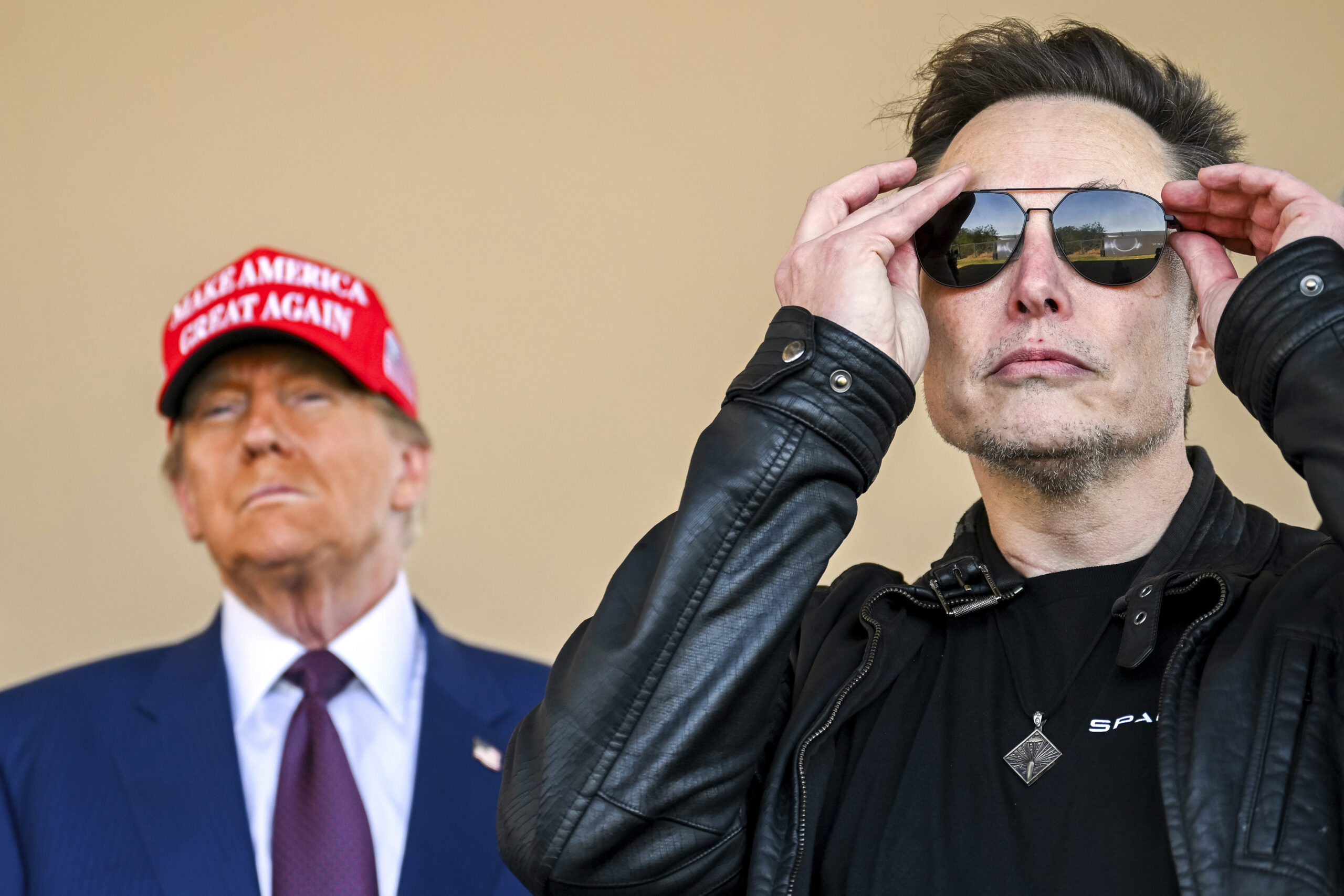
Elon Musk’s deteriorating political relationship with former President Donald Trump may expose his vast business empire to heightened regulatory scrutiny across multiple U.S. agencies. As political tensions escalate, the risk that regulators may more aggressively oversee Musk’s various companies has become a growing concern. Below is an overview of the key U.S. regulators with authority over Musk’s enterprises, and the potential challenges ahead:

Federal Communications Commission (FCC)
The FCC oversees the allocation of spectrum critical to SpaceX’s Starlink satellite internet service. In April, the FCC launched a review of its longstanding spectrum sharing rules, potentially affecting SpaceX’s access to expanded frequencies necessary to enhance its coverage. While the review aims to modernize spectrum usage, it may also result in stricter rules or delays for SpaceX, depending on the political climate and regulatory stance.

Food and Drug Administration (FDA)
The FDA regulates clinical trials for Neuralink, Musk’s brain implant company. While Neuralink has secured FDA approval for initial human trials, earlier safety concerns cited by the agency in 2023 remain relevant as trials progress. Any missteps or adverse events in ongoing studies could prompt the FDA to halt or delay the company’s development timeline.

Environmental Protection Agency (EPA)
SpaceX’s Starbase launch facility in Texas falls under the EPA’s jurisdiction for environmental compliance, particularly regarding wastewater discharge and environmental impact assessments under the National Environmental Policy Act. Rocket launches and tests, which have included multiple explosions, may invite further scrutiny, particularly if environmental groups or political adversaries exert pressure on federal agencies.

National Highway Traffic Safety Administration (NHTSA)
Tesla’s Full Self-Driving (FSD) technology remains under active investigation by NHTSA, especially regarding its performance under poor visibility conditions. The agency recently requested detailed information on Tesla’s robotaxi service set to launch in Austin, Texas, this month. Any regulatory findings could impact Tesla’s ability to scale its self-driving services.

Federal Aviation Administration (FAA)
The FAA proposed a $633,000 fine against SpaceX last year for license violations during launches. With ongoing investigations and the potential for future launch failures, the FAA holds significant leverage over SpaceX’s launch schedule and licensing requirements.

Securities and Exchange Commission (SEC)
Musk continues to face legal battles with the SEC, including litigation related to his 2022 acquisition of Twitter (now X). The regulator is also reportedly investigating Neuralink, raising additional legal exposure. Any adverse findings could impact Musk personally as well as his companies’ access to capital markets.

Federal Trade Commission (FTC)
The FTC oversees data privacy and antitrust compliance for social media platforms, including X. The agency is currently investigating whether certain media watchdog groups coordinated advertiser boycotts of X, a situation Musk claims is anti-competitive. The FTC’s broader mandate to protect consumer privacy could result in further investigations, particularly regarding data protection for minors.

Political Climate Raises Stakes
While these agencies have long held authority over Musk’s operations, his prior friendly ties to Trump may have provided a degree of political insulation. The recent breakdown in their relationship removes that buffer, potentially leaving Musk more exposed to adversarial regulatory action depending on future election outcomes and shifting political alliances.

With businesses spanning electric vehicles, space exploration, telecommunications, brain-computer interfaces, and social media, Musk’s cross-sector reach makes him uniquely vulnerable to regulatory actions from multiple federal agencies simultaneously.
Apple and Meta Hit with Fines as EU Advances Tech Industry Investigations

Apple and Meta have both been hit with significant fines by the European Union, marking the first sanctions under the EU’s groundbreaking Digital Markets Act (DMA), which aims to reduce the influence of major tech giants. Apple was fined EUR 500 million (approximately $570 million or Rs. 4,869 crore), while Meta faced a fine of EUR 200 million (about Rs. 1,708 crore). These penalties are the result of a year-long investigation by the European Commission into whether these companies were adhering to the regulations set out in the DMA, which was designed to create a more level playing field for smaller competitors in markets dominated by major players like Apple, Meta, and Google.

The fines could increase tensions between the EU and the United States, especially as former President Donald Trump has previously threatened to impose tariffs on countries that penalize U.S. companies. The timing of these fines is particularly sensitive, as Trump cited the DMA in February when he vowed to protect American companies from what he described as “overseas extortion.” While the fines represent a significant step in the EU’s efforts to regulate Big Tech, they also highlight the growing divide between European regulatory bodies and U.S. tech firms, which have long enjoyed a relatively unchallenged position in global markets.

The fines follow the implementation of the DMA, which came into effect in 2023, and signal the EU’s firm stance on enforcing these new rules. The DMA is part of a broader effort to curb the market dominance of companies like Apple, Meta, and Google, with the aim of fostering innovation and competition by providing smaller rivals with greater access to digital markets. Alphabet’s Google and Elon Musk’s X are also reportedly under investigation, and may face similar penalties if they are found in violation of the DMA.

The EU’s decision to press ahead with these investigations is bolstered by a recent ruling from a U.S. court, which found that Google had unlawfully dominated two key online advertising markets. This verdict could pave the way for U.S. antitrust regulators to take further action against Google, potentially even seeking to break up the company’s advertising products. As the EU continues to crack down on Big Tech, these regulatory actions are likely to have far-reaching consequences for the future of tech industry competition and market regulation.

OpenAI Said to Be Developing an AI-Driven Social Media Network

OpenAI is reportedly preparing to launch its own social media platform, according to recent reports. The San Francisco-based artificial intelligence company is said to be working on integrating AI capabilities into this new social app, though specifics about how the AI features will be used remain unclear. The platform is rumored to be positioned as a competitor to Elon Musk’s X (formerly Twitter) and the suite of social apps owned by Mark Zuckerberg’s Meta. Notably, both X and Meta have recently introduced AI features into their ecosystems, highlighting a growing trend of blending AI with social experiences. This news surfaces just days after OpenAI announced its latest advancements with the GPT-4.1 family of models.

According to a report from The Verge, OpenAI’s social platform could be based heavily on ChatGPT. Sources close to the project suggest that an internal prototype already exists, reportedly emphasizing GPT-4o’s image-generation capabilities. The platform’s design includes a public feed where AI-created images may be displayed, hinting at a highly visual, content-driven experience. While it has been described as similar to X, the integration of generative AI at the core could set OpenAI’s project apart from more traditional social networks.

CEO Sam Altman has reportedly sought external feedback on the early prototype, though major questions remain. It is still unclear whether OpenAI intends to launch a standalone social app or incorporate these features directly into the existing ChatGPT interface. Observers have pointed out similarities to OpenAI’s video generation platform, Sora, which also features a content feed—though Sora lacks a true social element, as creators are not identified. Early indications suggest that OpenAI’s approach might prioritize showcasing AI capabilities in a social context, rather than building a purely human-driven network supplemented by AI, like X or Instagram.

The move into social media would also intensify OpenAI’s ongoing rivalry with X and Meta. Elon Musk, owner of X, has been openly critical of Sam Altman and OpenAI’s shift toward a for-profit structure. Musk previously filed a lawsuit against the company and even made a bid to acquire it, to which Altman responded sharply, joking that OpenAI would instead offer to buy Twitter for $9.74 billion. With tensions already high, OpenAI’s entry into the social networking space could further escalate competition among tech giants racing to dominate the future of AI-powered digital experiences.