Wildfires Near Athens Prompt Mass Evacuations and International Assistance

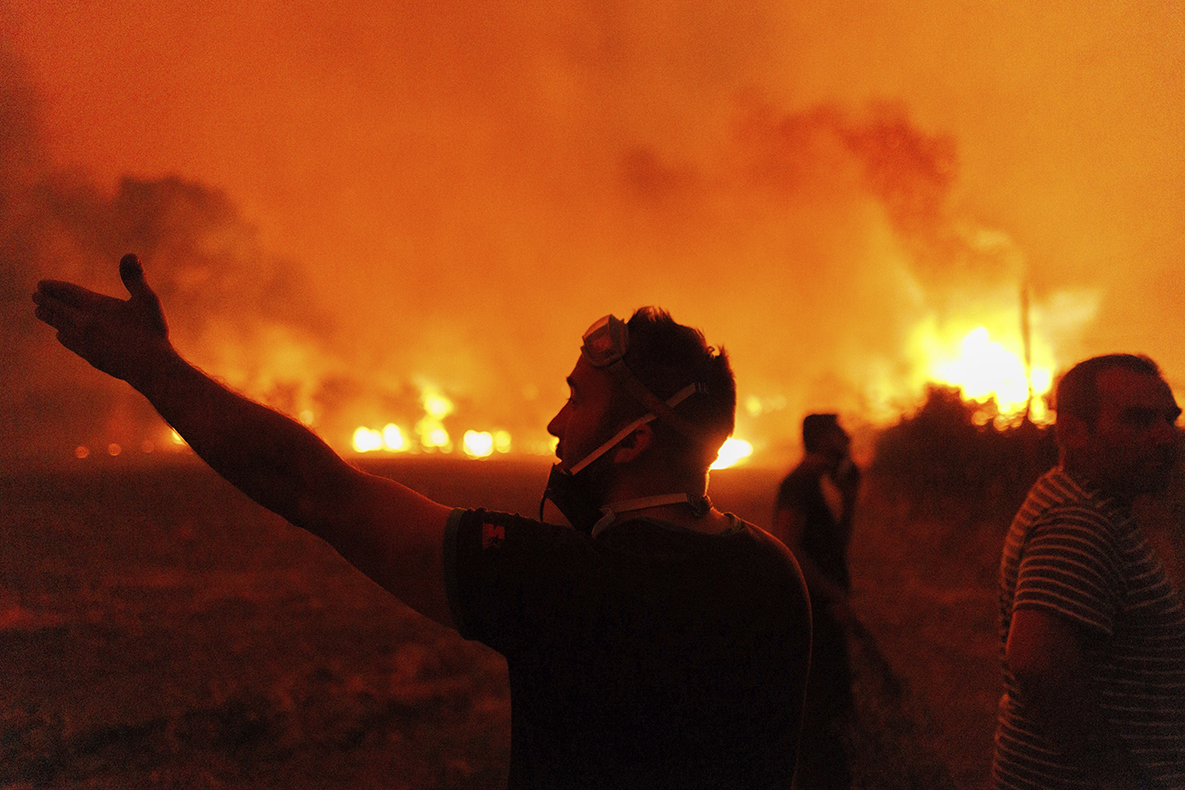
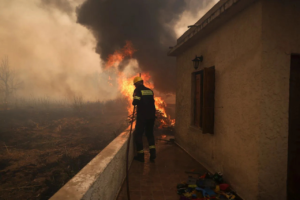
A rapidly spreading wildfire near Athens, Greece, has forced authorities to order evacuations from several neighborhoods. The blaze, which began on Sunday near Varnavas, north of the capital, has intensified, with 685 firefighters and 32 water-bombing aircraft deployed to control the situation. The fire, exacerbated by strong winds, prolonged drought, and challenging terrain, has continued for over 20 hours, showing no signs of abating.

The fire has significantly impacted the area, with Greek public broadcaster ERT estimating its size at over 30 kilometers (19 miles). The flames are advancing towards Penteli, located approximately 16 kilometers (10 miles) northeast of Athens, threatening residential areas and the National Observatory of Athens.
Despite wildfires being a common occurrence in Greek summers, climate scientists attribute the increased intensity and frequency of these fires to unusually hot and dry weather linked to global warming. This summer has seen Greece endure its hottest June and July on record, with numerous wildfires already reported.

Local residents have described harrowing scenes, including animals struggling to escape the flames and thick smoke making it nearly impossible to breathe. Reports indicate that at least 13 citizens and two firefighters have been treated for burn and respiratory injuries. The Greek government has requested assistance from the European Union, with France, Italy, the Czech Republic, Spain, and Turkey responding to aid in firefighting efforts.

The situation has raised concerns about a repeat of last summer’s devastating fires, which ravaged several regions and islands. The Greek government has also heightened health and emergency measures, with three hospitals in the Attica region on alert and children evacuated from a hospital in Penteli.

As the crisis unfolds, international support continues to pour in, and the Greek government remains on high alert, urging residents to heed evacuation orders and stay safe amid the ongoing emergency.
 

Student Dies in Bangladesh Protests, Sparking Nationwide Outcry and Calls for Justice

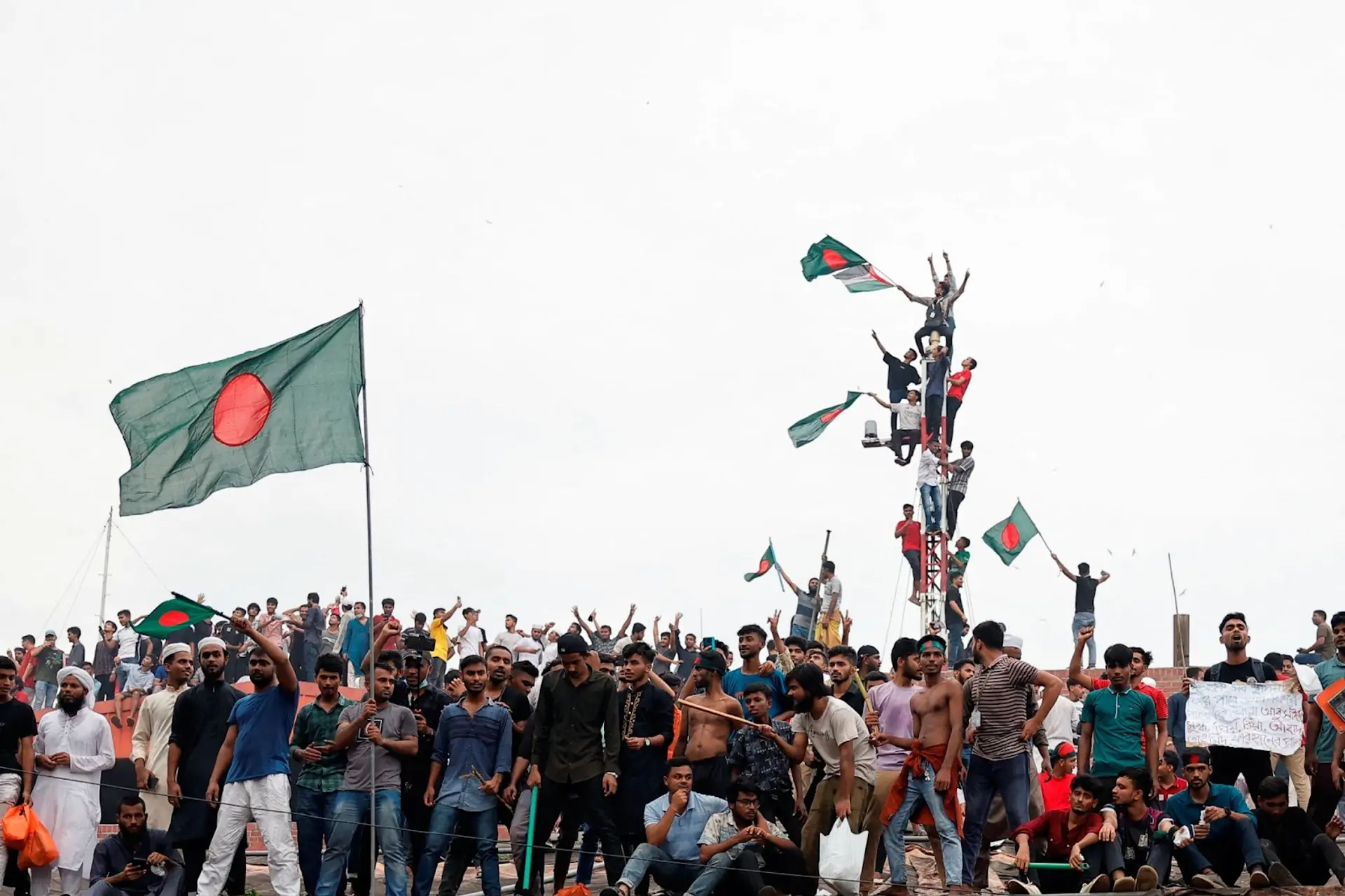
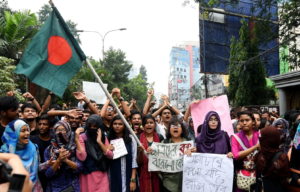
On July 18, 25-year-old university student Mir Mahfuzur Rahman, known as Mugdho, was shot and killed during protests in Dhaka, Bangladesh. Mugdho had been actively distributing water to demonstrators when a bullet struck him in the forehead, leading to his death shortly after. His final moments, captured in a video showing him wiping tear gas from his eyes, went viral and galvanized further protests across the country.

The protests, which initially started as peaceful demonstrations against a government job quota system, escalated into a broader movement demanding the resignation of long-time Prime Minister Sheikh Hasina. The unrest led to a violent crackdown, resulting in at least 300 fatalities, according to local media reports. Amidst the chaos, Hasina fled to India, and Nobel Peace Prize laureate Muhammad Yunus returned to Dhaka to form a temporary government and oversee upcoming elections.

Mugdho’s twin brother, Snigdho, along with their older brother Dipto, are now grappling with the loss. The twins had shared a close bond, studying and planning for a future together in Italy. In their grief, they hold onto Mugdho’s university ID card, a symbol of his sacrifice. Snigdho reflects on his brother’s impact, noting that Mugdho’s actions inspired many to join the protest movement.

The death of Mugdho followed the killing of another protester, Abu Sayed, on July 16. Amnesty International condemned the police for allegedly using unlawful force against Sayed. These events turned the student-led protests into a nationwide call for justice, with widespread participation from people of all backgrounds.

Amid the violence, UNICEF reported that at least 32 children have died in the clashes. The family of 13-year-old Mubarak, a victim of the violence, is struggling to cope with their loss. Mubarak’s mother, Fareeda Begum, mourns her son’s death while cherishing his memories through his TikTok videos. Mubarak had been helping his parents with their livelihood when he was caught in the crossfire.

The protests have evolved from a student-driven movement into a broader fight for justice, reflecting widespread discontent and demands for change across Bangladesh.


Putin Vows Retaliation as Ukraine Intensifies Incursion into Russian Territory, Prompting Mass Evacuations

Russian President Vladimir Putin has vowed a “worthy response” to Ukraine’s escalating incursion into Russian territory, which has prompted the evacuation of 11,000 people from a second border region on Monday. In a televised meeting with top security officials and regional governors, Putin emphasized that Ukrainian forces are suffering significant losses, particularly among their most combat-ready units. He assured that Russia would achieve all its objectives, as the conflict between the two nations intensifies.

This latest escalation comes after Ukrainian forces launched a daring incursion into the Russian border region of Kursk last Tuesday, catching Moscow by surprise. Russian defense officials have since claimed to have thwarted further Ukrainian advances, but reports indicate that Ukrainian troops have penetrated up to 35 kilometers (22 miles) into Russian territory. The incursion has disrupted Russia’s summer offensive in eastern Ukraine, forcing the Kremlin to redeploy forces to the border regions to counter the unexpected threat.

In response to the growing conflict, the administrative head of the Belgorod border region, Andrey Miskov, announced that 11,000 people have been evacuated from the Krasnoyarsk district due to “enemy activity” at the border. The evacuation, carried out in a centralized manner, saw most residents safely relocated, with only 500 people, including the administration, remaining in their workplaces. Belgorod’s governor, Vyacheslav Gladkov, confirmed the alarming situation, noting a large number of cars fleeing the Krasnoyarsk area as the situation worsened.

Ukraine’s incursion has been strategically significant, allowing Ukrainian forces to seize the initiative in one part of the front line. The Institute for the Study of War (ISW) noted that this operation has forced the Kremlin and Russian military command to react, suggesting that Russia may have underestimated Ukraine’s capabilities. Ukrainian President Volodymyr Zelenskyy acknowledged the raid, praising Ukrainian units for pushing the conflict into the aggressor’s territory.

Amid the ongoing conflict, tensions have flared further with a large fire breaking out at the Zaporizhzhia Nuclear Power Plant in southern Ukraine. Both Moscow and Kyiv have blamed each other for the incident, which occurred as Ukrainian forces continue their incursion into Russian border territory. Ukrainian officials accused Russian forces of starting the fire, while the Kremlin-installed governor of Zaporizhzhia claimed Ukrainian shelling was responsible.

The situation at the nuclear power plant, which has been a frequent flashpoint between Ukraine and Russia, has raised concerns over a potential nuclear disaster. The International Atomic Energy Agency (IAEA) reported that its experts witnessed “strong dark smoke” coming from the northern area of the plant following multiple explosions. While the IAEA stated that there has been no immediate impact on nuclear safety, the incident underscores the high-risk environment as the conflict between Russia and Ukraine escalates.