GE HealthCare Partners with Amazon Web Services to Develop Generative AI for Medical Data Analysis

GE HealthCare announced a strategic collaboration with Amazon Web Services (AWS) to develop generative artificial intelligence (AI) models and tools aimed at enhancing the analysis of complex medical data. This partnership targets the healthcare industry, which generates nearly a third of the world’s data, much of which remains underutilized due to its fragmented and inaccessible nature.

With 97% of hospital data going unused, according to a Deloitte report, GE HealthCare sees an opportunity to leverage generative AI to optimize data use across healthcare operations. The collaboration with AWS will focus on creating AI models that can streamline various medical processes, including screenings, diagnoses, decision support, and workflow management such as scheduling.
Dr. Taha Kass-Hout, GE HealthCare’s global chief science and technology officer, highlighted that this partnership will enable hospitals and clinicians to maximize the potential of their existing data. AWS’s advanced solutions, including Amazon Bedrock and Amazon SageMaker, will provide the technical infrastructure necessary for developing these AI models at scale.

Additionally, GE HealthCare plans to utilize AWS’s AI tools to boost internal productivity. One of the initial projects includes deploying Amazon Q Developer, an assistive tool that generates real-time code suggestions for software developers, thereby improving their efficiency.

While GE HealthCare already offers AI tools, this collaboration with AWS is expected to accelerate the development and deployment of new AI-driven medical applications. These innovations will initially be available to GE HealthCare employees and customers, with plans for broader accessibility in the future. The company maintains strict testing standards to ensure the reliability and safety of its AI applications.
 

Viking Therapeutics Stock Surges Nearly 30% Following Weight Loss Drug Milestone

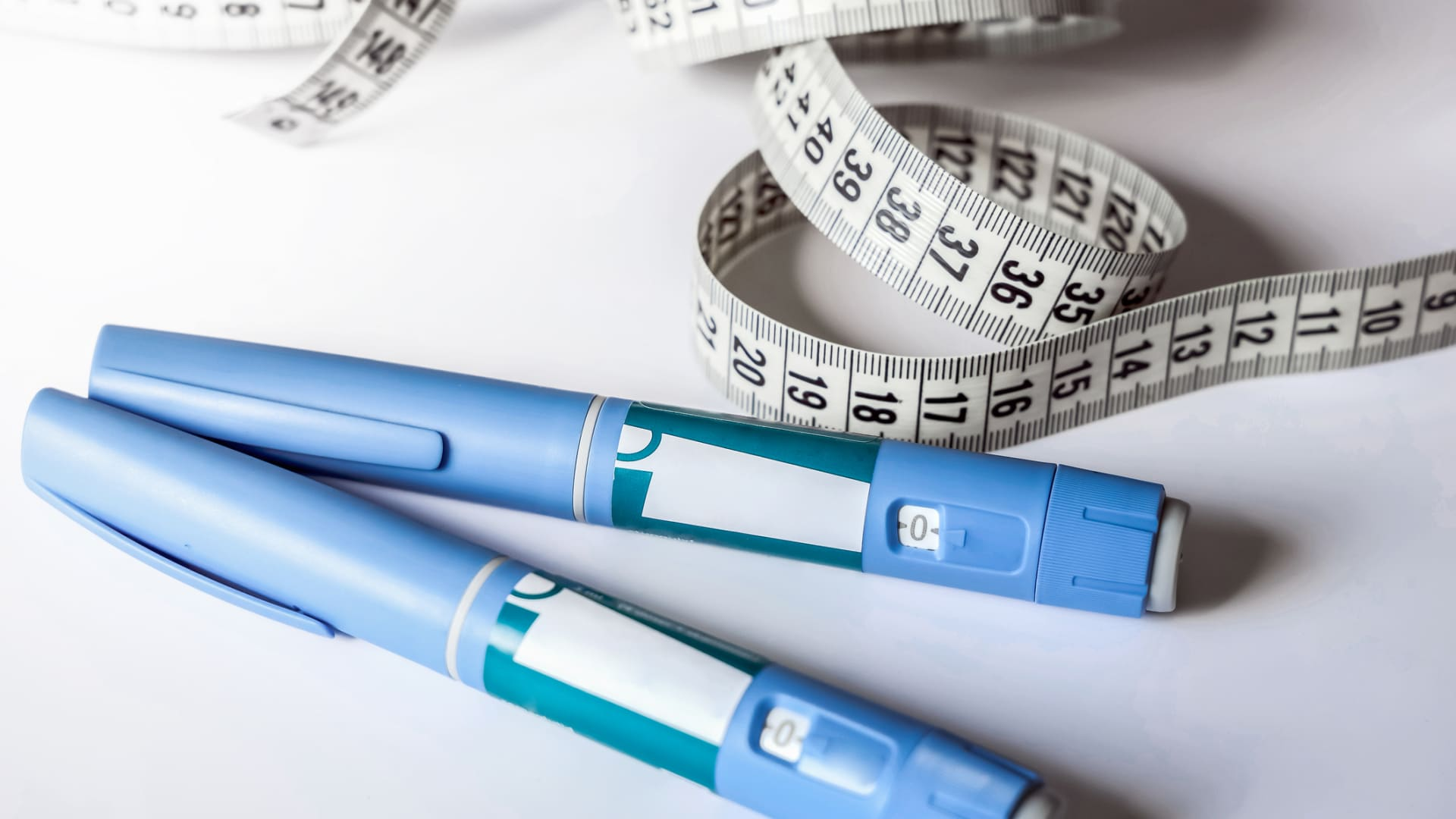
Viking Therapeutics saw its stock jump by 28% on Thursday after the company announced it would be advancing its experimental weight loss injection, VK2735, into a late-stage trial earlier than anticipated. This move positions Viking closer to entering the lucrative GLP-1 market, which analysts project could grow to $150 billion by the end of the decade.

Viking’s accelerated timeline was influenced by feedback from the Food and Drug Administration (FDA), allowing the San Diego-based biotech firm to bypass an additional mid-stage trial. The company plans to meet with the FDA in the fourth quarter to finalize the design and timing of the phase three trial, potentially shaving a year off the drug’s development timeline. Analysts now estimate the drug could launch as early as 2029.

VK2735, a weekly injection that targets GLP-1 and GIP hormones, demonstrated promising results in a phase two trial, with patients experiencing up to 14.7% body weight loss after 13 weeks. Viking also plans to test a monthly version of the injection, which could offer a more convenient alternative to Eli Lilly’s Zepbound and Novo Nordisk’s Wegovy, both of which are administered weekly.

In response to Viking’s announcement, shares of major competitors Eli Lilly and Novo Nordisk closed lower, down 4% and 3% respectively, reflecting market concerns over potential new competition in the weight loss and diabetes treatment space.

Viking Therapeutics is also exploring an oral version of VK2735, which showed a 3.3% weight loss compared to a placebo in an early-stage trial. As Viking pushes forward, its entry into the GLP-1 market could intensify competition among drugmakers vying for a share of this rapidly expanding sector.


Eli Lilly’s Q2 Earnings Surpass Expectations, Raises Full-Year Outlook

Eli Lilly reported stellar second-quarter earnings, significantly exceeding market expectations, driven by robust sales of its diabetes drug Mounjaro and weight loss injection Zepbound. The pharmaceutical giant raised its full-year revenue forecast by $3 billion, now expecting between $45.4 billion and $46.6 billion, while also increasing its adjusted earnings guidance to a range of $16.10 to $16.60 per share.

The company’s performance was primarily bolstered by the increased demand for Mounjaro and Zepbound, which together have seen sales soar as supply constraints begin to ease. Despite previous shortages, Eli Lilly’s recent expansion in production capacity has improved the availability of these drugs in the U.S., contributing to the positive financial results. Zepbound, in its second full quarter on the U.S. market, generated $1.24 billion in sales, outperforming analyst expectations. Similarly, Mounjaro brought in $3.09 billion, more than triple the revenue from the same period last year.

CEO David Ricks noted that the company has ramped up its manufacturing efforts, including building six new plants and hiring thousands of workers to meet the growing demand. He also mentioned that Eli Lilly is working on developing more convenient weight loss pills to complement its existing injectable treatments.

Eli Lilly’s shares rose by more than 7% following the earnings announcement, continuing a strong upward trend that has seen the stock gain over 30% this year. The company’s market cap now exceeds $730 billion, making it the largest pharmaceutical firm based in the U.S. This success contrasts with competitor Novo Nordisk, which recently reported weaker-than-expected sales for its similar drugs due to pricing pressures.