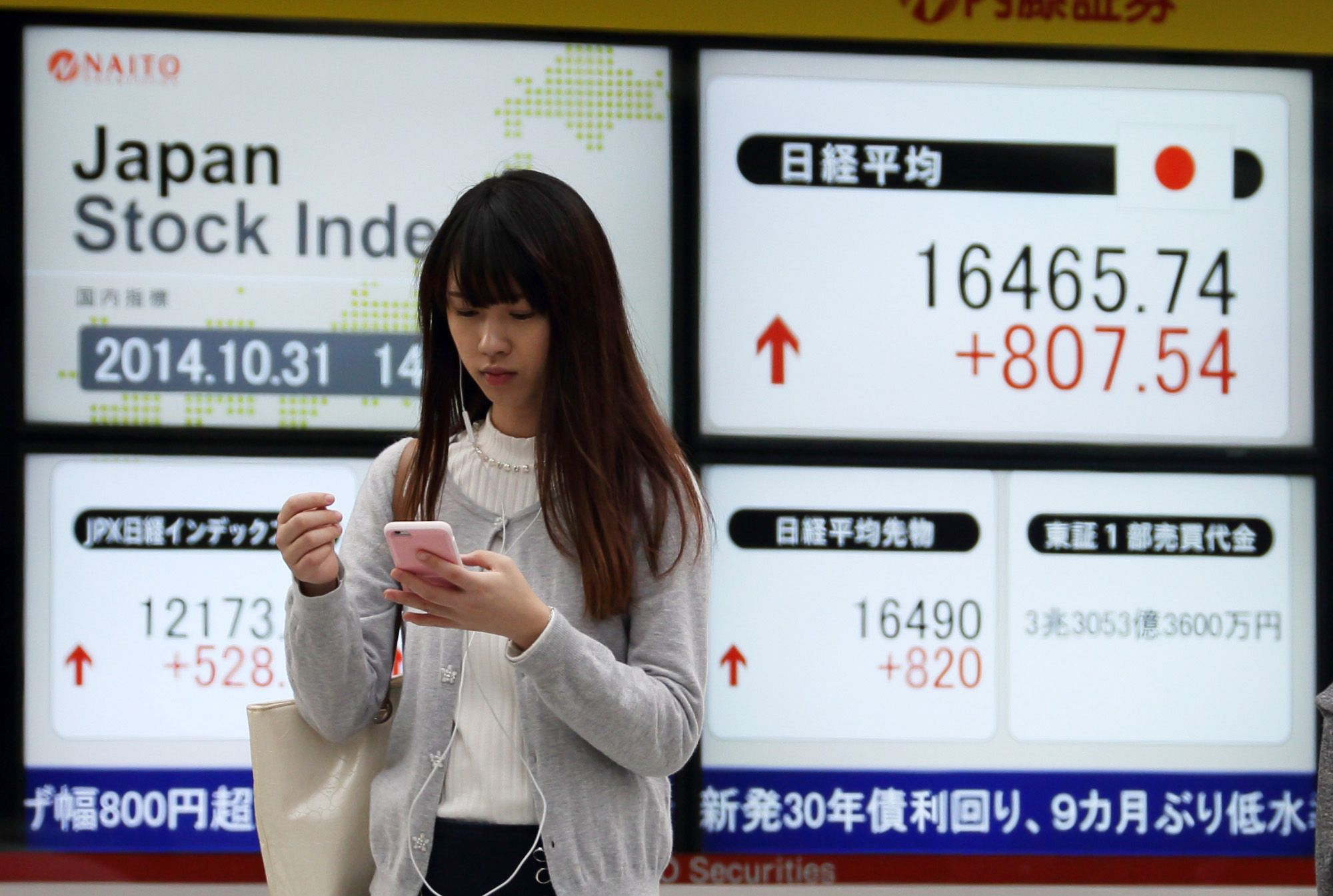
Asia-Pacific Markets Surge as Tech Stocks Lead Gains

Asia-Pacific markets rallied on Thursday, tracking a strong performance on Wall Street driven by a tech sector surge. The Nikkei 225 in Japan jumped 2.77%, while the broader Topix rose 1.91%. Semiconductor stocks were among the biggest gainers, with Tokyo Electron up 3.56%, Advantest climbing 7.18%, and Renesas Electronics rising 2.23%. SoftBank Group, which holds a stake in chip designer Arm, also surged 7.2%.

In South Korea, the Kospi gained 1.41%, while the Kosdaq added 2.53%. Semiconductor giants SK Hynix and Samsung Electronics were up 6% and 1%, respectively.

Taiwan’s Taiex climbed over 3%, with Taiwan Semiconductor Manufacturing Company (TSMC) up 5.13% and Hon Hai Precision Industry (Foxconn) gaining 4.13%. The tech rally was fueled by Nvidia CEO Jensen Huang’s optimistic outlook on AI chip demand, boosting sentiment across Asia’s semiconductor sector.

Shares of Seven & i Holdings surged as much as 7.3% after reports indicated that Alimentation Couche-Tard is considering raising its offer for the Japanese retail giant, following an initial $39 billion buyout approach. The revised offer is expected to be significantly higher.

Economic Data: Japan’s producer price index (PPI) rose 2.5% year-on-year in August, below expectations of 2.8% and down from July’s 3%. This data is closely monitored by the Bank of Japan, which has signaled its intention to raise interest rates further in the coming months. Hong Kong’s PPI for the second quarter is due later today, while India’s consumer price index (CPI) for August is expected to rise 3.5% year-on-year, slightly lower than the previous month’s 3.54%.

In other news, Chinese home appliance manufacturer Midea Group is preparing to price its shares at the top of the range, aiming to raise at least $3.46 billion in its upcoming Hong Kong listing, the largest in the city since May 2021.

Elsewhere in Asia: Australia’s S&P/ASX 200 climbed 0.57%, Hong Kong’s Hang Seng advanced 0.81%, while mainland China’s CSI 300 remained flat.

Wall Street Overview: In the U.S., the S&P 500 gained 1.07%, the Nasdaq Composite rallied 2.17%, and the Dow Jones Industrial Index edged up 0.31%. Investors were buoyed by a higher-than-expected rise in core CPI and are now looking ahead to the release of the producer price index for August, with expectations of a 0.2% increase in both headline and core inflation.
 

China’s AI Giants Step Up to Challenge U.S. in AI Development

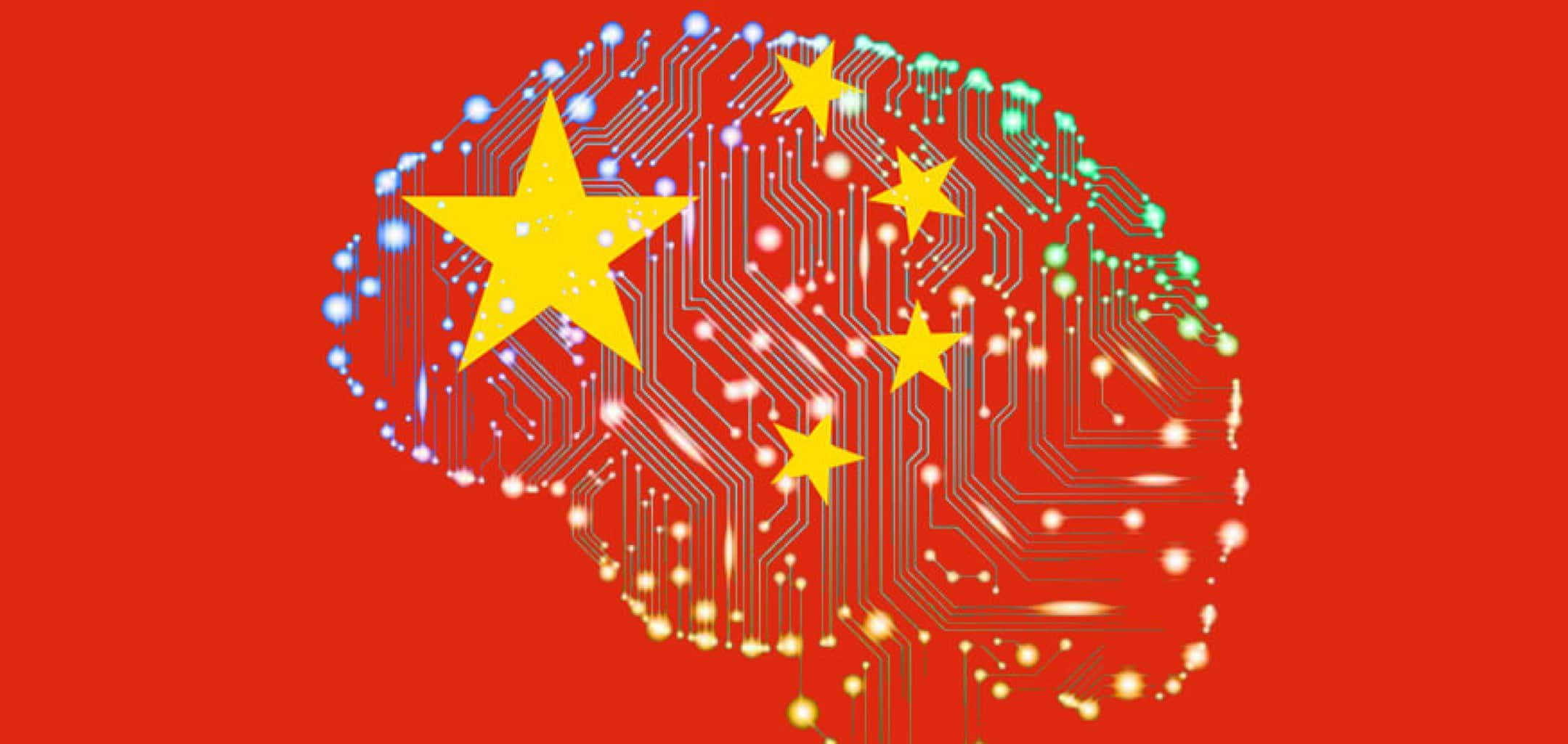
While global attention has largely been on U.S. companies like OpenAI, Google, and Meta, China is making significant strides in the artificial intelligence (AI) race. Chinese tech giants, including Baidu, Alibaba, Tencent, Huawei, and ByteDance, have developed powerful generative AI models over the past 18 months. These companies aim to position China as a global leader in AI, adding a new dimension to the technology competition between China and the U.S.

Generative AI, which powers applications like ChatGPT and Google’s Gemini, can generate text, images, and videos based on user prompts. Below is a closer look at the key players and their AI models from China.

Baidu: ERNIE Baidu, a major Chinese internet company, was one of the first to launch generative AI tools. Its flagship model, Ernie Bot, is a chatbot designed to compete with OpenAI’s ChatGPT. With 300 million users, Ernie 4.0 claims capabilities comparable to GPT-4, offering understanding and reasoning abilities. Baidu is also commercializing its AI through its cloud computing division.

Alibaba: Tongyi Qianwen Alibaba launched its foundational AI models, known as Tongyi Qianwen, or Qwen, last year. The company has developed different versions for various tasks, such as content creation and solving mathematical problems. Some Qwen models are open-sourced, allowing developers to access them with certain restrictions. By May, over 90,000 enterprise users were using Qwen models.

Tencent: Hunyuan Tencent’s AI model, Hunyuan, focuses on Chinese language processing and advanced logical reasoning. Accessible via Tencent’s cloud services, Hunyuan is designed to support industries from gaming to social media and e-commerce. Tencent has also integrated Hunyuan into WeChat, China’s largest messaging platform, through its AI assistant, Yuanbao.

Huawei: Pangu Huawei has taken a unique approach by creating AI models tailored to specific industries like government, finance, and meteorology. Its Pangu AI models, available through Huawei’s cloud services, support generative features such as virtual human avatars and code generation. One standout model, the Pangu Meteorology Model, can predict the trajectory of typhoons with remarkable speed, significantly reducing prediction time.

ByteDance: Doubao ByteDance, the company behind TikTok, entered the AI race later than its competitors with its Doubao model. Doubao stands out by being more affordable and offers capabilities such as voice generation and code generation for developers, making it accessible to a broader range of users.

China’s AI advancements reflect the country’s growing ambition to rival U.S. companies in this critical technology sector.


U.N. Chief Decries Lack of Accountability for UN Staff Killings in Gaza

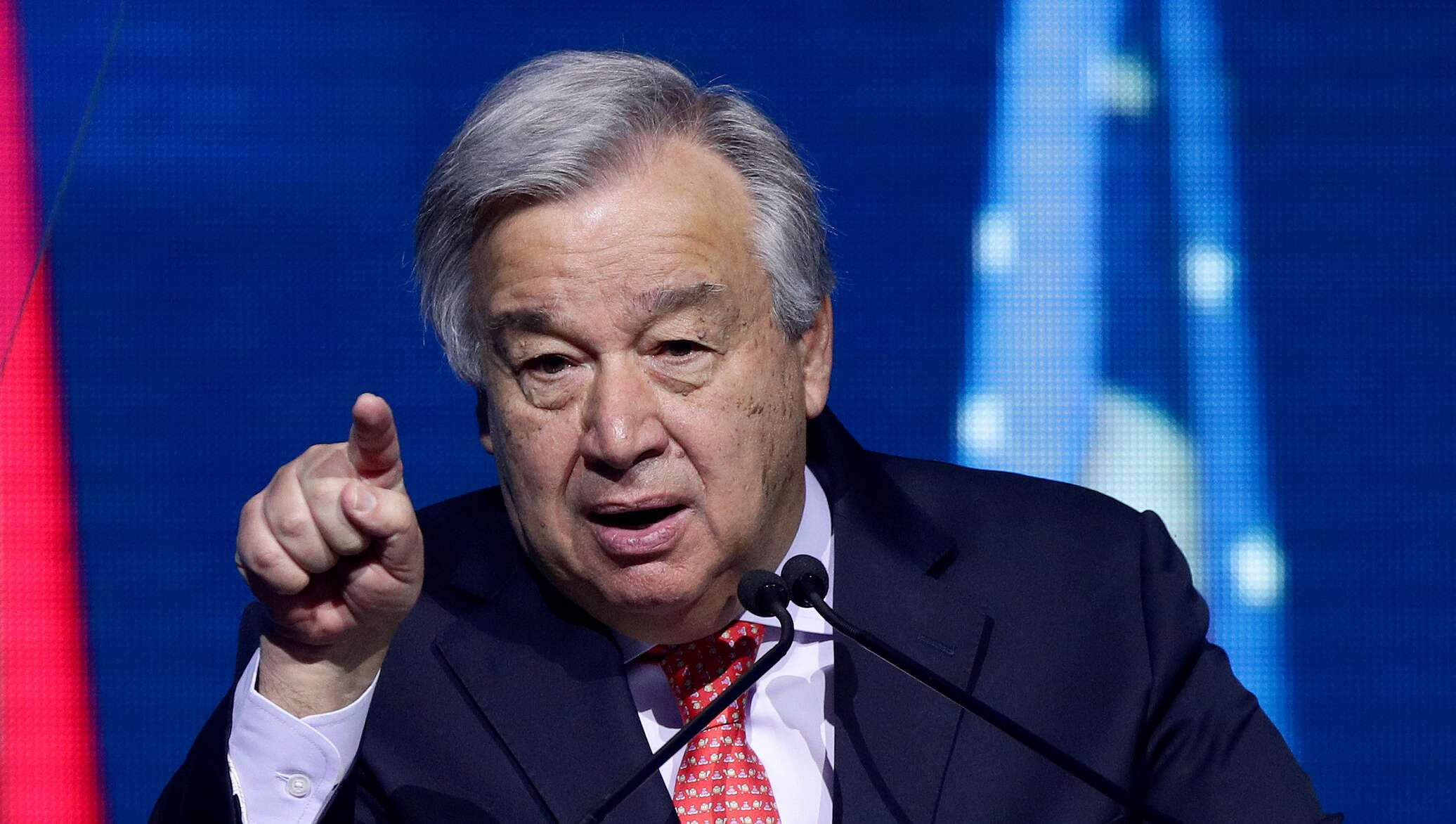
United Nations Secretary-General Antonio Guterres criticized the failure to hold those responsible for the deaths of U.N. staff and aid workers in Gaza accountable, calling it “totally unacceptable” in an interview with Reuters. Guterres emphasized the need for effective investigations into the deaths of nearly 300 humanitarian workers, most of whom were U.N. staff, amidst the ongoing conflict in Gaza.

Guterres condemned the humanitarian situation in Gaza, citing violations of international law and inadequate protection of civilians as Israel retaliates against Hamas. While Israel claims it targets militants, Guterres called for more robust investigations into civilian casualties, including aid workers.

The U.N. Secretary-General also expressed concerns about Haiti, where armed gangs have created a humanitarian crisis. Guterres said a U.N. peacekeeping force would not be suitable for the country’s current unrest and criticized the slow response to Haiti’s request for international assistance.

Looking ahead to the U.N. General Assembly, Guterres described the global situation as chaotic, citing the conflicts in Gaza and Ukraine as having no peaceful solutions in sight.