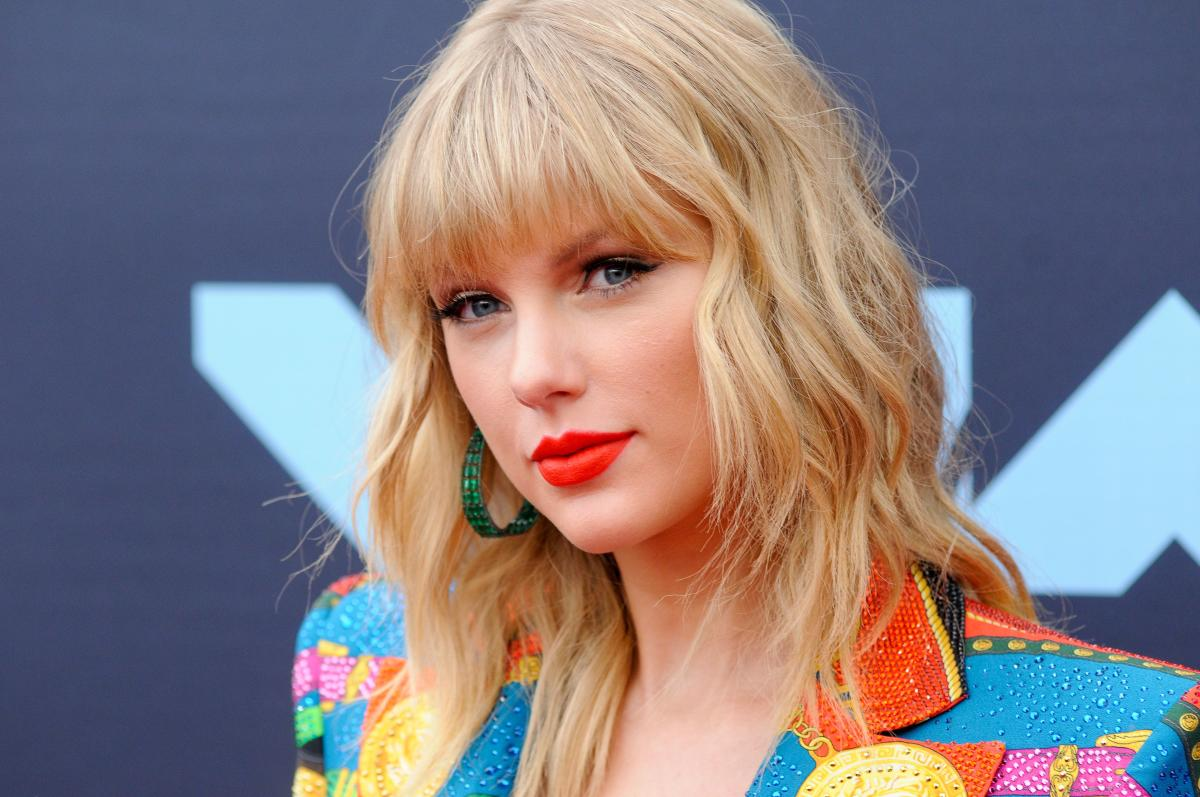
Taylor Swift Endorses Kamala Harris for President, Encourages Fans to Get Involved

On Tuesday, pop superstar Taylor Swift publicly endorsed Vice President Kamala Harris for president in the 2024 election. This move ended speculation about Swift’s political stance leading up to the November election, marking her continued involvement in political advocacy.

After watching the recent debate between Harris and former President Donald Trump, Swift took to Instagram to share her support. “Like many of you, I watched the debate tonight,” she wrote. “It’s a great time to do your research on the candidates. I’ve done mine, and I’ll be voting for Kamala Harris and Tim Walz in the 2024 Presidential Election.”

Swift addressed a recent AI-generated video falsely depicting her endorsing Trump, a moment that she said highlighted her fears about misinformation. “The best way to fight misinformation is with the truth. I will be casting my vote for Kamala Harris,” she said, directly clearing up any confusion.

Harris became the Democratic nominee in August after President Joe Biden exited the race, naming Minnesota Governor Tim Walz as her running mate. In her endorsement, Swift praised Harris and Walz for their leadership and commitment to issues she cares deeply about, such as LGBTQ+ rights and reproductive freedoms.

“I’m voting for @kamalaharris because she fights for the rights and causes I believe need a warrior to champion them,” Swift stated. “Her choice of Tim Walz as running mate reassures me that they’re the team who will keep fighting for progress.”

Swift, who had previously backed Joe Biden and Harris in 2020, has been increasingly vocal about political issues since her endorsement of Democratic candidates in 2018. Known for advocating for women’s rights and LGBTQ+ issues, she also emphasized the importance of voter registration and early voting, especially encouraging first-time voters.

Swifties, as her dedicated fan base is known, have already mobilized in support of Harris. An online group, Swifties for Kamala, has raised over $122,000 for Harris’ campaign since its formation in August. Though Swift is not directly affiliated with the group, her influence on young voters remains a powerful force in the 2024 election cycle.

 

European Central Bank Set to Slash Interest Rates Ahead of U.S. Federal Reserve’s Decision

The European Central Bank (ECB) is expected to cut interest rates by 25 basis points this Thursday, just days before the U.S. Federal Reserve (Fed) begins its own rate-cutting cycle. This move follows a series of aggressive rate hikes in the euro area, as both central banks respond to shifting economic conditions and inflationary pressures.

According to market expectations, the Fed is likely to follow suit with its own rate cut during its upcoming meeting on September 17-18. While the ECB’s decision has been widely anticipated, the Fed’s move could mark the start of a broader trend of monetary easing in advanced economies.

Holger Schmieding, chief economist at Berenberg Bank, described the ECB’s decision as “largely uncontroversial,” noting that recent remarks from ECB officials, including Bundesbank President Joachim Nagel, have indicated broad support for a rate cut. The ECB’s current interest rate sits at 3.75%, following years of aggressive rate hikes aimed at controlling inflation, but with recent inflation data showing a decline, the central bank is ready to shift gears.

Inflation in the eurozone has softened, with headline figures in August reaching a three-year low of 2.2%. However, core inflation remains slightly elevated at 2.8%, driven by the services sector. The ECB’s rate cut is seen as a response to these mixed signals, as well as to concerns about weakening domestic demand and slowing confidence in key economic sectors.

The ECB is also expected to release updated staff projections this Thursday, but analysts don’t foresee major revisions to inflation or growth figures. However, some economists, such as Anatoli Annenkov from Société Générale, warn that the outlook for growth may be more pessimistic than it was in July, with weakening confidence and sluggish demand raising concerns about the broader economic landscape.

As the ECB prepares to act, attention will shift to what comes next. While the central bank is likely to pause rate cuts in October, there is an outside chance that further reductions could come sooner. ECB Chief Economist Philip Lane has hinted at the possibility of a faster rate-cutting cycle to avoid the risks of keeping rates too high for too long. He also stressed that the ECB needs to ensure inflation stays at its 2% target once it reaches that level, avoiding both over- and undershooting the mark.

With the ECB navigating these complexities, the central bank’s moves are being closely watched as it seeks to balance growth concerns with inflationary pressures across the euro area.


From the Far Right to Fiscal Challenges: France’s Political and Economic Crisis

France is grappling with mounting political and economic challenges, following the appointment of veteran conservative Michel Barnier as prime minister by President Emmanuel Macron. After an inconclusive snap election in July, Barnier faces daunting tasks that include addressing fiscal issues and navigating opposition from both the far-right National Rally and left-wing coalitions.

Barnier’s immediate challenge is drafting a 2025 budget and presenting a deficit reduction plan to the European Commission to avoid disciplinary measures. France’s budget deficit, currently at 5.5% of GDP and its public debt at over 110%, far exceed the EU’s limits. The country must make steep spending cuts and introduce tax increases to meet the Commission’s requirements.

However, Barnier’s government lacks strong support in France’s fractious parliament, where the far-right National Rally, led by Marine Le Pen and Jordan Bardella, holds 142 seats. The left-wing New Popular Front (NPF) coalition, which was angered by Macron’s rejection of its premiership candidate despite winning the largest vote share, holds 193 seats. The 228 deputies Barnier can count on from his own party and Macron’s centrist alliance may not be enough to pass the budget.

Analysts warn that Barnier’s political survival hinges on Le Pen’s National Rally, which could either support his government or ally with the NPF to bring it down. The far-right has become a kingmaker in this situation, positioning itself to influence government policies, particularly regarding immigration and the cost of living. Barnier’s success will depend on whether he can balance these competing forces without plunging France into further political and economic instability.