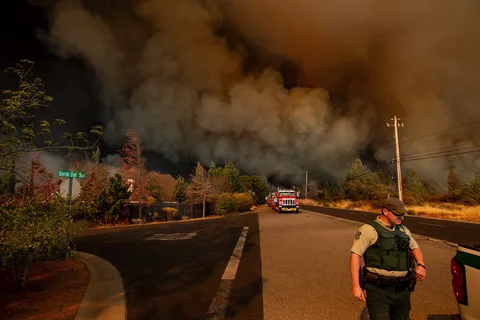
How Montecito Defended Against the Thomas Fire

In December 2017, Montecito, California, faced one of the largest wildfires in the state’s history—the Thomas Fire. Remarkably, despite the massive blaze consuming over 282,000 acres, Montecito managed to survive with only seven homes destroyed. This outcome was largely due to the town’s decades-long preparation and community efforts.

Maeve Juarez, a wildland fire specialist for the Montecito Fire Department, was on the frontlines as the Thomas Fire approached. Her team and the community had spent 30 years preparing for such an event. The town had implemented various preventive measures, from regular cleanup initiatives to fire-proofing homes, all of which contributed to their successful defense against the fire.

Montecito’s preparation began in 1994 when the Montecito Fire Department initiated a program aimed at wildfire risk mitigation. The strategy included clearing dried leaves, managing brush, and maintaining fire-resistant structures. This approach fostered a high level of community trust and collaboration, essential for quick and effective action when the fire hit.

On December 16, 2017, the fire’s flames were near Montecito. However, due to meticulous planning and the deployment of over 8,000 firefighters, including 130 engines and 30 crews, the town managed to stave off the worst. The fire’s peak intensity was met with strategic efforts to control spot fires and manage the blaze’s advance, leading to significantly lower damage than anticipated.

The success of Montecito’s fire defense strategy is attributed to several factors. The town had implemented a comprehensive evacuation plan, which ensured residents followed evacuation orders and allowed firefighters to work efficiently. The community’s longstanding commitment to fire preparedness and the availability of firefighting resources played crucial roles in their defense.

As climate change exacerbates wildfire risks, other communities can learn from Montecito’s example. Developing a unified wildfire mitigation strategy, starting with asset mapping to protect critical infrastructure, and ensuring comprehensive evacuation plans are vital steps. Communities should also focus on creating defensible spaces around properties and using fire-resistant materials to enhance individual preparedness.

Experts like Erica Fischer and Emily Troisi emphasize the importance of collaboration between land management agencies, governments, and homeowners to build effective wildfire defense strategies. While Montecito’s approach may not be a one-size-fits-all solution, its successful experience highlights the value of long-term planning and community engagement in wildfire preparedness.

 

Planning a Trip to China: Common Challenges and New Developments

Traveling to China can be a daunting experience for many foreign tourists due to visa complexities, flight limitations, and the unique digital landscape. However, recent changes are making travel to China increasingly accessible and user-friendly.

Visa and Travel Challenges

Obtaining a visa for China has traditionally been a complicated process. Visa applications can be intricate, and international flights are currently limited and costly, partly due to restricted airspace over Russia. However, China has introduced several measures to ease these challenges. The country now offers visa exemptions for numerous nationalities and a 144-hour visa-free transit policy at several entry points.

Moreover, China has been improving its digital infrastructure to accommodate international visitors. Mobile wallet platforms like Alipay and WeChat have simplified their setup processes and now accept international credit cards. Some cities, like Beijing, offer all-in-one passes for easier access to attractions and public transit.

Current Travel Trends

China welcomed approximately 14 million foreign visitors in the first half of 2024, a significant increase from the previous year. About half of these visitors utilized visa-free policies. Although the numbers are still below pre-pandemic levels, this upward trend is encouraging.

Travel specialist Denny Tian notes that new visa policies have led to increased tourist arrivals from several countries. For instance, the 15-day visa-free policy has contributed to a rise in visitors from eligible nations.

Experiences of Recent Travelers

Gabriela Correia, a Portuguese doctor, visited Shanghai and Beijing in June 2024 under the 144-hour visa-free transit policy. Despite challenges such as limited online information and the lack of English speakers, Correia found the experience rewarding. She used tools like Google Translate and a travel SIM card with a VPN to navigate the digital barriers.

Correia and her American boyfriend enjoyed their visit despite language barriers and local payment practices. They found solutions like using QR codes for restaurant orders and opted for a private guide to enhance their visit to the Great Wall.

Travel FAQs for China

  • Visa Requirements: China has various visa exemption agreements and policies. For example, citizens of 15 countries, including Austria, Australia, and Spain, can visit China visa-free for up to 15 days. Other travelers may need to apply for a tourist visa. The application process for U.S. citizens has been simplified since January 2024, removing requirements for proof of travel documents.
  • 144-hour and 72-hour Visa-Free Transit Policies: These policies allow travelers from certain countries to stay in China for up to three or six days while en route to a third country. Restrictions apply to travel within designated regions.
  • Traveling to Tibet: Travelers must obtain a Tibet Travel Permit through a certified travel agency and are required to join a group tour or book a tour guide and accommodations.
  • Visas for Hong Kong and Macao: Hong Kong and Macao have separate visa policies, with visa-free entry available for many nationalities. Check the respective immigration websites for details.
  • Hainan Island: The island offers 30-day visa-free entry for passport holders from 59 countries, but travelers cannot visit other parts of China.
  • Smartphone and App Use: While popular apps like Google and Facebook are blocked in China, using a VPN or travel SIM card can provide access. Local apps like Gaode Maps and Baidu Maps are recommended for navigation.
  • Mobile Payments: Cash is still accepted, but mobile payments via WeChat Pay and Alipay are prevalent. Both apps now support international credit cards, though some local businesses may not accept them.

Safety and Practical Tips

China is considered one of the safest travel destinations, though travelers should be aware of varying local laws. Many tourists find the country welcoming and friendly, and following respectful behavior is advised.

Useful Apps for Travelers

  1. Gaode Maps / Baidu Maps: For navigation within China.
  2. MetroMan: Provides information on subway systems and nearby attractions.
  3. WeChat: Useful for communication, menu access, and booking services.
  4. Alipay: For mobile payments and linking international credit cards.
  5. Didi: China’s car-hailing app.
  6. Trip.com: For booking tickets and accommodations.
  7. Baidu Translate: For translation needs.

By preparing for these aspects, travelers can better navigate the complexities of visiting China and make the most of their trip.

Physics Breakthrough Brings Nuclear Clock Closer to Reality

Scientists have moved a step closer to developing a nuclear clock that could revolutionize timekeeping, offering unparalleled precision compared to current atomic clocks. This advancement, detailed in research published on September 4 in Nature, brings the concept of a clock so accurate it could run for a billion years without losing a second into tangible reality.

A New Level of Precision

The breakthrough involves a novel method of measuring time by observing the oscillations within an atom’s nucleus rather than its electrons. Atomic clocks, which currently set the standard for timekeeping accuracy, rely on the controlled energy transitions of electrons. These clocks measure time by counting the oscillations of electromagnetic radiation that excites the electrons, a process occurring billions of times per second.

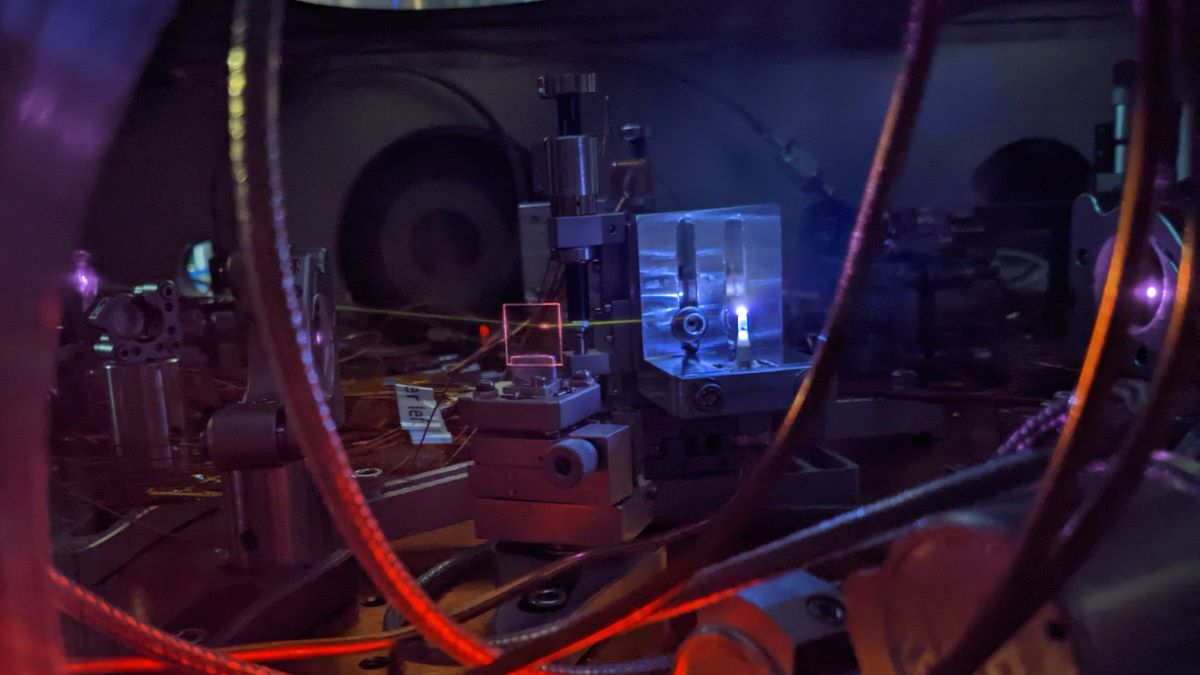
The new nuclear clock technique, however, uses ultraviolet light to excite the nucleus of a thorium-229 atom embedded in a solid crystal. Researchers measured the frequency of energy pulses affecting the nucleus—essentially the “pendulum” of this nuclear clock—by counting waves in the UV signal with an optical frequency comb. This method promises to surpass atomic clocks by providing more accurate time measurements due to the higher frequency of the nuclear oscillations.

A Promising Prototype

Although the nuclear clock is still in development, the prototype achieved accuracy comparable to that of atomic clocks. Future improvements could enhance its precision even further. “There are a lot of things that we can push to further improve the accuracy,” said Chuankun Zhang, lead author of the study and graduate student at JILA. Zhang mentioned potential adjustments like optimizing laser alignment and frequency.

Dr. Olga Kocharovskaya, a distinguished professor at Texas A&M University, emphasized the significance of this development. “It leaves no doubts that such a clock is feasible and will be built soon,” she said. The thorium-229 nucleus, used in this research, produced a more stable and stronger signal than previously tested candidates like scandium-45.

Implications for Physics

Nuclear clocks could dramatically impact various scientific fields. Their extreme accuracy and stability might transform studies of earthquakes, gravitational fields, and space-time. Unlike atomic clocks, nuclear clocks could be simpler and more portable, not requiring high vacuum conditions or extensive shielding from electromagnetic disturbances.

Moreover, nuclear clocks could offer a new tool for investigating fundamental physics. By comparing frequency ratios between nuclear and atomic clocks, scientists could test the constancy of fundamental physics constants and explore potential shifts too small to detect with current technology. This could also aid in the study of dark matter, which interacts with particles in ways that are currently undetectable.

Looking Ahead

The journey to replacing or surpassing atomic clocks with nuclear clocks is still ongoing. However, the current advancements suggest that such a future might be closer than expected. As technology progresses and new discoveries are made, nuclear clocks could become central to cutting-edge experiments and explorations in fundamental physics.