
Close Menu
  • Home
  • Technology
  • Devices
  • Business
  • Science
  • Gadgets
  • Startups
Ayaksız
  • Home
  • Technology

    Lucid and Bolt Plan 25,000 Robotaxis for Europe

    Eylül 18, 2026

    AMD Gives PC Builders More Choice With New Ryzen 5 Desktop Chips

    Eylül 11, 2026

    Apple Expands Device Protection With a $49.99 Family Plan

    Eylül 11, 2026

    Snapdragon 8 Elite Extreme Gen 6 Reportedly Beats MediaTek’s Next Flagship Chipset

    Eylül 11, 2026

    Pinterest CFO Julia Donnelly to Step Down in October

    Ağustos 30, 2026
  • Devices

    iQOO 16 Design and Colour Options Unveiled With Major Camera Upgrade Confirmed

    Eylül 11, 2026

    Lava Bold N4 Pro 5G India Launch Date, Design and Key Specs Confirmed

    Eylül 11, 2026

    Xiaomi 18 Pro Max Geekbench Listing Reveals Key Specifications

    Eylül 10, 2026

    Samsung Galaxy Tab S12 Ultra, Tab S12+ Design Leaks in New Renders

    Eylül 10, 2026

    Vivo X500 Series Designs Revealed Ahead of September Launch

    Eylül 10, 2026
  • Business

    Google Pixel 11 Pro Leaked Renders Indicate It Might Sport Thinner Bezels Than the Pixel 10 Pro

    Mart 30, 2026

    Motorola Edge 70 Debuts With Snapdragon 7 Gen 4, Ultra-Slim 5.99mm Body

    Kasım 5, 2025

    Samsung Galaxy S26 Series Could See Price Increase Amid Rising Component Costs: Report

    Kasım 4, 2025

    Amazon’s AWS Partners with NBA to Power New AI Basketball Platform

    Ekim 4, 2025

    Billionaire-Backed Bitcoin Firm OranjeBTC to List on Brazil’s B3 Exchange

    Ekim 4, 2025
  • Science

    SpaceX’s $1.75 Trillion Valuation Raises Questions Ahead of IPO

    Nisan 11, 2026

    US Moves to Ease Satellite Power Limits, Boosting Space Broadband

    Nisan 10, 2026

    iPhone 17 Pro Max NASA Approves iPhone 17 Pro Max for Use on Artemis 2 Deep Space Mission

    Nisan 6, 2026

    Spain’s First Private 5G Satellite Mission

    Şubat 17, 2026

    Eutelsat Signs Launch Deal With MaiaSpace for LEO Satellites

    Ocak 17, 2026
  • Gadgets

    Vivo Buds Debut in India With Up to 50-Hour Battery Life

    Eylül 10, 2026

    Moto Buds 2 Fusion India Launch Date Confirmed, Features Teased

    Eylül 10, 2026

    Sennheiser Unveils Accentum Clip Earbuds With Up to 36 Hours of Total Battery Life

    Temmuz 2, 2026

    Nothing Ear 3a and CMF Buds Neo Appear in Regulatory Filings, Hinting at Upcoming Launch

    Haziran 2, 2026

    OnePlus Watch 4 Leak Hints at Launch With Snapdragon W5 and OxygenOS Watch 8

    Nisan 22, 2026
  • Startups

    Glean Reaches $7.2 Billion Valuation Amid AI Investment Surge

    Haziran 15, 2025

    How I Built a $2 Billion Super App: The Journey of Grab’s Anthony Tan and ’20-Hour’ Workdays

    Ekim 7, 2024

    Tupperware Files for Bankruptcy as Demand Declines

    Eylül 18, 2024

    Wildfire Detection Device Wins UK James Dyson Award

    Eylül 12, 2024

    Japan and Tokyo Governments Eye $4.7 Billion Valuation for Tokyo Metro in Upcoming IPO

    Ağustos 19, 2024
Ayaksız
Anasayfa » Blog » Physics Breakthrough Brings Nuclear Clock Closer to Reality
Science

Physics Breakthrough Brings Nuclear Clock Closer to Reality

By ayaksızEylül 11, 2024Yorum yapılmamış3 Mins Read
Facebook Twitter Pinterest LinkedIn Tumblr Email
Share
Facebook Twitter LinkedIn Pinterest Email

Scientists have moved a step closer to developing a nuclear clock that could revolutionize timekeeping, offering unparalleled precision compared to current atomic clocks. This advancement, detailed in research published on September 4 in Nature, brings the concept of a clock so accurate it could run for a billion years without losing a second into tangible reality.

A New Level of Precision

The breakthrough involves a novel method of measuring time by observing the oscillations within an atom’s nucleus rather than its electrons. Atomic clocks, which currently set the standard for timekeeping accuracy, rely on the controlled energy transitions of electrons. These clocks measure time by counting the oscillations of electromagnetic radiation that excites the electrons, a process occurring billions of times per second.

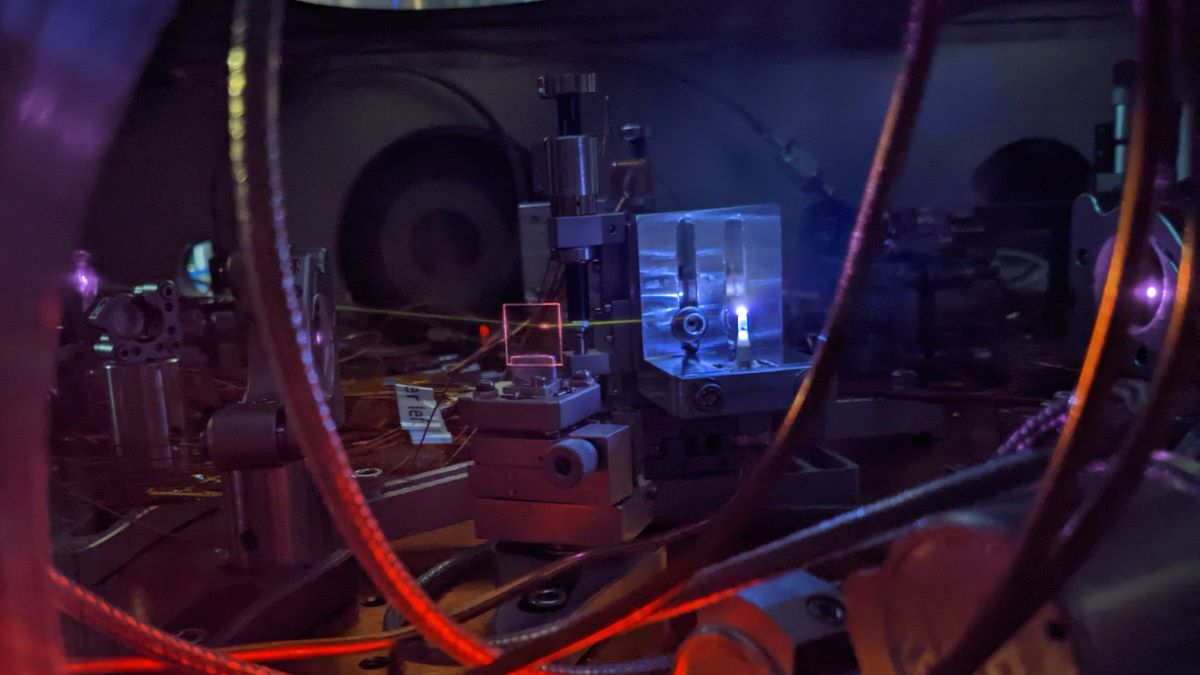
The new nuclear clock technique, however, uses ultraviolet light to excite the nucleus of a thorium-229 atom embedded in a solid crystal. Researchers measured the frequency of energy pulses affecting the nucleus—essentially the “pendulum” of this nuclear clock—by counting waves in the UV signal with an optical frequency comb. This method promises to surpass atomic clocks by providing more accurate time measurements due to the higher frequency of the nuclear oscillations.

A Promising Prototype

Although the nuclear clock is still in development, the prototype achieved accuracy comparable to that of atomic clocks. Future improvements could enhance its precision even further. “There are a lot of things that we can push to further improve the accuracy,” said Chuankun Zhang, lead author of the study and graduate student at JILA. Zhang mentioned potential adjustments like optimizing laser alignment and frequency.

Dr. Olga Kocharovskaya, a distinguished professor at Texas A&M University, emphasized the significance of this development. “It leaves no doubts that such a clock is feasible and will be built soon,” she said. The thorium-229 nucleus, used in this research, produced a more stable and stronger signal than previously tested candidates like scandium-45.

Implications for Physics

Nuclear clocks could dramatically impact various scientific fields. Their extreme accuracy and stability might transform studies of earthquakes, gravitational fields, and space-time. Unlike atomic clocks, nuclear clocks could be simpler and more portable, not requiring high vacuum conditions or extensive shielding from electromagnetic disturbances.

Moreover, nuclear clocks could offer a new tool for investigating fundamental physics. By comparing frequency ratios between nuclear and atomic clocks, scientists could test the constancy of fundamental physics constants and explore potential shifts too small to detect with current technology. This could also aid in the study of dark matter, which interacts with particles in ways that are currently undetectable.

Looking Ahead

The journey to replacing or surpassing atomic clocks with nuclear clocks is still ongoing. However, the current advancements suggest that such a future might be closer than expected. As technology progresses and new discoveries are made, nuclear clocks could become central to cutting-edge experiments and explorations in fundamental physics.


atomic clocks Dark Matter Fundamental Constants Nuclear Clocks Physics Breakthrough Precision Measurement Thorium-229 timekeeping
Share. Facebook Twitter Pinterest LinkedIn Tumblr Email
ayaksız
  • Website

Related Posts

SpaceX’s $1.75 Trillion Valuation Raises Questions Ahead of IPO

Nisan 11, 2026

US Moves to Ease Satellite Power Limits, Boosting Space Broadband

Nisan 10, 2026

iPhone 17 Pro Max NASA Approves iPhone 17 Pro Max for Use on Artemis 2 Deep Space Mission

Nisan 6, 2026
Add A Comment

Comments are closed.

Recent Posts
  • Lucid and Bolt Plan 25,000 Robotaxis for Europe
  • AMD Gives PC Builders More Choice With New Ryzen 5 Desktop Chips
  • Apple Expands Device Protection With a $49.99 Family Plan
  • Snapdragon 8 Elite Extreme Gen 6 Reportedly Beats MediaTek’s Next Flagship Chipset
  • iQOO 16 Design and Colour Options Unveiled With Major Camera Upgrade Confirmed
Tags
AI AI Chips AI Infrastructure Amazon Android Apple Artificial Intelligence Bitcoin ChatGPT China Cryptocurrency Cybersecurity data centers DeepSeek Donald Trump Electric Vehicles Elon Musk Ether Generative AI Google Huawei India Investment Iphone Meta Microsoft NASA National Security Nvidia OnePlus OpenAI Oppo Realme Samsung semiconductor industry Social media Sony SpaceX Technology Tesla Tether TikTok Vivo WhatsApp Xiaomi
Ayaksız
Instagram
© 2026 Ayaksız.

Type above and press Enter to search. Press Esc to cancel.