
Israeli Troops Kill Turkish-American Activist at West Bank Protest

Israeli troops shot and killed Aysenur Ezgi Eygi, a 26-year-old Turkish-American activist, during a protest against settlement expansion in the West Bank on Friday, according to Palestinian and Turkish officials. Eygi, who held both U.S. and Turkish citizenship and had recently graduated from the University of Washington, was participating in a demonstration in Beita when she was fatally injured. Turkey’s foreign ministry accused Israeli Prime Minister Benjamin Netanyahu’s government of responsibility for her death, while the White House expressed deep concern and called for an investigation.

Eygi, who was studying psychology and Middle Eastern languages and cultures, was described by her family as a passionate human rights advocate. She had been involved in various protests, including those against U.S. support for Israel’s actions in Gaza. The University of Washington’s president, Ana Mari Cauce, remembered her as a positive influence and peer mentor.

The Israeli military reported that troops fired towards a male protester they deemed a threat but acknowledged that a female foreign national was killed during the incident. The military is reviewing the circumstances of Eygi’s death. No immediate response was given by Netanyahu’s office.

In a related incident, a 13-year-old girl was also killed by Israeli gunfire in the village of Qaryut, near Beita, amid violent confrontations between settlers and Palestinians. The rise in violence by Israeli settlers in the West Bank has provoked international criticism and led to U.S. sanctions on some individuals involved in the settler movement.

Turkey’s President Tayyip Erdogan condemned the killing and vowed to work against what he called Israel’s policy of occupation and genocide. U.S. Senator Chris Van Hollen criticized the Biden Administration for not doing enough to seek justice for American victims and called for a thorough investigation. Since the 1967 Middle East war, Israel’s occupation of the West Bank has been a contentious issue, with international condemnation of Israeli settlements which are widely considered illegal under international law.

Judge Delays Trump Sentencing in Hush Money Case Until After Election

A New York judge has postponed the sentencing of former U.S. President Donald Trump in his hush money criminal case until after the November 5th election, aiming to avoid any perception of political bias. Initially, Trump’s sentencing was scheduled for September 18, but his legal team successfully argued for a delay, asserting that the original date aligned too closely with election season, potentially interfering with the vote. Manhattan District Attorney Alvin Bragg, who charged Trump in this case, is a Democrat, while Trump, now the Republican nominee for the presidency, maintains that the case was politically motivated.

Judge Juan Merchan emphasized in his decision that the delay was meant to protect the court’s impartiality, ensuring that it is not perceived as politically influenced. He set the new sentencing date for November 26, unless Trump’s defense team’s request to dismiss the case is granted. Trump responded on his Truth Social platform, expressing gratitude for the delay and reiterating his position that the case should be dismissed as he focuses on what he considers the most critical election in U.S. history.

This case, notable for being the first criminal trial of a former or current U.S. president, revolves around Trump’s conviction on 34 counts of falsifying business records. These charges relate to payments made by his then-lawyer to adult film actress Stormy Daniels in exchange for her silence about an alleged affair with Trump before the 2016 election, a claim Trump denies. Despite the guilty verdict handed down on May 30, Trump continues to appeal the decision.

Judge Merchan’s recent ruling also indicated that he would consider Trump’s request to overturn the conviction in light of a U.S. Supreme Court decision regarding presidential immunity. This landmark ruling, tied to a separate case, clarified that a sitting president cannot be prosecuted for their official acts and that such actions cannot be used as evidence in cases involving unofficial behavior. Trump’s defense argues that this ruling supports dismissing his conviction, though the prosecution maintains that the case centers on Trump’s personal conduct, unrelated to his presidential duties.

Prosecutors have not opposed the delay in sentencing, leaving the timing to the discretion of the court. Legal experts believe Bragg may be navigating carefully, avoiding accusations of political bias in light of Trump’s repeated claims of election interference. Trump could face up to four years in prison for falsifying business records, though probation or fines are more common for such offenses. Nonetheless, should Trump win the presidency, he could potentially influence federal charges related to election interference, though he would not have the power to dismiss state-level cases like the one in New York.
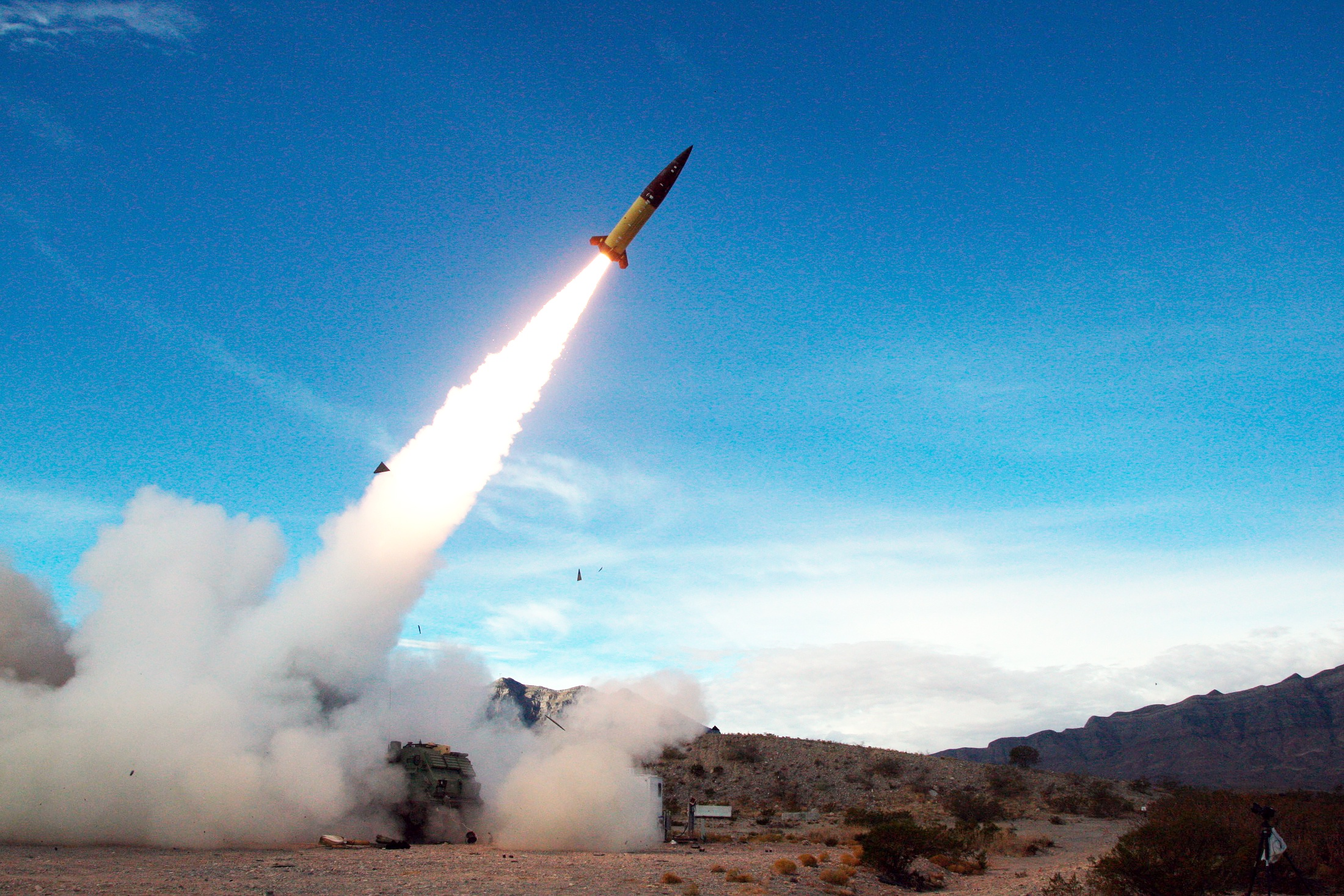
U.S. Cautions Long-Range Strikes Won’t Be Decisive in Ukraine War, Zelenskiy Pushes for Expanded Capabilities

Ukraine’s long-range strikes into Russia, U.S. Defense Secretary Lloyd Austin emphasized on Friday, will not be the decisive factor in turning the tide of the ongoing conflict in Ukraine, even as President Volodymyr Zelenskiy continues to urge Western nations to supply long-range missiles. Speaking at a meeting of Ukraine’s allies at Ramstein Air Base in Germany, Austin reiterated Washington’s commitment to supporting Kyiv, announcing an additional $250 million in U.S. security assistance. However, he pushed back against the idea that deep strikes within Russia using Western weapons would shift the balance of the war. Zelenskiy has long called for the lifting of restrictions that prevent Ukraine from striking targets deep inside Russia, arguing that such capabilities would pressure Moscow to seek peace. During the meeting, he received support from several Baltic nations, including Lithuania and Estonia, who echoed his call for more advanced weaponry.

Austin, however, maintained that no single capability would be decisive, explaining that Russia had already moved key aircraft beyond the range of U.S.-supplied missiles. He also pointed out that Ukraine possesses its own drone capabilities, which can reach targets within Russia. “There are many targets in Russia,” Austin said, referring to Ukraine’s use of unmanned aerial vehicles (UAVs) and other tactics to strike critical points. Meanwhile, Germany pledged an additional 12 self-propelled howitzers to Ukraine, and Canada announced it would send 80,840 surplus small air-to-surface rockets and 1,300 warheads in the months ahead.

Zelenskiy’s appearance at the Ramstein meeting comes at a critical juncture in the war, as Ukrainian forces conduct a surprise offensive in Russia’s Kursk region, while Russian troops intensify their focus on capturing Pokrovsk in eastern Ukraine, a key logistics hub. Zelenskiy insists that long-range strikes on Russian territory are essential not only for liberating occupied regions but also for compelling Russia to negotiate peace. Despite Western reluctance to allow strikes deep inside Russia, Zelenskiy has consistently challenged the notion of ‘red lines’ drawn by Russia, asserting that such boundaries do not hold in the face of ongoing aggression.

The Ramstein meeting also comes at a politically sensitive time for the United States, with the upcoming presidential election potentially affecting U.S. support for Ukraine. While Vice President Kamala Harris has pledged continued support, former President Donald Trump has expressed skepticism over the aid being funneled to Ukraine and has suggested that peace talks could involve territorial concessions by Kyiv. At the meeting, Austin cited the heavy toll the war has taken on Russia’s military, estimating that over 350,000 Russian troops have been killed or wounded and detailing the destruction of 32 Russian Navy vessels. Nonetheless, Moscow continues to unleash missile and drone attacks on Ukrainian cities, highlighting the need for additional air defense systems, a point Zelenskiy underscored during the talks.