The Return of Sheikh Abdul Rashid: A New Force in Kashmiri Politics

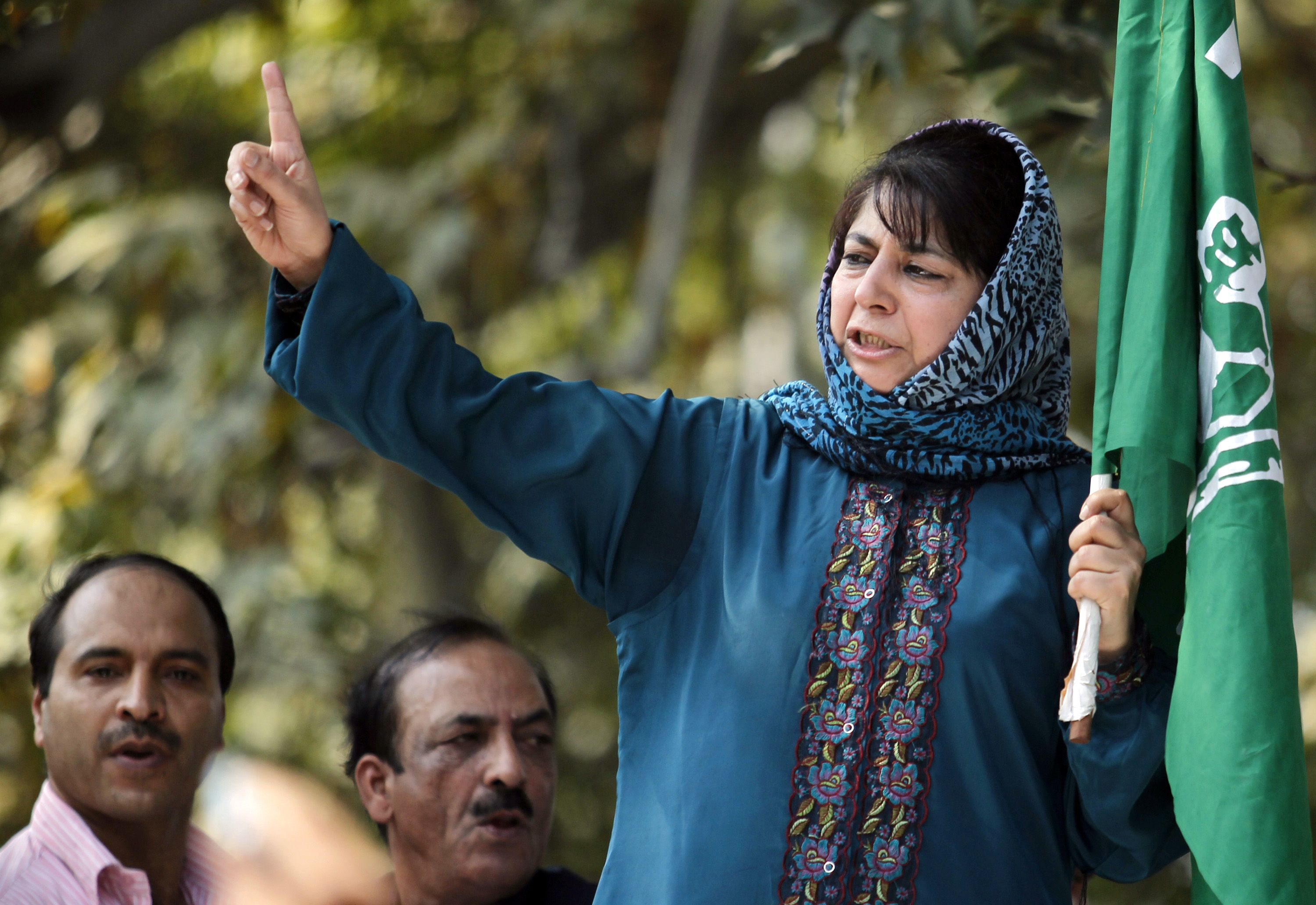
As assembly elections unfolded in Indian-administered Kashmir this month, the return of Sheikh Abdul Rashid from prison shook the region’s political landscape. Commonly known as Engineer Rashid, the 57-year-old politician was granted interim bail after being jailed in 2019, following the abrogation of Article 370, a move he fiercely opposed. His release has allowed him to rejoin the political arena, urging voters to support his Awami Ittehad Party, which has fielded candidates across more than three dozen constituencies.

These elections are significant as the first since the region’s autonomy was revoked, a decision that ended Kashmir’s special status under Article 370. With 873 candidates vying for 97 seats in the Muslim-majority Kashmir Valley and Hindu-majority Jammu, federal officials have framed the elections as proof of a return to normalcy in a region long marred by insurgency. However, Rashid’s reentry into politics challenges this narrative.

Rashid’s political career has been marked by outspoken criticism of Delhi’s control over Kashmir. He is known for his provocative protests and fiery speeches against what he calls the central government’s “heavy-handed” rule. Although his fiery rhetoric often puts him at odds with authorities, it also resonates deeply with the local population. His popularity surged in 2024 when he, from behind bars, defeated the influential regional politician Omar Abdullah in the parliamentary elections.

Rashid wasted no time upon his release on September 11, immediately reaffirming his opposition to the abrogation of Article 370. He used social media, particularly Facebook, to broadcast his message to millions, with an hour-long live video garnering over 2.5 million views, 44,000 likes, and 25,000 comments. This large following has unnerved his regional rivals, particularly Mehbooba Mufti and Omar Abdullah, who accuse him of being a proxy for Prime Minister Narendra Modi’s Bharatiya Janata Party (BJP). Rashid has vehemently denied these allegations, pointing out that his imprisonment would not align with being a BJP ally.
Picture background

Rashid’s critics view his release just before the elections with suspicion, claiming it might signal his collusion with the BJP-run federal government. Yet, his time in prison has only amplified his credibility among Kashmiris, many of whom see him as a “common man’s politician,” unafraid to confront authorities.

Rashid’s return comes at a critical juncture for the region. Historically, Kashmir’s politics has been dominated by parties pledging allegiance to India or pushing for increased autonomy. Some separatist factions have even supported an armed movement or favored Pakistan’s involvement in resolving the conflict. But Rashid, while rejecting armed militancy, has remained a vocal critic of Delhi’s policies. His blend of democratic participation and protest has drawn a loyal following, especially among the youth.

His blunt approach has earned him both admirers and enemies. In 2015, he hosted a controversial “beef party” to protest a cow-slaughter ban in several Indian states, leading to physical attacks by BJP members and other Hindu nationalist groups. Rashid’s protests often draw attention to alleged human rights abuses in Kashmir. On Human Rights Day in 2015, he led a protest with animals, stating, “Animals have more rights than people in Kashmir,” symbolizing the perceived injustices faced by Kashmiris.

Rashid’s path to politics was unconventional. He left his job as a government engineer in 2008 to enter politics, winning consecutive elections as an independent candidate. His defiance and populist stance have endeared him to the masses, and his time in jail has only magnified his appeal. Political analysts, such as Noor Mohammad Baba, observe that Rashid’s ability to protest against “anti-people” policies is what makes him a “crowd-puller.”

Despite allegations of being a “proxy of Delhi,” many voters remain unbothered by these accusations. “Almost all the regional parties have been in an alliance with the BJP in the past. They aren’t in a position to allege him of complicity with the BJP,” said a local businessman, Rafiq Ahmad, who added that people are willing to give Rashid a chance.

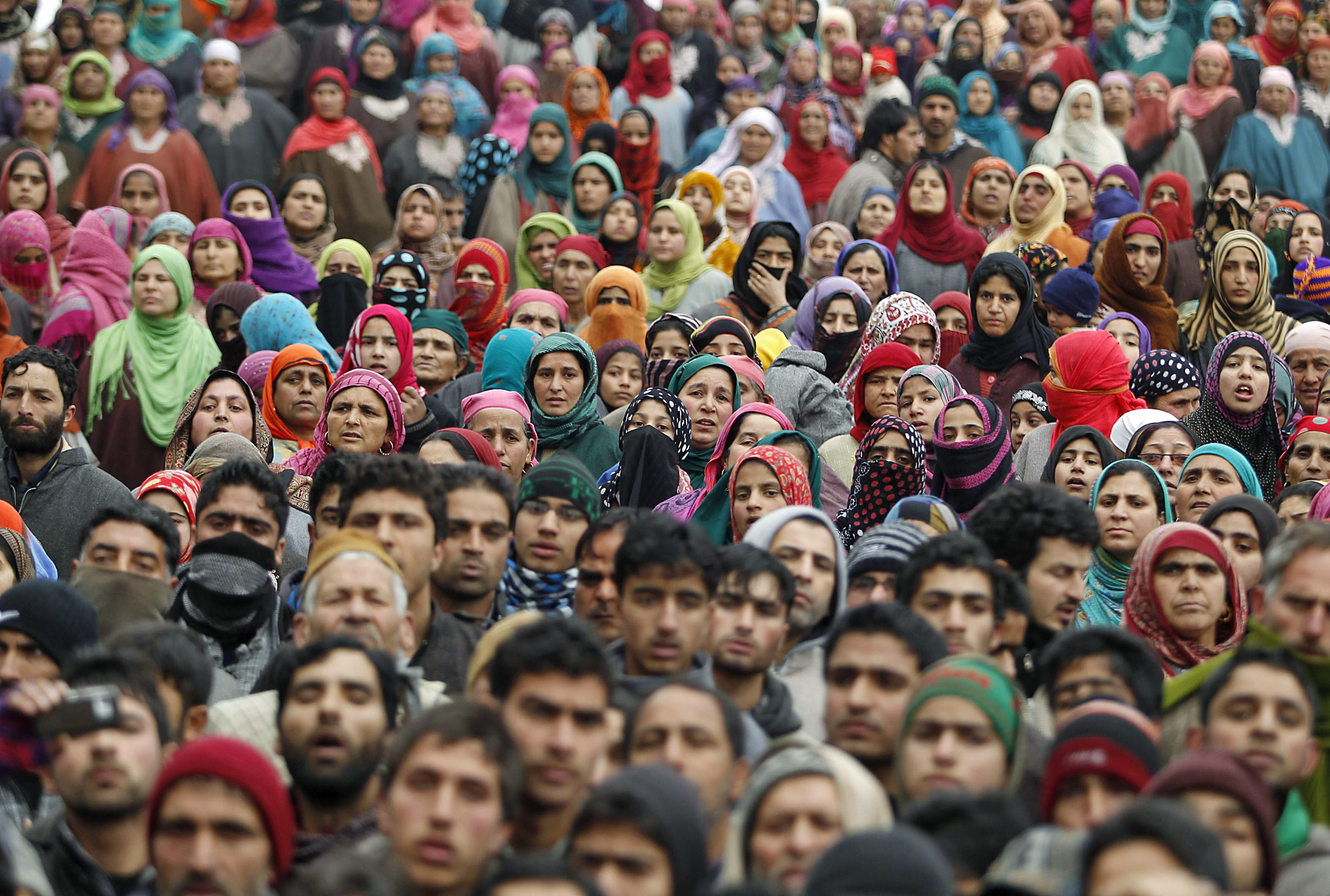
As he campaigns for his party’s candidates, Rashid continues to emphasize his calls for resolving the Kashmir conflict and ending the use of anti-terror laws to suppress dissent. With crowds of young men shouting in support, it is clear that Rashid’s return has injected a new dynamic into Kashmiri politics.
Gold’s Record-Breaking Rally Signals Economic Uncertainty

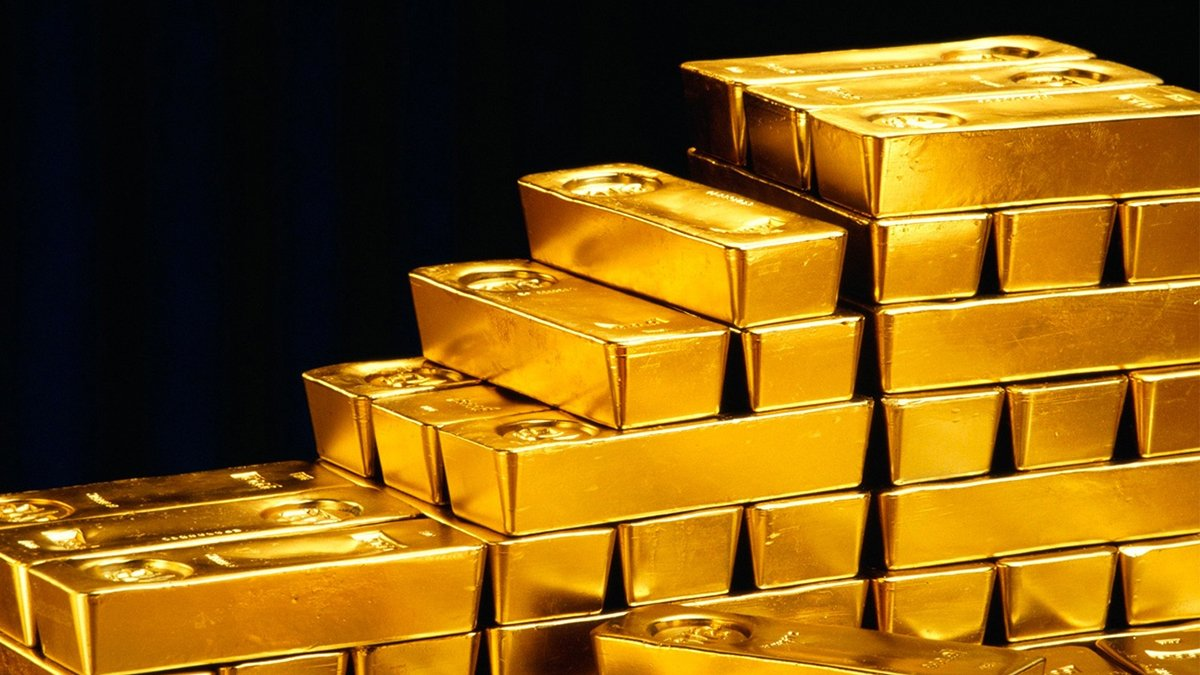
The gold market is experiencing a significant rally in 2024, with gold futures hitting new highs, most recently reaching $2,687.30 before retreating. This surge comes after the Federal Reserve’s aggressive half-point interest rate cut, reflecting growing concern about the U.S. economy’s health. Gold, traditionally seen as a safe-haven asset, has risen 30% this year, outperforming the S&P 500’s 20% gain. The rally is driven by central banks, particularly in China, Turkey, and India, diversifying away from the U.S. dollar and stockpiling gold.

However, the strong demand for gold also signals ongoing concerns about economic stability. Investors often flock to gold during times of uncertainty, viewing it as a more secure store of value compared to stocks, bonds, or currencies during a potential downturn. While stock markets have hit fresh highs, the Federal Reserve’s rate cut indicates potential weaknesses in the U.S. economy, especially as unemployment has risen slightly to 4.2%, up from 3.8% a year ago.

Fresh data from the Conference Board’s consumer confidence index shows declining sentiment among Americans, with the index dropping from 105.6 in August to 98.7 in September. This pessimism adds to investor anxiety, suggesting that the Fed’s rate cut may be more of a “crisis cut” than a proactive measure, as stated by Kristina Hooper, Chief Global Market Strategist at Invesco.

The appeal of gold is also heightened by the Fed’s ongoing rate-cutting strategy. JPMorgan Chase researchers project gold to climb further, targeting $2,850 an ounce by 2025 as interest rates fall. With the Fed planning more cuts this year and in 2025, gold’s allure surpasses that of U.S. Treasuries, whose yields have fallen below the 4% highs seen just months ago.

In addition to gold, silver is also surging, up 34% this year. Silver’s rally, while often linked to economic optimism due to its industrial uses in electronics, solar energy, and infrastructure, is also benefiting from the same economic conditions driving gold. Demand for silver is expected to rise due to clean energy transitions and China’s solar and electric vehicle markets.

China’s recent efforts to revitalize its economy, including rate cuts and other measures, are also contributing to the strength of precious metals like gold and silver. Will Rhind, CEO of GraniteShares, is optimistic about gold’s future, citing these global economic trends as ongoing drivers for its rally.

China Fires ICBM Into Pacific Ocean Amid Regional Tensions

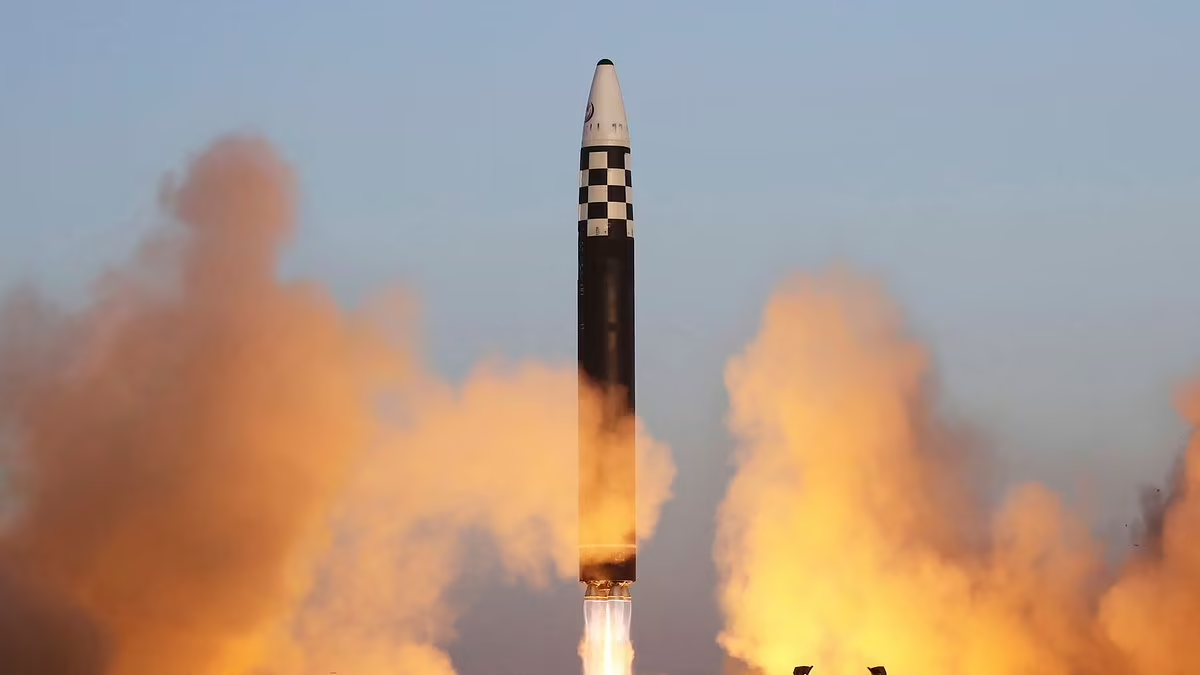
China launched an intercontinental ballistic missile (ICBM) into the Pacific Ocean on Wednesday, marking its first public test of such a missile in decades. The missile, carrying a dummy warhead, was launched by the People’s Liberation Army Rocket Force at 8:44 a.m. Beijing time and landed in the Pacific, though the exact flight path and landing zone were not disclosed. While China’s Defense Ministry emphasized that the test was part of routine training and not aimed at any specific country, analysts suggest the move sends a clear signal to the United States and its allies, especially amidst rising tensions in the region.

The timing of the test is notable, with China and Russia currently conducting joint naval drills near Japan. The launch also coincides with increasing tensions in the East China Sea, South China Sea, and Taiwan Strait. While China notified some countries in advance of the launch, Japan confirmed that it was not informed, raising concerns about the risks of miscalculation in the region. This test marks the first time China has fired an ICBM over the Pacific since 1980, a significant move in light of China’s growing military assertiveness.

Experts say the test is a powerful message to Washington, signaling that any direct intervention in Taiwan could put the U.S. mainland at risk. Additionally, it demonstrates China’s capability to simultaneously confront multiple fronts. Analysts also point out that China, which has been building up its nuclear arsenal under President Xi Jinping, has expanded its ballistic missile capabilities. The country’s latest ICBM, the DF-41, is capable of reaching the U.S. mainland with an estimated range of up to 15,000 kilometers.

Military observers note that China rarely announces its missile launches, making this public test particularly significant. The missile launch follows weeks of mounting tensions, including collisions between Chinese and Philippine vessels and protests from Japan over airspace incursions by Chinese and Russian military aircraft. The Pentagon acknowledged receiving advanced notice of the test, describing it as a positive step toward avoiding misperceptions.

China’s military, especially its Rocket Force, has been under scrutiny following corruption scandals, but analysts suggest the test may also be aimed at demonstrating that these internal issues have not weakened its operational readiness. The U.S. Department of Defense has warned of China’s expanding nuclear capabilities, predicting a rapid increase in the number of nuclear warheads in the coming decade.